
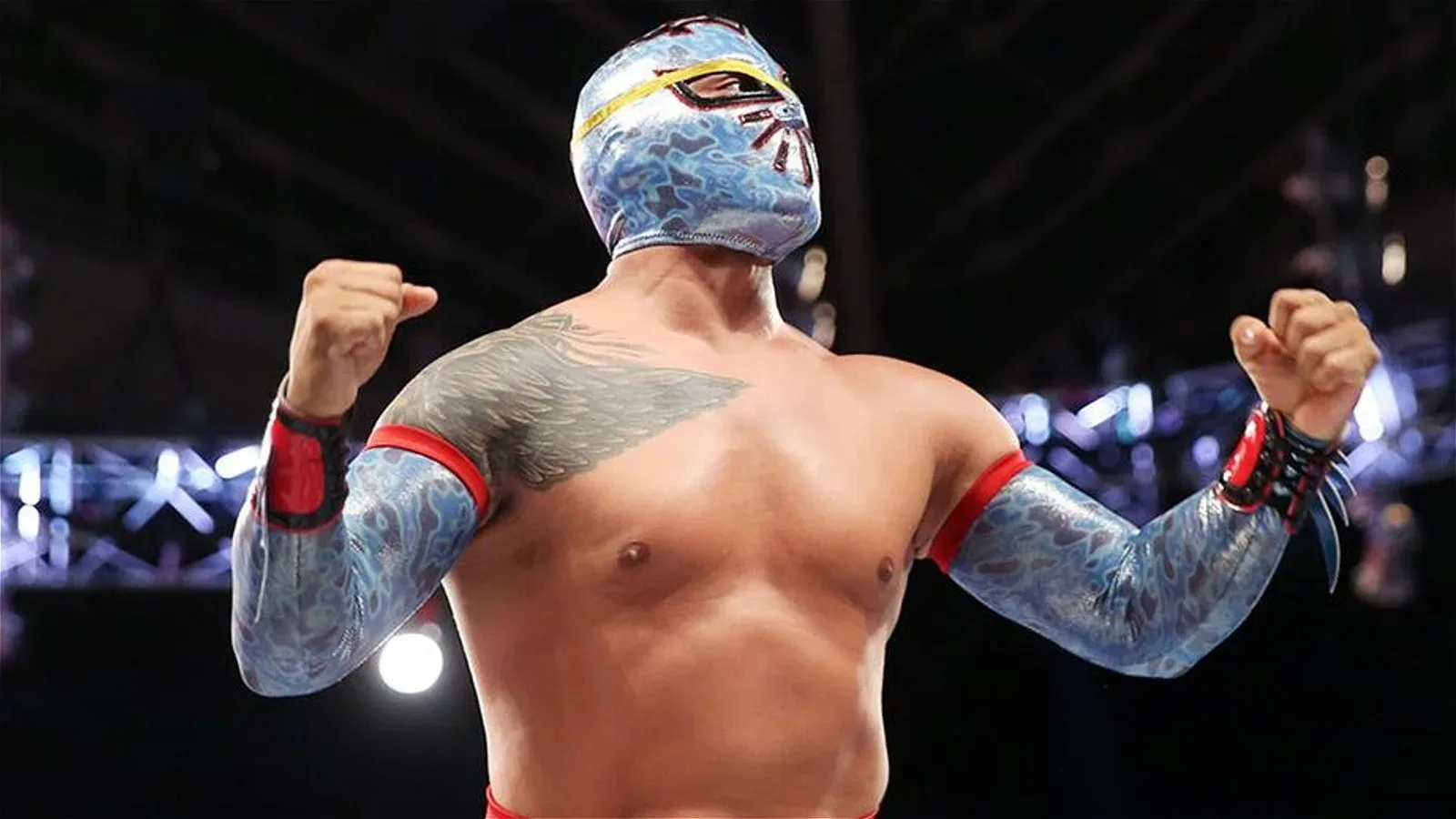
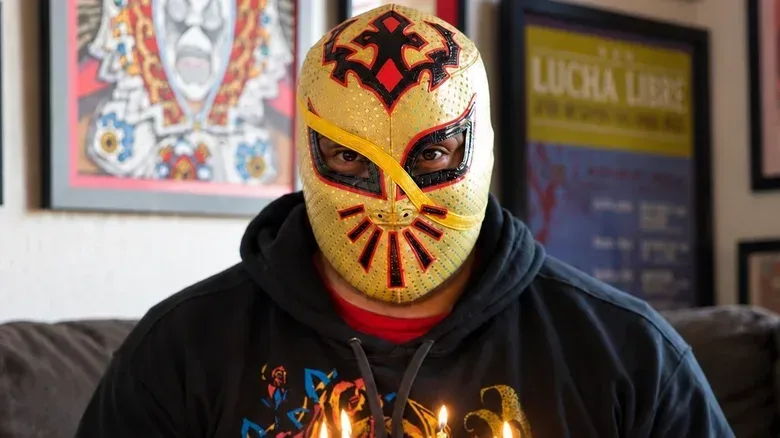
Cinta De Oro has offered a candid perspective on the way lucha libre was viewed during his time in WWE, while also revisiting the frustration that shaped the final years of his run with the company. The performer, best known to WWE audiences as Sin Cara, worked through multiple eras of company leadership and believes the central issue was not simply whether one executive understood Mexican wrestling better than another.
Instead, Cinta De Oro suggested that WWE’s larger presentation model changed the conversation around the lucha style altogether. Speaking on TMZ’s Inside The Ring, he was asked to compare the respective understanding of lucha libre under Vince McMahon and Triple H. He did not give a simple answer, explaining that the product was ultimately framed as entertainment rather than as traditional professional wrestling or lucha libre.
That distinction is especially notable in the current WWE landscape. WWE’s acquisition of Lucha Libre AAA Worldwide has put more focus on Mexican talent, lucha traditions, and cross-promotional matches. Events such as Worlds Collide have created a platform where AAA performers and WWE wrestlers can meet in high-profile settings, exposing fans of each promotion to different approaches to the sport.
For Cinta De Oro, however, the broader question is whether that increased visibility will consistently produce major opportunities for Mexican and Latino wrestlers. His comments reflected both an appreciation for the current attention on lucha libre and a lingering disappointment over the chances he felt he did not receive while wearing the Sin Cara mask.
For more background on this topic, read Logan Paul Praises WWE Women’s Roster After Money in the Bank.
A WWE Run Defined By Adaptation
Cinta De Oro arrived in WWE with a significant reputation as a lucha libre standout. His WWE tenure included time portraying Sin Cara Negro before he later took on the Sin Cara identity himself. It was a role with enormous visual potential: a masked wrestler with a distinctly Mexican presentation, high-flying offense, and a name that had already drawn attention across the wrestling world.
Yet adapting to WWE required more than executing a familiar lucha libre style. Cinta De Oro indicated that the emphasis in WWE was on fitting into a larger entertainment structure. That can involve character direction, television pacing, production demands, and the need to perform within a style built around WWE’s own priorities. For a wrestler rooted in the traditions of Mexican lucha, those expectations can create a different kind of challenge than merely facing unfamiliar opponents.
He did stress that his WWE experience also included valuable opportunities to learn from some of the biggest names of an earlier generation. He named Big Show, Kane, and The Undertaker among the established Attitude Era stars he was fortunate to work with and observe. Those are performers with very different in-ring identities from a traditional luchador, and Cinta De Oro’s experience alongside them represented an education in WWE’s scale, psychology, and presentation.
His developmental days brought another test. Cinta De Oro recalled that wrestlers in Florida Championship Wrestling could be sent to the ring without a match card and expected to improvise their way through the contest. That environment demanded adaptability and composure. While some wrestlers thrive on the freedom of building a match in real time, it can also be a major adjustment for anyone trying to establish a particular style and prove that it belongs on a national stage.
The former Sin Cara’s account makes clear that he was not dismissing the lessons of that period. Rather, he described a system that required him to continually adjust while he was also trying to make the most of his own abilities. The tension between those two goals is central to how he remembers his time in WWE.
“I Wanted To Showcase My Talent”
Cinta De Oro also addressed past criticism he made regarding the opportunities available to Latino wrestlers in WWE. He did not retreat from that position. His core argument remains that he was asking for a sustained chance to demonstrate what he could do, not an automatic elevation without proving himself.
“I wanted to let them know that I’m here, you know? I want to showcase my talent!” Cinta De Oro said on TMZ’s Inside The Ring.
He recalled proposing a straightforward challenge to WWE: give him a full year on television, then judge whether he had become a major star. “Put me on television for a year, and then if after that year, I’m not a big star, then you can fire me on the spot,” he said.
That remark goes to the heart of his complaint. Wrestlers need meaningful repetition before audiences can fully invest in them. A memorable entrance, distinctive mask, or impressive highlight reel may create an immediate impression, but regular stories, victories, rivalries, and promotional time are what turn a recognizable act into a consistently supported star. Cinta De Oro believes he was never given that full runway.
He pointed to the present-day success of WWE performers receiving substantial screen time as evidence of what he had been seeking. The point was not that every wrestler who appears regularly becomes a top name. Rather, it was that sustained visibility gives talent a legitimate opportunity to connect, improve, and find the character elements that resonate with viewers.
That is an argument that extends beyond any one wrestler or one company. Across professional wrestling, television time is often the most valuable currency a performer can receive. Without it, even talented wrestlers can struggle to gain momentum. With it, a performer has the ability to develop an identity that audiences can follow over time.
AAA’s New Era And The El Grande Americano Question
The discussion naturally turned toward WWE’s evolving relationship with AAA. Cinta De Oro acknowledged that the times have changed with the acquisition, but he also questioned the identity of AAA’s biggest star in the current environment. He raised the issue of whether the promotion’s most prominent figure should be a Latino or Mexican wrestler, or someone outside that background.
His comments were directed in part at El Grande Americano’s position at the top of the AAA conversation. Cinta De Oro appeared dissatisfied with the larger implication of that spotlight, particularly given his long-standing belief that Mexican and Latino wrestlers should receive more chances to become defining stars. Still, he also gave El Grande Americano credit for making the most of the opportunity.
Cinta De Oro praised the way El Grande Americano has used social media to promote himself and adapt to Mexican culture. That acknowledgment is important because it shows that his objection is not simply about denying another performer’s success. He recognizes that El Grande Americano has effectively positioned himself and capitalized on the attention he has been given.
“At the end of the day, what’s happening with him? He got the opportunity to become a star!” Cinta De Oro said on TMZ’s Inside The Ring. “That’s all we’ve asked all this time!”
That perspective frames his comments less as an attack on an individual and more as a demand for equal access to the machinery that creates stars. If a character can become prominent through exposure, marketing, and cultural engagement, then Cinta De Oro wants Mexican and Latino performers to be granted the same institutional support.
A Call For The Next Generation
Ultimately, Cinta De Oro’s focus is on the wrestlers coming behind him. He wants the current moment—one in which WWE and AAA are more visibly connected—to lead to tangible opportunities for Mexican and Latino talent. The crossover potential is obvious, but he is emphasizing that representation must go further than appearances on special events or supporting roles.
“All I ask for the new generation is an opportunity for the Mexican kids, the Latino kids, to showcase their talent,” he said. “That’s all we’ve asked this time, and hopefully that time has come now.”
There is a significant difference between featuring lucha libre as an attraction and building luchadores as long-term headliners. The former can create exciting matches and memorable visuals. The latter requires commitment: regular television placement, meaningful creative direction, promotional support, and the patience to allow stars to grow.
Cinta De Oro’s WWE career remains an example of both the possibilities and limitations of bringing a major lucha libre identity into WWE’s system. He had the look, the athletic foundation, and the opportunity to share rings with major names. Yet he remains convinced that his potential was never tested with the consistent exposure he sought.
As WWE continues to integrate AAA into its wider wrestling ecosystem, that debate will remain relevant. The company now has a greater opportunity than ever to present lucha libre to a global audience. For Cinta De Oro, the measure of that opportunity will not only be whether the style is visible, but whether the wrestlers who carry its traditions are given the time and platform to become stars.
In pictures

Darryl Polo
Darryl Polo is a passionate wrestling fan covering WWE, AEW, TNA and beyond. He loves great rivalries, breakout stars and the moments that keep fans talking long after the bell. How we work.