
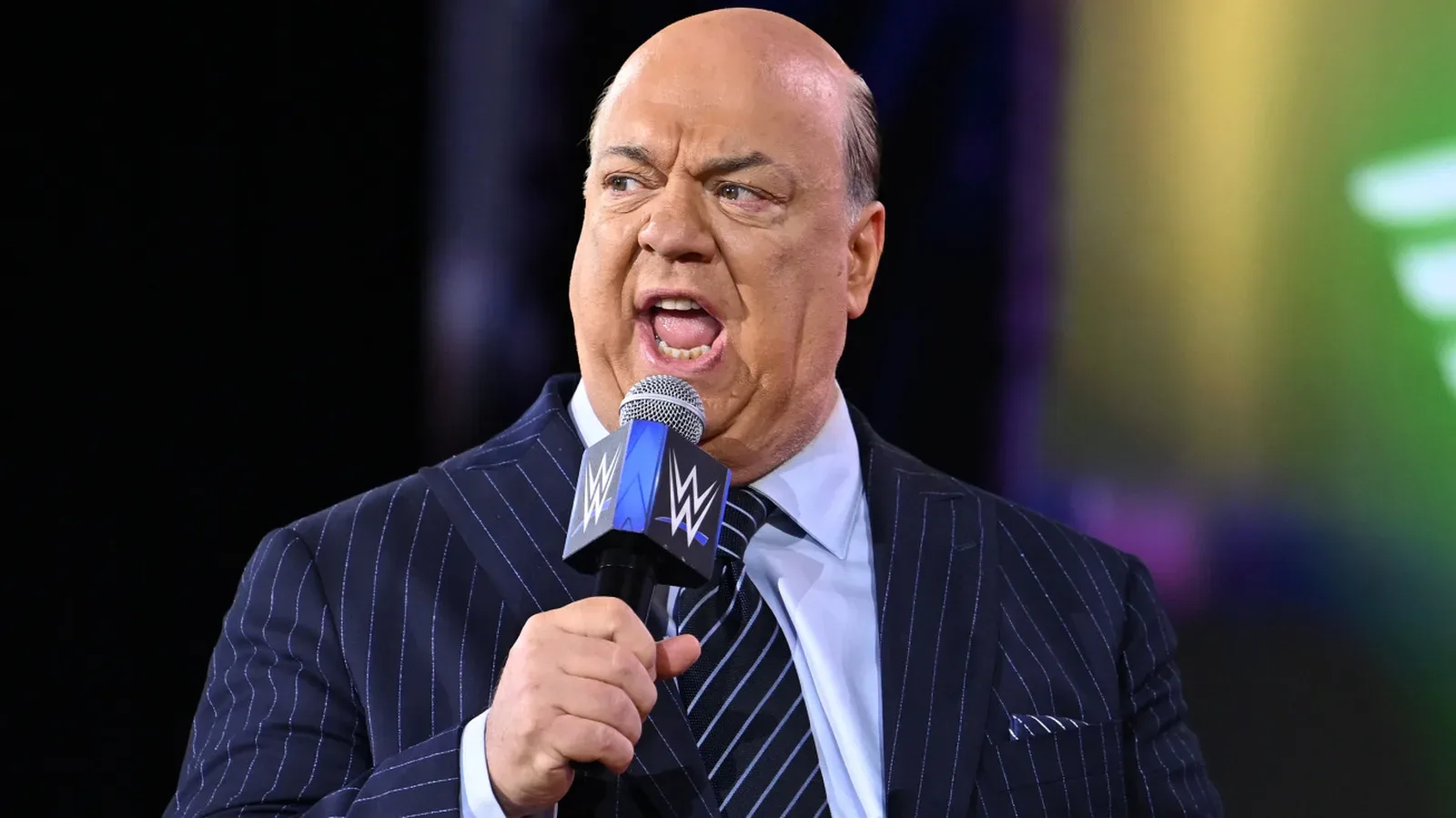
Paul Heyman’s ascent from WCW manager Paul E. Dangerously to the creative force behind Extreme Championship Wrestling was neither carefully mapped out nor guaranteed to happen. It began with a departure from WCW that left him angry enough to consider abandoning professional wrestling entirely. It continued with a radio opportunity in New York, an unexpected booking offer, and a difficult situation involving one of his mentors, Eddie Gilbert.
Speaking on In Depth with Graham Bensinger, Heyman revisited the 1993 chain of events that took him from being out of WCW to booking Eastern Championship Wrestling. The Philadelphia-area promotion would soon become ECW, a company whose influence remains visible across modern WWE and the wider wrestling industry.
At the time, however, Heyman was not looking toward the eventual legacy of ECW. He was a 28-year-old who had just lost his position in WCW amid changes under Bill Watts, and he believed his wrestling career may have reached its end.
A Contract Dispute Ended Heyman’s WCW Run
Heyman had become a familiar television personality during his WCW stint as Paul E. Dangerously. But the arrival of Watts as an executive brought a change in direction, including a push to reduce contracts. Heyman said he did not agree to the proposed cut in pay and found himself on the outside of the company.
For more background on this topic, read Robert Stone Says Kendal Grey Stood Out From Her First Day in NXT.
“I got fired from WCW and I didn’t want to ever get fired again,” Heyman said on In Depth with Graham Bensinger.
He recalled that Watts wanted to cut contracts throughout the company. Rather than accept the reduction, Heyman pushed back. That conflict led to the end of his WCW employment and, at least initially, a decision to walk away from the industry.
“I was really p***** off,” Heyman said, explaining that he felt finished with wrestling at that point in his life.
The reaction is notable considering how closely Heyman has been tied to professional wrestling over the decades that followed. His work as an on-screen manager, promoter, executive, producer and creative architect has made him one of the industry’s most identifiable figures. Yet in the wake of his WCW exit, he was prepared to pursue an entirely different professional route.
The Radio Career Heyman Nearly Chose
Heyman revealed that he was close to signing an agreement to host a New York radio program that would have competed directly with Howard Stern. The opportunity represented a serious alternative to wrestling, not merely a temporary fallback plan.
Before that deal could be finalized, Jim Crockett Jr. approached Heyman with an offer to book. Crockett challenged Heyman over opinions he had shared about wrestling’s creative direction during the early 1990s. Heyman had criticized bookers of that era as being out of touch and short on new ideas. Crockett effectively gave him the chance to prove that his criticisms could translate into practical creative leadership.
Heyman accepted the challenge and moved away from the radio path. That decision placed him back in wrestling, though the specific opportunity that would define his career came shortly afterward in Eastern Championship Wrestling.
In September 1993, Heyman began booking the smaller promotion. The company was based around the Philadelphia wrestling scene and was far from the national force it would eventually become. It did, however, offer Heyman a rare level of creative latitude. The factors that put him in that role were tied to Gilbert, the man previously handling the booking responsibilities.
Eddie Gilbert’s Difficult Circumstances Created An Opening
Before Heyman took over creatively, “Hot Stuff” Eddie Gilbert was Eastern Championship Wrestling’s booker. Gilbert was also a significant figure in Heyman’s development and was described by Heyman as a mentor. But Gilbert was going through major personal and physical difficulties at the time.
Heyman said Gilbert had recently gone through his second divorce and was dealing with severe pain connected to a neck injury suffered years earlier in an automobile accident. According to Heyman, the pain and reliance on pain medication left Gilbert in a very difficult state, and his relationship with ECW owner Tod Gordon deteriorated during the week of a show.
“Eddie had hit a point in his life,” Heyman said on In Depth with Graham Bensinger. “He had just gone through his second divorce [and] he had terrible pain from a broken neck that he suffered in a car wreck from years earlier.”
Gordon asked Heyman to step in and assume the booking duties. What initially came from a crisis within the promotion became a transformative moment for both Heyman and the company. With control of creative direction, Heyman was able to pursue ideas that he had wanted to bring to wrestling for years.
The transition also came with personal complexity. Heyman was not simply replacing an anonymous predecessor; he was taking on the role once held by someone who had influenced him. The situation was shaped by Gilbert’s hardships, but it gave Heyman the platform to turn a regional promotion into something dramatically different from the established major companies.
Building A Different Kind Of Wrestling Promotion
Heyman’s vision for ECW was driven by the belief that wrestling needed to feel contemporary. He sought to reach the 18-to-34 male demographic and to present stories, characters and conflicts that reflected the culture surrounding the audience. That included paying attention to mainstream developments while also understanding underground trends and the attitudes of fans who felt underserved by conventional wrestling programming.
ECW’s identity became rooted in that approach. Its presentation was often provocative, intense and unapologetically unconventional. The promotion’s style brought together high-impact action, international influences, memorable promos and an audience that was treated as an essential part of the product rather than passive spectators.
Heyman did not immediately own the company when he took over the book. Over approximately the next 18 months, he gradually assumed complete control from Gordon while working to reduce the organization’s debt. The process was not portrayed as an easy rise from a small territory to a national cult phenomenon. It involved major financial risk, constant pressure and an ongoing commitment from Heyman to keep the promotion alive.
He said he invested all the money he had into ECW and also used substantial financial support from his parents. The company ultimately ceased operations in 2001, but Heyman’s recollection makes clear that he does not view that eventual outcome as a reason to regret the investment.
“Even the lowest day was a great day,” Heyman said on In Depth with Graham Bensinger.
Heyman recalled reaching a point where personal bankruptcy was a reality, but he remained focused on what he still possessed: his health, his life and his ability to rebuild. That perspective reflects the all-in mindset associated with ECW’s growth, as well as the risks that came with operating an ambitious independent wrestling company.
ECW’s Lasting Place In Heyman’s Career
ECW folded in 2001, yet its impact has endured long beyond its final event. Its alumni went on to become central figures in WWE, WCW, TNA and other promotions. Its creative influence can be seen in the prominence of alternative wrestling styles, the importance of passionate live crowds, the blending of athleticism with character-driven presentation, and the demand for programming that does not feel interchangeable.
For Heyman, the ECW chapter also paved the way for his later work in WWE. His ability to develop talent, identify audience reactions, shape major acts and communicate an idea with conviction has remained evident throughout his WWE career. Whether as an on-screen advocate or in behind-the-scenes creative roles, the instincts he developed and tested in ECW have continued to define his standing in the industry.
The path to that position, though, began with a moment of uncertainty. A dispute over a WCW contract had convinced Heyman he might be done with wrestling. A radio offer could have sent him in another direction. A call to book, followed by a sudden opening in Eastern Championship Wrestling, changed everything.
Heyman’s recollection underscores how precarious the beginning of ECW’s story truly was. Before it became a defining name in wrestling history, it was a small promotion handed to a young, frustrated creative mind who had something to prove. From that opportunity came one of the most influential experiments the business has ever seen.
In pictures

Darryl Polo
Darryl Polo is a passionate wrestling fan covering WWE, AEW, TNA and beyond. He loves great rivalries, breakout stars and the moments that keep fans talking long after the bell. How we work.