
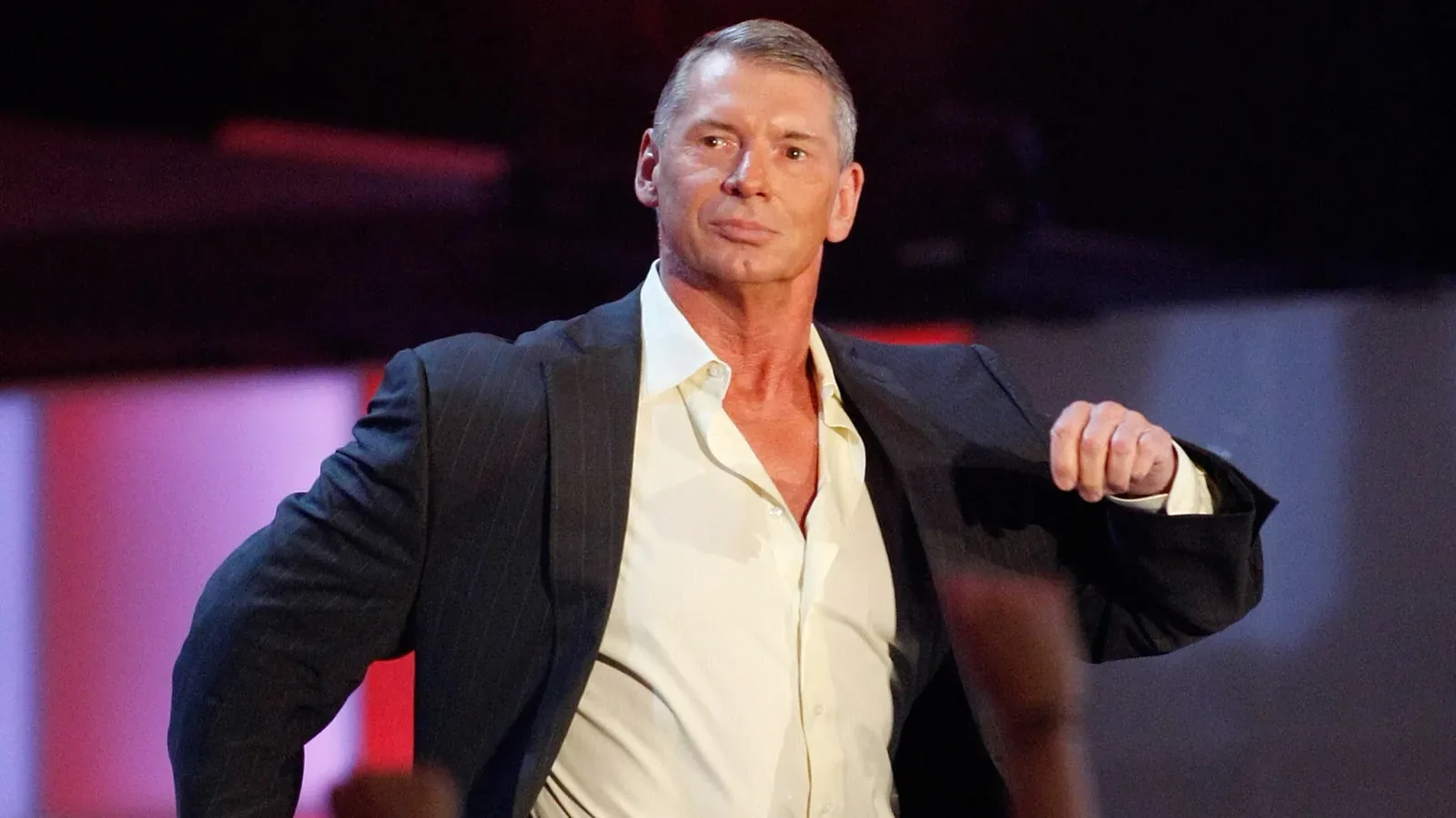
Paul Heyman has offered a candid assessment of Vince McMahon’s relationship with morality, ambition and power, describing a former WWE leader who, in Heyman’s view, was not especially concerned with being judged as a “good man.”
Speaking on In Depth With Graham Bensinger, Heyman reflected on the many years he spent working alongside and, at times, clashing with McMahon. The conversation touched on the defining characteristics that made McMahon one of professional wrestling’s most consequential figures, as well as the traits that could make working with him difficult.
Heyman’s perspective was not framed as a simple celebration or condemnation. Instead, he described a complicated working relationship with a man whose drive and influence were enormous, but whose standards and decision-making could be exhausting to navigate.
“No, I don’t think Vince ever considered himself a good man,” Heyman said. “I don’t think he cared about it. I don’t think that was part of his self-judgement. I don’t think he felt he was placed on this planet to be a good man.”
For more background on this topic, read Kit Wilson Reveals Unused WWE Pitch for Chelsea Green-Led Secret Hervice.
The comment speaks to the bluntness with which Heyman has often discussed the wrestling business. He has long been one of the industry’s most prominent creative minds and on-screen personalities, and his career has repeatedly intersected with McMahon’s WWE empire. That history includes Heyman’s role as the architect of the original Extreme Championship Wrestling, his eventual work within WWE, his time as a television commentator and executive, and his current role as a central on-screen figure around The Bloodline.
McMahon’s impact on wrestling is difficult to separate from the modern shape of the industry. Under his leadership, WWE became a global entertainment force and transformed the way wrestling was presented, marketed and distributed. But Heyman’s remarks emphasized that professional achievement and personal virtue are separate questions, and that McMahon did not appear to measure himself through the latter standard.
A Work Ethic That Was Both Inspiring and Paralyzing
Heyman also addressed the challenge of attempting to match McMahon’s intensity. For decades, McMahon became associated with an all-consuming work schedule and a hands-on management style. Heyman said trying to keep pace with McMahon’s ethics and vision was effectively impossible because of the nonstop nature of his approach.
That intensity could be admired while also being overwhelming. Heyman characterized McMahon’s work ethic as unparalleled, using two seemingly opposing terms to explain its effect on him: inspiring and paralyzing.
The distinction is important. A leader’s capacity to outwork everyone around him can set a formidable standard, but it can also create an environment in which colleagues are continuously trying to meet demands that may not be sustainable. Heyman’s recollection suggests McMahon’s energy was not simply a professional asset; it was a force that shaped every interaction around him.
For Heyman, the difficulty was not limited to the hours or the sheer pace. It was also about tracking McMahon’s evolving creative instincts. WWE has long been known for its fast-moving production process, particularly in eras when McMahon was deeply involved in virtually every level of presentation. A concept could change quickly, priorities could shift, and creative authority could become a point of contention.
Heyman has operated in wrestling as both an entrepreneur and a creative executive, so he understands the value of decisive leadership. His ECW success was built on a sharply defined identity, with a product that intentionally contrasted with the major national promotions of the 1990s. That background made autonomy particularly important whenever he was put in position to guide a brand or project.
Heyman Recalls Heated Meetings With McMahon
The interview also covered the confrontational nature of some of Heyman’s business discussions with McMahon. Heyman said their meetings could feature extensive profanity and described the disputes as “childish battles.” Rather than avoid those confrontations, he said McMahon enjoyed them.
Creative disagreements are hardly unusual in wrestling, an industry built on strong personalities, competing instincts and high-stakes decisions over television, talent and brand direction. Yet Heyman’s description portrays arguments with McMahon as more than routine debate. They were part of a broader power dynamic between two people who each had firm ideas about what the product should be.
Heyman’s career had already established him as a rival promoter before he became a WWE figure. ECW’s influence remains substantial despite its original run ending decades ago. The promotion helped create opportunities for performers and styles that did not fit the conventional mold, while its presentation left an imprint on mainstream wrestling that continued well after the company ceased operations.
That legacy made WWE’s decision to revisit the ECW name a significant one. The company staged the successful ECW One Night Stand event in 2005, followed by another event under that banner in 2006, before launching ECW as a weekly WWE television brand. Heyman was initially positioned as the public face of the relaunch and seemed like a natural figure to help shape its direction.
However, Heyman said his control was quickly reduced.
The 2006 ECW Relaunch Remains a Major Point of Friction
Heyman identified the ECW relaunch as one of the clearest examples of his frustrations with McMahon. He said that McMahon told him he would be placed in charge of the revived brand, only for that authority to begin disappearing almost immediately.
“When we relaunched ECW, he told me he was putting me in charge of it, and 30 seconds later, [he] started stripping me of any authority that I had in controlling or contouring or tailoring or creating the product,” Heyman said.
In Heyman’s view, the result was damaging across the board. He believed the interference was bad for the product itself, bad for the company and, above all, bad for the audience.
The tension surrounding the ECW revival was rooted in a fundamental issue: the original ECW’s identity was inseparable from its independence and its willingness to operate outside mainstream wrestling conventions. Once the brand became part of WWE’s corporate structure, it was inevitably subject to a different set of production standards, business priorities and creative oversight.
WWE’s ECW brand brought the ECW name to a much larger platform and featured a mixture of former ECW talent, WWE regulars and newer performers. It also introduced championship programs and gave television exposure to wrestlers who would go on to have meaningful careers elsewhere in WWE. Still, the weekly version of ECW faced continued scrutiny from fans who wanted a closer continuation of the original Philadelphia-based promotion.
Heyman’s comments make clear that he viewed the central issue as creative control. Being given responsibility without the ability to make defining choices is a frustrating position in any business, but it held special weight in the ECW situation because Heyman had been so closely identified with the original concept.
The WWE version of ECW ultimately came to an end on February 16, 2010. Its closure marked the conclusion of a relaunch that remained commercially and creatively distinct from the promotion that had built its cult following during the 1990s.
A Complicated History Between Two Defining Wrestling Figures
Heyman’s reflections underline the complexity of his history with McMahon. Their relationship brought together two of wrestling’s most influential and forceful creative personalities. There was collaboration, conflict, mutual recognition and a long record of disagreements over how wrestling should be made.
Heyman did not present McMahon as someone seeking moral approval. Nor did he deny the immense impact of McMahon’s work ethic and vision. Instead, he described a person whose priorities were centered on the work, the product and the pursuit of his own objectives, even when that approach created friction with people around him.
Those distinctions matter when considering McMahon’s legacy. His name remains tied to WWE’s growth into an international powerhouse, while the people who worked closest to him continue to share markedly different accounts of what it was like to operate under his leadership. Heyman’s account adds another layer to that larger conversation: one shaped by respect for unmatched drive, frustration over creative interference and a recognition that the pursuit of success was not necessarily accompanied by concern for being seen as a good man.
In pictures

Darryl Polo
Darryl Polo is a passionate wrestling fan covering WWE, AEW, TNA and beyond. He loves great rivalries, breakout stars and the moments that keep fans talking long after the bell. How we work.