
Paramount’s proposed acquisition of Warner Bros. Discovery may be moving significantly closer to completion following reported settlement talks with states that had sought to stop the deal in court. The development carries obvious interest across the entertainment business, but it also places renewed attention on the future of All Elite Wrestling’s relationship with the Warner Bros. Discovery networks that have been central to the company since its launch.
The proposed $111 billion transaction has faced a lengthy and complicated path. Paramount entered the picture after Netflix had announced plans in December to acquire the Warner Bros. side of the company, with Discovery Global expected to operate separately again. Paramount later supplanted that arrangement with an agreement to acquire Warner Bros. Discovery as a whole.
While regulators in nearly 70 jurisdictions had approved the acquisition, the deal encountered opposition from a coalition of 12 state attorneys general and the Writers Guild. Those challengers brought legal action intended to block the merger, alleging that it would breach antitrust laws. A trial had been scheduled for March before being postponed indefinitely, leaving the ultimate resolution of the transaction uncertain.
That uncertainty may now be easing. Settlement discussions reportedly began over the weekend after four states conceded, creating a potential route for the merger to proceed. The settlement was expected to be announced later on September 21, though final approval of the terms remains important before the legal dispute can formally be considered resolved.
For more background on this topic, read Mike Bailey Details Tony Khan’s Match Feedback and Faith in AEW’s Roster.
Reported terms focus on theatrical releases and editorial independence
Paramount had reportedly made a series of recent offers designed to settle the states’ challenges. Among the commitments under discussion were promises to release 30 films per year in theaters and to expand television production. Those measures were intended to answer concerns about what the combined company’s structure and business decisions could mean for consumers, creators, distribution, and competition.
California Attorney General Rob Bonta, who led the state coalition, had previously indicated that he favored structural changes over behavioral remedies. Structural solutions generally alter ownership or business assets directly, while behavioral remedies rely on a company’s future compliance with operating commitments. Bonta’s stated concern was that behavioral conditions can be difficult to enforce over time.
The reported settlement includes significant consequences if Paramount does not meet its theatrical-release target. Paramount could face a $30 million financial penalty for every film below the promised annual total of 30 theatrical releases. The company could also be required to sell its stake in Miramax if the target is not met.
The potential agreement also reportedly includes independent editorial boards for CBS and CNN. Massachusetts, New York, Connecticut, and Minnesota were said to have held out longer than other states before concluding that continued litigation would be difficult to justify without California continuing to lead the challenge. Those states reportedly secured the editorial-board provisions during the process.
A settlement would also help Paramount avoid substantial costs attached to delays. The company was reportedly facing late fees of $7 million per day beginning October 1 if the acquisition had not moved forward. With that deadline approaching, a negotiated resolution would be consequential not only for the companies involved but for the many brands, networks, studios, sports properties, and programming partners connected to Warner Bros. Discovery.
At the time the settlement discussions emerged, representatives for Paramount, California, New York, Minnesota, and Massachusetts had not responded to requests for comment. That leaves the reported terms subject to confirmation and means the precise implementation of any agreement will matter as the transaction heads toward its next stage.
Why the merger matters to AEW
For wrestling viewers, the biggest point of interest is Warner Bros. Discovery’s ongoing media-rights relationship with AEW. Since 2019, AEW programming has aired on TNT, TBS, and HBO MAX, bringing pro wrestling back to the Turner-connected channels that had been synonymous with the industry during earlier generations.
That distribution footprint has been foundational to AEW’s identity. AEW Dynamite has been a staple of TBS and its preceding TNT run, while AEW Collision and other company programming have expanded the promotion’s presence across WBD platforms. The HBO MAX component has also been an important part of AEW’s modern media strategy, offering another avenue for viewers to access the company’s content.
Major corporate changes naturally invite questions about programming priorities, spending, network strategies, and existing partnerships. A company as large as Warner Bros. Discovery contains a broad range of entertainment properties, and a Paramount acquisition would create another massive media structure with its own leadership, brands, assets, and strategic goals. In that environment, fans have understandably watched merger developments for any indication of what they could mean for AEW.
However, nothing in the merger discussions has suggested that AEW’s place on its current WBD-associated platforms is under immediate threat. The corporate transaction has generated speculation from outside observers, but reported developments have not established that AEW programming is being targeted for removal or that its standing has changed as a result of the proposed acquisition.
That distinction is important. Media mergers can produce long-term changes, but they do not automatically erase every existing programming relationship. Any future decisions about AEW’s rights, scheduling, platforms, or broader role would depend on the post-merger company’s eventual structure and strategy, as well as the terms of AEW’s own media arrangements.
Tony Khan has reportedly been optimistic about David Ellison
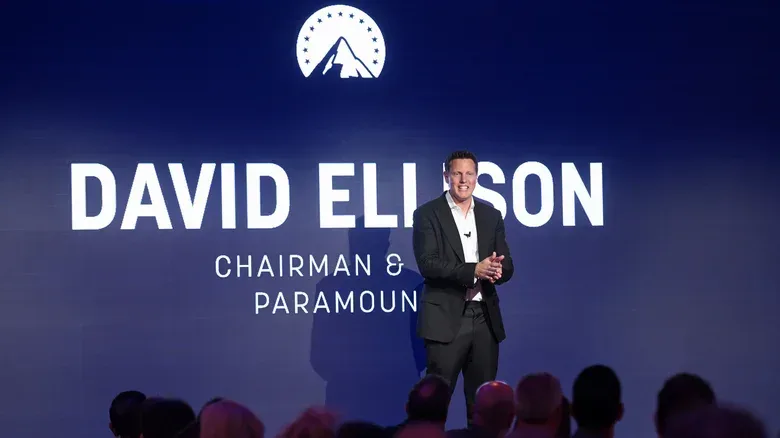
While some have viewed Paramount’s potential takeover as a possible negative for AEW, Tony Khan has reportedly been looking forward to working with David Ellison. That reported outlook has stood apart from the more pessimistic assumptions that often surface whenever a major media company changes ownership.
For AEW, the relevant issue is not simply whether Warner Bros. Discovery changes hands. It is how any new ownership group approaches live programming, sports-adjacent content, streaming, cable networks, and the value of a wrestling brand that has operated across several of those areas since 2019.
AEW offers regularly scheduled live television content, a year-round event calendar, a recognizable roster, pay-per-view programming, and an established audience across linear and streaming platforms. Those are meaningful factors in a media landscape where companies continue to weigh the value of live, repeatable programming against the expenses of scripted entertainment and the competition for audience attention.
The reported commitment to increase television production is also notable in the broader context of the merger, though there has been no indication that such a provision is specifically connected to AEW. It instead reflects the larger negotiations around the transaction and the conditions sought by state officials. Still, the discussion underscores that television output remains a central part of how the combined company could be evaluated.
At present, the clearest takeaway for wrestling fans is that the Paramount-Warner Bros. Discovery transaction appears closer to clearing one of its most serious legal obstacles. A reported settlement would not answer every question surrounding the combined company’s future, nor would it by itself define AEW’s long-term media direction. But it would reduce a major source of uncertainty hanging over the corporate side of AEW’s television home.
Until the settlement is formally confirmed and the acquisition reaches completion, there will remain important steps to follow. For now, AEW continues to have an established presence on TNT, TBS, and HBO MAX, and there has been no reported indication that the company’s position is in danger during the merger process. The eventual outcome may shape the media environment around AEW, but the available information does not point to an immediate disruption of its Warner Bros. Discovery partnership.
In pictures
Darryl Polo
Darryl Polo is a passionate wrestling fan covering WWE, AEW, TNA and beyond. He loves great rivalries, breakout stars and the moments that keep fans talking long after the bell. How we work.