
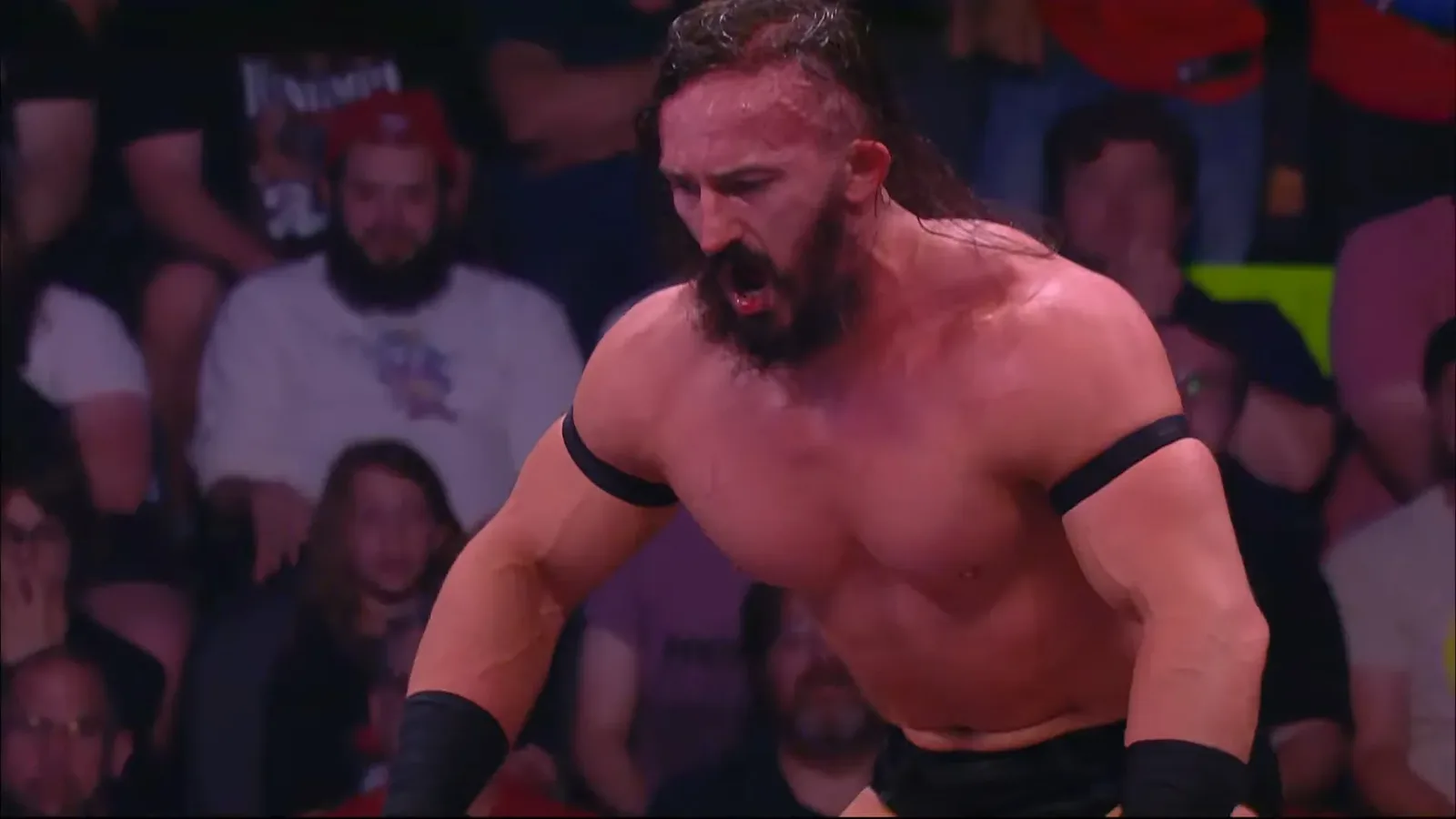
Benjaman Satterley, the wrestler known around the world as PAC, has died at the age of 40. The news has left All Elite Wrestling, his peers and fans confronting the loss of one of the most distinctive performers of his generation.
PAC’s final match took place only one day before his death, when he wrestled Andrade El Idolo on Saturday. The suddenness of that final appearance is especially difficult to absorb. PAC was still an active performer, still capable of producing the punishing, explosive and highly technical wrestling that made him essential viewing throughout his career. No cause of death was disclosed in the information surrounding the announcement.
For an audience that came to wrestling through AEW, PAC was never simply another member of the roster. He was a foundational presence: a wrestler whose intensity felt immediate, whose physical style was astonishing, and whose ability to work with vastly different opponents made nearly every program he entered feel more important.
View the referenced post on X
View the referenced post on X
View the referenced post on X
His ring persona was famously severe. PAC carried himself with a permanent scowl, a volatile energy and the sense that any opponent in front of him had made a serious mistake. He howled in anger, attacked with startling speed and used a cold, cutting delivery whenever he spoke. Yet the character worked because it was matched by extraordinary execution between the ropes. Every movement had force behind it, from his strikes and suplexes to the spectacular aerial offense that made the Black Arrow one of wrestling’s most breathtaking finishing moves.
For more background on this topic, read Tony Schiavone Explains Why He Reworked His Famous Sting Call for Steven Borden.
A cornerstone of AEW’s identity
PAC became one of the defining figures of AEW’s early years. He helped establish the promotion’s in-ring standard by bringing a style that combined elite athleticism, relentless aggression and a willingness to wrestle anybody. He could have a high-speed match with a top flyer, a hard-hitting fight with a brawler or a tense technical contest with an established international star, all while remaining unmistakably himself.
His work alongside Penta and Rey Fenix in Death Triangle remains one of the most celebrated chapters of his AEW run. On paper, the group was an unusual collection: PAC’s furious, unmasked intensity beside the masked Lucha Brothers’ dazzling lucha libre attack. In practice, it was a near-perfect blend. Death Triangle could overwhelm opponents with speed, precision and a mean streak that made them one of the company’s most compelling trios.
The group’s time together was interrupted at points by injuries and by the eventual departure of the Lucha Brothers from AEW, but their impact was undeniable. Death Triangle held the AEW World Trios Championship for 126 days after winning the vacant titles against Best Friends. Their reign ended when they lost the championship to The Elite. Those matches, and the wider rivalry around them, showcased PAC at his best: determined to win at any cost, but always creating space for the spectacular strengths of the wrestlers around him.
That was a recurring quality of his career. PAC did not need to be the hero of a story to make it work. Often positioned as an antagonist, he was a wrestler fans wanted to see precisely because he made opposition matter. A match against PAC carried the promise that an opponent would be tested physically and emotionally. Even when viewers were rooting against him, they knew they were likely to see something exceptional.
The rivalry with Orange Cassidy
Perhaps no AEW rivalry captured PAC’s versatility more clearly than his series with Orange Cassidy. The pairing was built on a natural contrast. Cassidy’s character projected ease, detachment and a refusal to be rattled, while PAC treated every perceived slight as an outrage. Cassidy’s casual manner was exactly the kind of thing that could send PAC into a rage.
Their chemistry made the conflict memorable. PAC’s deadly seriousness gave Cassidy’s laid-back act an ideal foil, while Cassidy’s refusal to be intimidated exposed another layer of PAC’s fury. Their matches delivered the athletic intensity expected from both men, but they also demonstrated PAC’s sharp understanding of character-driven wrestling. He knew how to make the audience laugh at his frustration without weakening the threat he represented once the bell rang.
PAC also brought that same adaptability into major matches with names including Kazuchika Okada, Will Ospreay and Swerve Strickland. Whether he was wrestling a global main-event star, a rising challenger or a beloved AEW original, he had an ability to make the contest feel like a fight that demanded full attention.
Another vivid example came during his program with Malakai Black. After Black sprayed PAC with his ominous black mist, PAC returned for a later match wearing a blindfold. He was still able to perform remarkable offense with it on before removing it and making clear that Black’s mist had not broken him. It was an outlandish wrestling premise elevated by PAC’s absolute commitment to the moment. He could make wild concepts credible because he wrestled every situation with complete conviction.
More than the character called “The Bastard”
In recent periods, PAC appeared with the Death Riders, where his presence added another dangerous and unpredictable element to the group. As with so much of his career, he remained a performer capable of appearing in a broad range of matchups and immediately raising their stakes. There were stretches when injuries kept him away from regular competition, and there were times when his individual direction shifted outside of Death Triangle, but his value to AEW was never in question.
He was a wrestler who could be inserted into a marquee match and make the assignment feel significant. His opponents knew that they would have to keep pace with an athlete whose conditioning, timing and intensity were exceptional. Fans knew a PAC appearance could bring a sudden rush of speed, a vicious submission attempt, a brutal kick or the sight of him climbing to the ropes for the Black Arrow.
Tributes from fellow wrestlers have reflected the respect and affection PAC earned beyond the ring. That contrast is striking to anyone familiar primarily with his onscreen persona. The man who was so often angry, contemptuous and unyielding in character could be seen away from wrestling smiling with friends and colleagues. The loss is a reminder of the divide between a wrestling role and the person who brings it to life—and, more painfully, of how quickly the people behind those roles can be taken from those who know and admire them.
PAC’s death also follows the loss of Andy Williams, known to wrestling fans as The Butcher, who died at 48. In an industry built on physical risk, larger-than-life presentation and the feeling that its great athletes will always be ready for the next match, these losses are deeply unsettling. PAC was only 40 years old. He was still actively wrestling. There were still matches fans imagined for him, championships they hoped he might pursue and rivalries that seemed possible.
Among those possibilities was another run toward the top of AEW’s singles division. PAC had the credibility, ability and history to be a believable world championship contender whenever the moment arrived. That potential is now part of the sadness surrounding his death: not merely the end of a notable career, but the end of stories that will never be told and performances that will never happen.
An enduring legacy
Wrestling will continue, as it always does. There will be tributes, memories and matches wrestled with PAC in mind. But his absence will be felt in the particular spaces he filled so well: the opening bell of a match that suddenly became must-see, the furious stare across the ring, the astonishing aerial finish, and the certainty that he would make any opponent look like they belonged in an important fight.
For many fans, PAC was one of the wrestlers who helped define what they loved about modern professional wrestling. He represented a style that was fearless without being empty spectacle, dramatic without sacrificing athletic credibility, and theatrical without losing the feeling of real violence. He was a world-class wrestler, a vital part of Death Triangle, an outstanding rival and an unforgettable presence.
Known to fans as “The Bastard,” PAC inspired a rare kind of investment. Audiences could boo him, marvel at him and eagerly await his next match all at once. His legacy will endure in the work he left behind, in the wrestlers he elevated and in the fans who came to understand just how special a PAC match could be.

Darryl Polo
Darryl Polo is a passionate wrestling fan covering WWE, AEW, TNA and beyond. He loves great rivalries, breakout stars and the moments that keep fans talking long after the bell. How we work.