
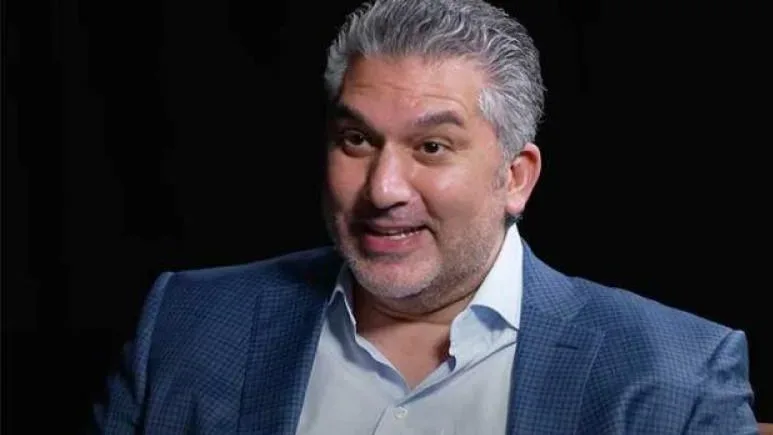
WWE President Nick Khan has offered a straightforward explanation of how the company approaches ticket pricing at opposite ends of the arena.
Speaking on an episode of The Deal with Alex Rodriguez and Jason Kelly recorded during Bloomberg’s Screetime conference, Khan discussed the balance WWE seeks between premium inventory and more affordable seating. His comments centered on P1 tickets — generally the most expensive seats available for an event — and upper-bowl seats, which are often viewed as the more accessible part of an arena ticket map.
Khan made clear that WWE wants to maximize the value of its top-tier inventory.
“So how we look at it at WWE is the P1 tickets, the most expensive tickets, we wanna jack those up as high as possible. So for the A-Rods of the world who can afford it, no problem. For the upper bowl, which you need to watch for, you wanna say, ‘Hey, we wanna price it family-friendly,’ but if you price it too family-friendly, they all go to third-party brokers. That’s how we do it.”
For more background on this topic, read Kieran Culkin Shows Support for WWE Champion Sami Zayn on The Tonight Show.
The remarks provide a concise look at a central issue facing WWE and the broader live-event industry: how to charge the highest possible amount for premium experiences while still ensuring that a meaningful number of tickets remain within reach for fans who are not shopping at the top of the market.
Premium Seats Carry a Different Goal
Khan’s description of P1 ticket pricing leaves little doubt about WWE’s objective for its most desirable seats. Those tickets are positioned for customers who are willing and able to pay a significant premium for location, exclusivity, convenience, or the overall event experience.
At major WWE events, the value of those seats can be tied to several factors: proximity to the ring, demand for the show, the size of the venue, the market hosting the event, and the added appeal of a special attraction. A Premium Live Event with a major championship match, a marquee return, or an especially strong card can naturally create increased competition for the most limited and visible seats in the building.
From WWE’s perspective, premium inventory is finite. There are only so many ringside and lower-level seats that can be classified among the best available options. Khan’s comments indicate that WWE sees those seats as an opportunity to capture as much of the demand as possible directly, rather than leaving a large gap between the original price and the amount a buyer may later pay through resale.
That does not mean every fan is expected to pursue a P1 ticket. In fact, Khan explicitly separated the high-end buyer from the audience WWE hopes to accommodate in other areas of an arena. The company’s ticketing strategy, as he described it, is not built around one uniform price level. It is designed around distinct segments of the audience.
The Upper-Bowl Balancing Act
The more complicated part of Khan’s answer concerned upper-bowl seating. He said WWE wants those tickets to be “family-friendly,” an acknowledgement that many fans attend WWE events as parents, children, groups of friends, or households working within a defined entertainment budget.
Upper-bowl tickets can be important to the atmosphere of a televised WWE event as well as its business model. A full arena creates a stronger presentation for performers and viewers alike, while an affordable entry point gives fans an opportunity to be in the building even if a floor or lower-bowl purchase is not realistic.
However, Khan also identified the risk in pricing those seats too low. If the initial price is significantly below actual demand, third-party brokers may purchase inventory and attempt to resell it at a higher figure. In that scenario, the original buyer may not be the fan WWE intended to serve, while the financial upside moves away from the promotion and toward the secondary market.
That tension has become familiar across sports, concerts, and entertainment events. Companies can set an appealing initial price, only to see tickets quickly become unavailable through primary channels and reappear elsewhere at a higher cost. Khan’s comments suggest WWE is trying to avoid an outcome where affordability on paper simply turns into resale inventory in practice.
In other words, WWE’s goal is not merely to put a low number next to an upper-bowl seat. The company must also consider whether that number gives genuine fans a reasonable opportunity to complete a purchase before brokers enter the picture.
Demand, Resale, and Direct Revenue
Khan’s answer frames WWE’s pricing decisions as a demand-management issue as much as a revenue issue. On premium tickets, the company is plainly looking to meet the market at the highest level possible. On upper-bowl tickets, WWE is attempting to find a figure that remains approachable but is not so far beneath demand that it creates an easy resale opportunity.
That approach reflects the modern reality of major wrestling events. WWE has increasingly presented its biggest shows as large-scale destination events, with premium seating and enhanced experiences carrying considerable appeal. At the same time, WWE depends on broad audience participation. Its live events are not built solely for corporate guests or high-spending customers; the company also needs ticket options for longtime fans, families, and local audiences who want to experience the product in person.
The distinction matters because a WWE card can draw several different types of consumers to the same building. One buyer may want the closest possible seat and be comfortable paying accordingly. Another may prioritize bringing multiple family members to the show. Another may simply be looking for the least expensive way to attend. A single ticket map has to account for all of those customers.
There is also no indication in Khan’s remarks that WWE views “family-friendly” as synonymous with a fixed universal price. The cost of attending can vary based on venue, market, event type, demand, and available inventory. His point was instead about the principle of maintaining an accessible portion of the building while guarding against a pricing structure that unintentionally benefits brokers more than fans.
What It Means for WWE Fans
For fans, Khan’s explanation offers a clearer sense of why ticket prices can differ sharply throughout the same arena. The highest-priced seats are intentionally being positioned to command the greatest value possible. Upper-bowl seats are being considered through a different lens, but WWE is still seeking to price them in a way that reflects demand and discourages immediate resale activity.
That may not remove frustration when a desired event is expensive or when popular inventory disappears quickly. Still, it identifies the business calculation behind the pricing structure. WWE wants its premium seats to generate premium revenue, while its more economical sections must be affordable enough to attract families without becoming an obvious target for third-party brokers.
The comments also underline why fans may find it useful to monitor official onsale periods and available seating directly rather than assuming lower-priced tickets will remain available indefinitely. When demand is strong, the balance Khan described can be difficult to maintain, particularly for major stadium or arena events with broad national interest.
Survivor Series: WarGames Is Next on WWE’s PLE Calendar
WWE’s next Premium Live Event is Survivor Series: WarGames, scheduled for November 28 at Daikin Park in Houston, Texas. The event will be another prominent test of the live-event demand that Khan discussed, with Survivor Series traditionally standing among WWE’s most significant annual shows.
WarGames matches have become a defining attraction of the Survivor Series brand in recent years, adding to the event’s identity and helping distinguish it from WWE’s other Premium Live Events. A show of that profile is also the kind of event where the gap between premium demand and value-oriented seating can be especially visible.
Khan’s comments did not announce new ticket prices or specific changes for Survivor Series: WarGames. Rather, they laid out the company’s broader philosophy: maximize the top of the market, preserve a family-conscious option in the upper bowl, and avoid setting prices so low that brokers are positioned to profit from the difference.
As WWE continues to stage major events in prominent venues, that balance will remain a key part of its live-event strategy. The company is seeking to serve multiple levels of demand in the same building — from fans pursuing the closest seats possible to families looking for a manageable night out — while keeping more of the ticket value within WWE’s own primary sales operation.

Darryl Polo
Darryl Polo is a passionate wrestling fan covering WWE, AEW, TNA and beyond. He loves great rivalries, breakout stars and the moments that keep fans talking long after the bell. How we work.