
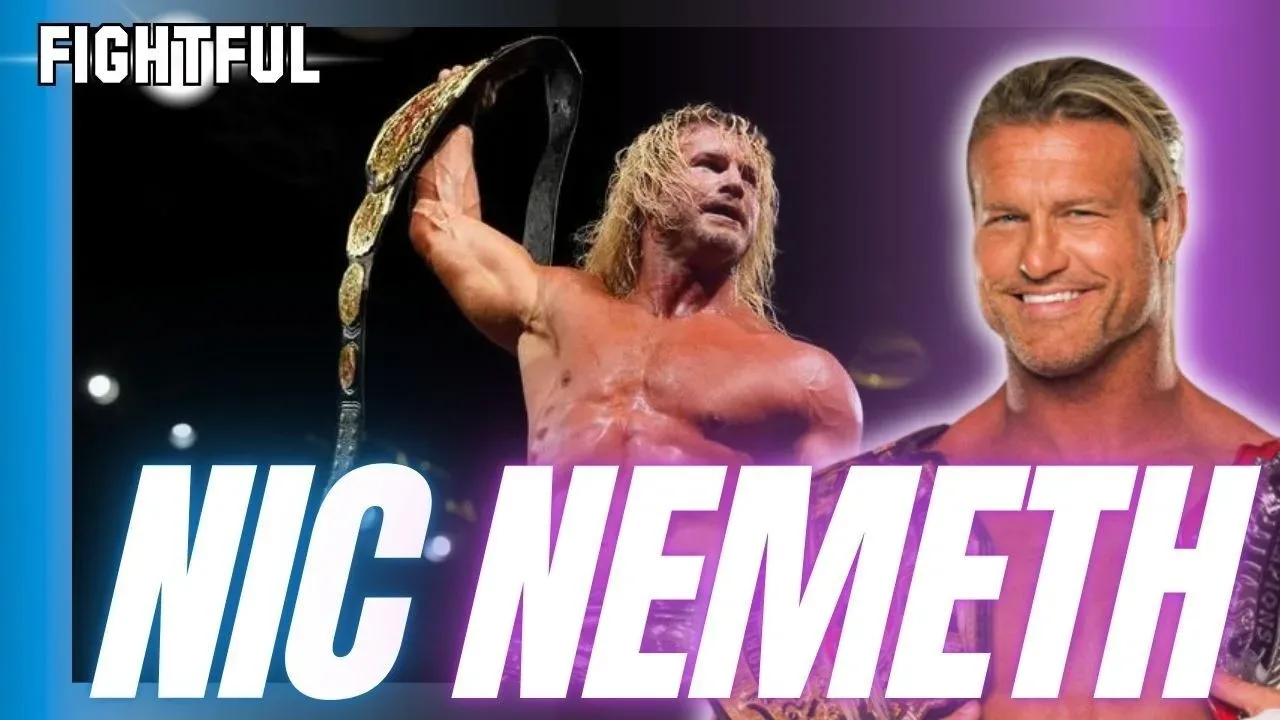
Nic Nemeth sees the TNA World Championship as more than a prize to be carried from one television taping or pay-per-view to the next. As he continues his second reign with the title, Nemeth has made clear that he views the championship as a responsibility—one that can occasionally extend beyond the usual TNA schedule when the right opportunity presents itself.
Nemeth regained the TNA World Championship at Slammiversary, where he defeated Mike Santana and ended Santana’s six-month run as champion. The victory placed Nemeth back at the top of the promotion, but he has not limited his role as titleholder to appearances exclusively under the TNA banner. In August, Nemeth defended the championship at two separate Adrenaline Championship Wrestling events, a move he believes should remain selective rather than becoming routine.
For Nemeth, the possibility of defending the title outside of TNA works best when it feels significant. He wants the bulk of the championship’s defenses to serve TNA’s own television, events, and audience, while still recognizing that a carefully chosen appearance elsewhere can be valuable for both the belt and the company it represents.
Keeping outside title defenses meaningful
Nemeth explained that an outside defense is not something he expects to happen constantly. Instead, he described it as an option that may come together through familiarity with a person or promotion, or through a conversation with TNA leadership. The important thing, in his view, is that the opportunity has a reason behind it and does not make the title feel overly available.
For more background on this topic, read Nic Nemeth Says His Best In-Ring Work Has Come After 40 as Bound For Glory Nears.
“Once in a great while, if I know the person or the company or even Carlos was like, ‘Hey, do you want to do something special? Do it.’ ‘Hey, cool.’”
He praised the accessibility of TNA’s decision-makers, saying there is room for a genuine exchange of ideas about creative direction, matches, and potential appearances. Nemeth specifically pointed to the ability to reach out and receive consideration rather than having an idea dismissed immediately. He characterized that openness as a major positive within TNA’s current environment.
“You can text anybody any day or night and they won’t go, ‘What are you stupid?’ They won’t do that. They’ll just go, ‘Oh, that’s an interesting idea. What about this?’ You have this back and forth, and when it comes to creative plans, match plans, ideas, they are there for it.”
That collaborative process does not mean Nemeth wants to take the championship everywhere. He stressed that TNA defenses should remain the priority. A title match on Impact can help produce a strong number for the program, while a match built for a major event such as Bound for Glory can help attract fans who may be discovering a standout wrestler for the first time.
Nemeth used Leon as an example of the kind of response TNA wants to create, saying the company wants viewers and live fans to come away thinking, “Man, Leon’s friggin’ awesome.” The comment reflects the balance he is looking for: the TNA World Championship should elevate the company’s own roster and programming first, but the occasional external defense can bring a different kind of attention to the belt.
“It doesn’t happen often because I want it to be special and I want most of the TNA defenses to be getting a number for Impact or getting some butts in seats for Bound for Glory,” Nemeth said. “But getting the option to put that title up sometimes is pretty damn cool too, because there’s a responsibility that you have as champ.”
A champion’s role beyond the ring
Nemeth’s comments frame the TNA World Championship as an assignment that goes beyond winning matches. The champion is expected to be a public representative, someone who can handle media obligations, travel, and the pressure that comes with taking the company’s top prize into a different setting.
He referenced the long-standing stories surrounding past traveling champions, joking about an era when a wrestler might have needed to put down a major deposit before being entrusted with a championship belt. Nemeth was not suggesting that such a system is in place today, but he used the comparison to underline a familiar principle: a promotion must trust the wrestler carrying its most important title.
“It’s not the old NWA days where you gotta put down a $50,000 deposit to carry the strap around, but it’s something along the lines, ‘I’m responsible,’” Nemeth said.
While he playfully questioned whether he should be called mature, Nemeth said he is at a stage in his career where TNA can depend on him in situations that demand professionalism. That includes promotional work, international travel, and defending the title in unfamiliar environments. His confidence also comes from his background as a shooter, which he jokingly cited as an added layer of security if anyone were inclined to test him.
“I feel like I’m the mature adult—which makes no sense, because I’m not mature—but in the business to where you can trust me to do PR, to fly to another country, to put the title on the line, to fight in some other country that you never heard of and come out of there with that thing,” he said.
The idea is not merely that Nemeth can physically defend the championship. It is that he understands the symbolic weight of carrying it. Every appearance involving the TNA World Title is, in some capacity, an advertisement for TNA. That puts added importance on the setting, the opponent, the presentation, and the champion himself.
Nemeth believes his best work has come after 40
Nemeth also spoke with considerable conviction about where he stands in his career. Having worked for roughly three decades, he argued that he has maintained a rare consistency as a performer and believes his work has continued to improve with experience.
His assessment included a blunt response to anyone who might reduce his prior WWE tenure to wins and losses. Nemeth acknowledged that some viewers may point to the times he lost, but he argued that his longevity and value as a performer were evident in the fact that he remained a well-compensated part of the company for so long.
“Whether you want to pretend that I was bad at wrestling because I lost all the time in WWE, the reason they paid me a shitload of money to be there and stay is because I’m awesome and I’ve only gotten better,” Nemeth said.
More notably, Nemeth identified the stretch from age 40 through 46 as the period in which he has produced his strongest work. Rather than viewing age as a limitation, he described it as a time when accumulated experience, confidence, and a willingness to evaluate himself honestly have helped him sharpen his performance.
He said that, every couple of years, he will revisit his older work and recognize both what he did well and the aspects that now feel dated or uncomfortable. That self-criticism is part of why he believes he has continued progressing. Nemeth does not see his past accomplishments as a reason to coast; he sees them as a foundation for becoming better.
“I think 40 to 46 age-wise is where I’ve done my best work,” Nemeth said. “Every year or two I look back and go, ‘Okay I’ve gotten a little bit better, but I’m much better now,’ and I feel great. I look great. I back it up.”
What comes next for the TNA World Champion
With the TNA World Championship once again around his waist, Nemeth believes he has the experience and credibility to be a central representative for the promotion. He called the responsibility of being champion “absolutely awesome,” and he is eager to continue defending the title in more places around the world.
That does not necessarily mean every potential appearance will result in an outside title match. Nemeth’s own comments make clear that he wants such defenses to retain their special quality. TNA programming and major TNA events remain essential to the championship’s direction. But when a fitting opportunity emerges, Nemeth is prepared to bring the title into a new venue and put its prestige on the line.
For a wrestler who considers this stage of his career his best, the current reign provides a platform that aligns with his confidence. Nemeth is not presenting himself as a champion simply holding a belt. He is presenting himself as someone trusted to carry TNA’s top championship, speak for the company, travel with it, and defend it wherever the right occasion calls for it.
That responsibility, Nemeth believes, is precisely what makes the TNA World Championship worth taking beyond TNA from time to time.

Darryl Polo
Darryl Polo is a passionate wrestling fan covering WWE, AEW, TNA and beyond. He loves great rivalries, breakout stars and the moments that keep fans talking long after the bell. How we work.