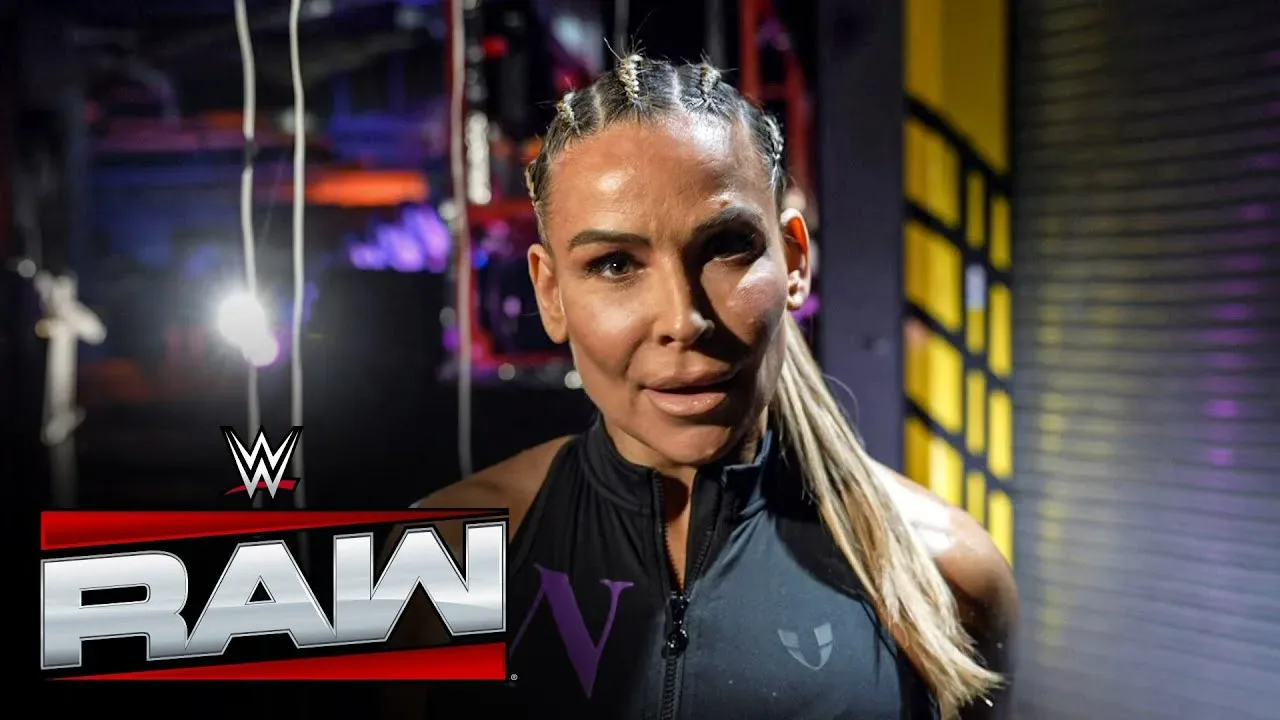
Nattie has addressed a recurring comparison surrounding her more recent WWE presentation, pushing back on the idea that her character shift is an effort to imitate Ronda Rousey.
After spending roughly 18 years prominently identified on WWE programming as Natalya, the veteran has increasingly used the name Nattie while presenting a tougher, more abrasive edge in and outside the company. The change has included a stiffer-looking approach to her offense and an increased emphasis on technical grappling, elements that have prompted some fans to compare the work to Rousey’s WWE run.
Nattie made clear that she has no issue with Rousey or the work Rousey did in WWE. However, she does not view the current Nattie character as an MMA imitation. Instead, she sees it as an evolving extension of herself and a meaningful departure from a presentation audiences had known for nearly two decades.
“It’s not like I’m trying to reenact” an MMA character, Nattie said, addressing the Rousey comparisons. “I love Ronda,” she added, while emphasizing that her own character is “still evolving and growing.”
For more background on this topic, read Ric Flair Denies WWE Return Rumors, Reaffirms Loyalty to AEW and Tony Khan.
A Distinct Change After Years as Natalya
The significance of Nattie’s comments lies in the length of her WWE career and the familiarity of the Natalya name. A performer who has been associated with one identity for that long faces a different challenge than someone debuting with a new character. The audience already has an established understanding of the performer’s mannerisms, style, history and place on the roster.
For Nattie, the shift is therefore not simply a shortened name or a cosmetic alteration. It is an attempt to communicate a different attitude and a different competitive energy while retaining the technical foundation that has long been central to her in-ring work.
She recalled a backstage conversation with Michael Hayes in which he stressed the importance of making the reason for the transition clear to viewers. Hayes’ question, as Nattie described it, centered on why someone known as Natalya for approximately 18 years was now appearing as Nattie. That is the key question attached to any reinvention from an established wrestler: the audience needs to understand not only that something has changed, but also why it changed.
Nattie said she hopes to have a chance to explain the transformation more fully on WWE programming in the future. At present, her remarks offer the clearest framing of the direction: this is not intended to be a replica of another wrestler’s act, and it should not be treated as a finished product.
Why the Rousey Comparisons Have Emerged
The comparisons to Rousey are understandable on a surface level. Rousey entered WWE with a legitimate combat-sports background and brought an MMA-adjacent intensity to her matches and persona. Her presentation placed substantial value on forceful strikes, throws, submissions and the sense that her opponents were facing a dangerous athlete rather than a conventional sports-entertainment character.
Nattie’s current work has drawn attention for being grittier and for leaning further into physicality and technical grappling. When a wrestler changes their tempo, their facial expressions, their demeanor and the apparent force behind their offense, fans will naturally search for reference points. Rousey is one of the most recognizable recent examples of a WWE performer whose identity was closely connected to combat-sports credibility.
But Nattie’s response draws an important line between shared influences or stylistic overlap and direct imitation. WWE performers regularly borrow from broad traditions of wrestling, combat sports and personal experience. Technical holds, sharper strikes and a more serious demeanor are not exclusive to any one wrestler. In Nattie’s case, those elements also fit a veteran competitor with a long-established background in technical wrestling.
Her comments do not dismiss the comparisons angrily, nor do they frame Rousey as a negative point of reference. Nattie specifically praised Rousey’s WWE work. The point is that admiration does not equal duplication. Nattie is asking viewers to judge the character on its own development rather than assume every harder-edged choice is an attempt to reproduce Rousey’s presentation.
An Evolving Character Rather Than a Completed Reinvention
The phrase “evolving and growing” is especially notable because it leaves room for the Nattie character to change further. Wrestling personas are often judged immediately, particularly when an established name introduces a new wrinkle. Yet Nattie’s framing suggests this is a process rather than a sudden, fully explained reset.
That approach can be especially useful for a performer whose history is so well known. Rather than pretending the Natalya identity never existed, an evolving Nattie character can build from the qualities audiences already recognize: ring experience, technical ability, resilience and a competitive pedigree. The newer edge then becomes a progression, not a rejection of everything that came before it.
There is also a practical storytelling element to that distinction. A dramatic transformation can be effective, but it requires a clear narrative explanation and consistent television follow-through. Nattie indicated that she would like to provide more of that explanation within WWE programming. Until that happens, her in-ring choices and overall demeanor are doing much of the work of defining the character.
The continued use of the character outside WWE also gives the presentation room to develop in different settings. Nattie has worked under the grittier version of the persona both in WWE and through independent appearances over the past year. That wider use reinforces that this is not being described as a one-off adjustment limited to a single match or isolated angle.
The Value of Reinvention for a WWE Veteran
For a wrestler with Nattie’s tenure, reinvention can be as much about creative motivation as it is about audience perception. Long careers create a deep connection with fans, but they can also make it difficult for viewers to separate a performer from the version they first came to know. A change in name, tone and wrestling approach creates an opportunity to reveal another side of an established talent.
That does not mean the change needs to discard a performer’s past. In fact, the strongest veteran reinventions often acknowledge that history. The audience understands the experience behind the new presentation, and the shift works because it feels like a response to years of competition rather than an unrelated role being placed on the wrestler.
Nattie’s comments fit that model. She is not claiming to be someone from a different discipline or attempting to present an invented combat-sports resume. She is instead distinguishing her current character from an MMA-based portrayal while maintaining that it is growing into its own identity.
The desire for a future on-screen explanation is also significant. Wrestling fans frequently invest more deeply in character changes when the performer is allowed to articulate their motivation. A promo, interview segment or story-driven confrontation can give audiences a direct answer to why a familiar name has adopted a new attitude. Nattie has already identified that need in her discussion with Hayes, and she has made clear that she wants the WWE audience to receive that context.
What Comes Next for Nattie
No specific WWE storyline or date for a fuller explanation of Nattie’s character shift has been announced. Her remarks should therefore be read as an insight into her current creative thinking rather than confirmation of an imminent angle.
What is clear is that she does not consider the process complete. The Nattie presentation is still being shaped, and she wants the distinction between a personal evolution and a Ronda Rousey imitation to be understood. The name change, grittier demeanor and more forceful technical style are all parts of that broader effort.
For now, the Rousey comparison remains a point of fan discussion rather than a label Nattie accepts. She has expressed respect for Rousey, while firmly maintaining that the two presentations should not be confused. Nattie’s focus is on developing a character that reflects her own direction after nearly two decades as Natalya, with more explanation potentially still to come on WWE television.

Darryl Polo
Darryl Polo is a passionate wrestling fan covering WWE, AEW, TNA and beyond. He loves great rivalries, breakout stars and the moments that keep fans talking long after the bell. How we work.