
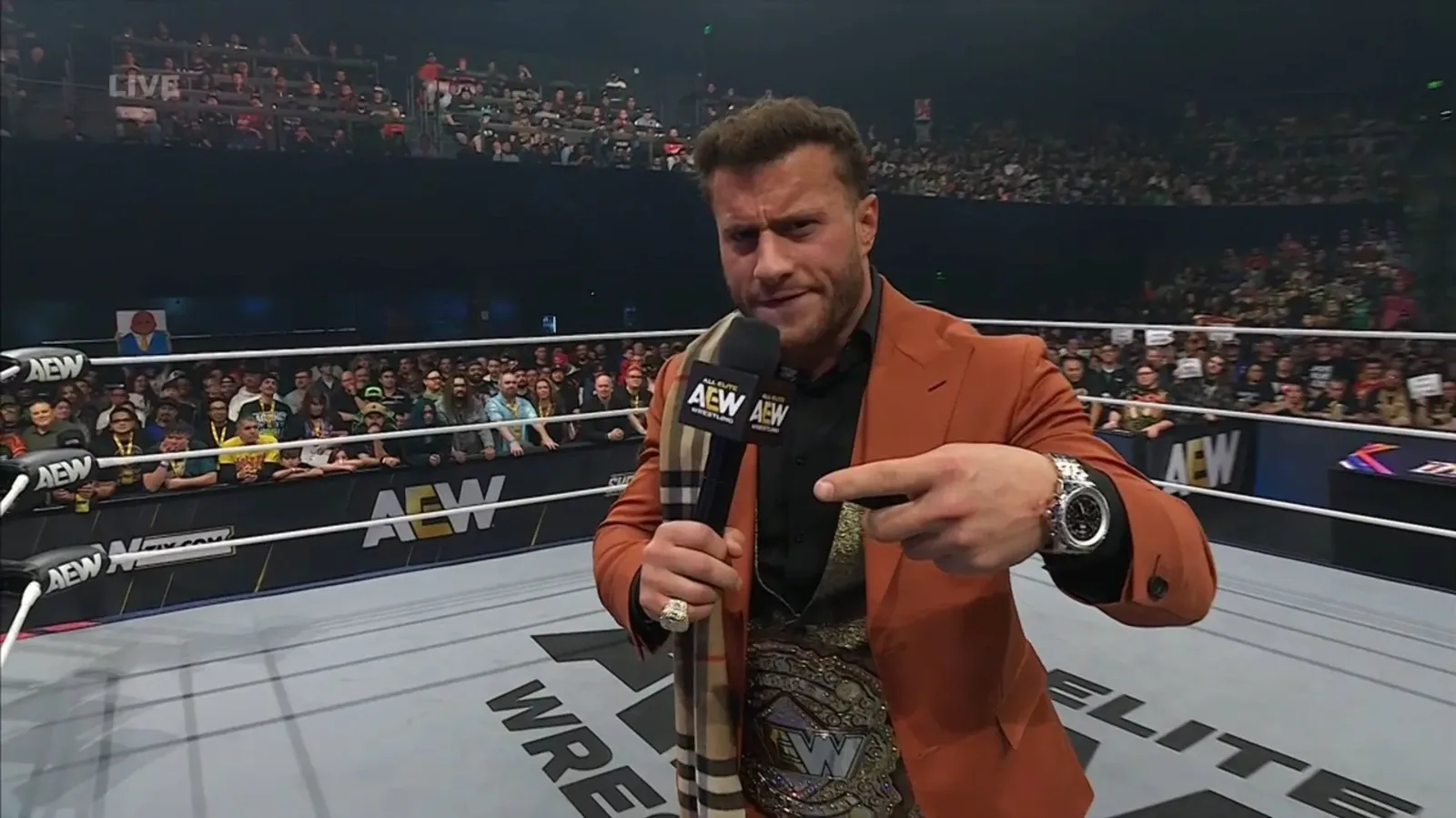
MJF called on wrestling fans to stop attacking Oba Femi in a pair of November 28, 2026, social media posts about the death of a young wrestler. His first message asked fans to show respect for Reed and Reed’s family rather than turn the death into a fight between rival fan bases. In a follow-up, MJF addressed the people targeting Femi directly: “He’s a human being. Grow up.”
The first post was about the tenor of the conversation. “Can we not make another young wrestler dying a tribalistic nightmare?” MJF wrote. “Can we respect the person and their family?” He ended the post with a profanity directed at the people turning the discussion into the kind of dispute he was condemning. The follow-up brought the focus to Femi and to what wrestlers take on whenever they step into the ring.
MJF did not repeat the attacks on Femi or lay out what prompted them. His posts did not establish a connection between Femi and the circumstances of Reed’s death. What they did make clear was who MJF was addressing: the people attacking Femi, not Femi himself. The distinction matters in a discussion where seeing a wrestler’s name alongside news of a death can lead readers to draw conclusions the posts do not support.
View the referenced post on X
MJF says wrestlers share the fans’ love of the business
Before telling fans to back off Femi, MJF explained why he and his peers are willing to work in a profession they know can be dangerous. “Everytime we step in that ring we are doing it because we love professional wrestling and we want to pay that love forward,” he wrote. “We are fans just as much as you are. We do this knowing its extremely dangerous.”
For more background on this topic, read Chris Jericho Reveals Two Catchphrases That Never Caught On.
That was more than a reminder that wrestling carries physical risks. MJF was also pushing back on the idea that fans and performers are on opposite sides. He described wrestlers as people who love the same thing their audience does, then used that shared interest to make a point about how fans treat them. His defense of Femi did not depend on whether the people reading his post liked Femi as a performer or watched the same wrestling shows he did.
There is a difference between accepting the physical demands of wrestling and accepting whatever strangers choose to say about you. MJF’s follow-up put both ideas in the same post without confusing them. He spoke about the first in the collective voice, saying “we” when he described going into the ring. When he got to the second, he singled out a specific audience: those attacking Oba. His remark about danger was a description of the work, not an explanation for what happened to Reed.
Where wrestling debate stops being about wrestling
Professional wrestling gives fans plenty to disagree about. They can argue over who should win a title, whether a match delivered or how a promotion presents its talent. Those debates concern a product made for an audience that is invited to pick favorites and take sides. MJF’s use of “tribalistic” pointed to what happens when those habits carry over into a conversation that is no longer about the product. A wrestler’s death is not a result to celebrate or dispute, and it says nothing about whether one company or its fans are better than another.
Nor was MJF making a case against criticism of wrestling. Both posts dealt with a specific situation: the response to a death and the treatment of a performer being attacked in that conversation. Fans can have strong opinions about Femi’s work and still recognize that those opinions are irrelevant to whether he should be subjected to personal attacks. MJF did not ask his audience to become Femi fans. He asked them to treat Femi like a person regardless of where their loyalties lie.
That distinction also helps explain why it matters not to fill in details that MJF left out. His remarks do not say what the people targeting Femi alleged, how widespread the attacks were or whether Femi responded. Repeating speculation to explain the backlash would give it a wider audience without making the facts any clearer. MJF’s statement is news for what he actually said and whom he chose to defend, not for unverified claims that readers might infer from it.
Respect for Reed and his family was the starting point
The sharpest line of the follow-up was directed at Femi’s attackers, but MJF’s first request was about Reed and Reed’s loved ones. He asked whether fans could respect “the person and their family” before he named Femi at all. That order is worth noting: the defense of Femi was not a substitute for acknowledging the loss. It followed a plea to keep a death from being overshadowed by a familiar argument between people who watch wrestling.
Fans who want to talk about a wrestler’s death have ways to do so without turning another performer into a target. They can remember the person who died, express condolences or leave questions unanswered when the facts are not known. None of that requires defending a promotion, scoring a point against a rival fan base or circulating an accusation just because someone else posted it first. The practical consequence of MJF’s appeal is that fans can choose not only what they say, but also what they help spread.
MJF’s two messages ultimately asked for the same restraint in different terms. The first asked people to consider a grieving family before taking sides. The second asked them to consider the wrestler on the receiving end before posting an attack. Between the two, MJF spoke as a performer who sees himself as a fan, too. The love of wrestling he described was something he and his audience had in common, not a reason for either to treat someone else as a stand-in for a company or its supporters.
For all the anger in the first post, the follow-up ended with a plain statement rather than an argument about promotions or personalities. MJF did not need fans to agree about their favorite wrestlers to get his point. “He’s a human being,” he said of Femi. That was the reason he gave for leaving the attacks behind, and it fit the request he had already made on behalf of Reed and his family.

Darryl Polo
Darryl Polo is a passionate wrestling fan covering WWE, AEW, TNA and beyond. He loves great rivalries, breakout stars and the moments that keep fans talking long after the bell. How we work.