
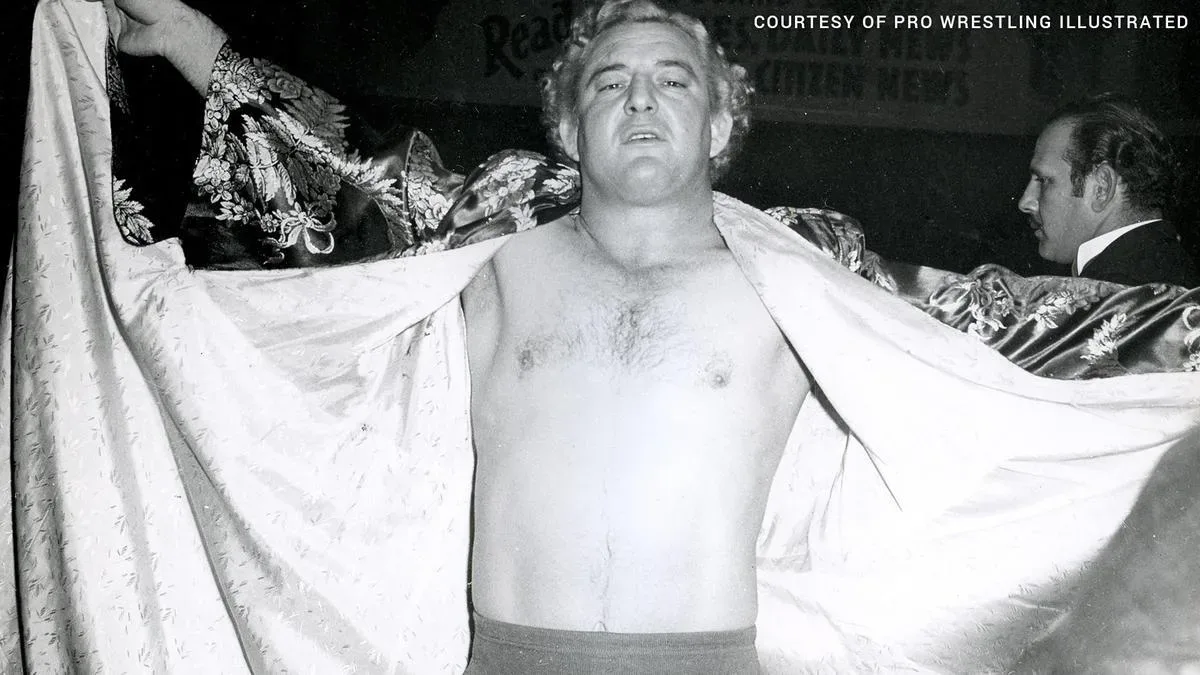
Chris Jericho thinks plenty of people know the name Gorgeous George without appreciating what it meant when the wrestler was at his peak. Jericho plays George in The Greatest, the Amazon Prime series about Muhammad Ali that premiered on November 4. He appears in the fourth episode, where George figures into the story of a young Cassius Clay. For Jericho, that part of the series offers a chance to show why one of wrestling’s biggest personalities mattered to a boxer who was still figuring out how far his own personality could take him.
Discussing the role in an interview, Jericho pointed to two measures of George’s reach: what Clay saw in him and what television viewers were willing to spend to watch him. One is the story of a young athlete recognizing something useful in an entertainer from another sport. The other is about a star who, in Jericho’s telling, was enough of an attraction to help persuade people to buy a television set. Both get at the distinction Jericho made between knowing George’s name today and understanding how big he was at the time.
What a young Cassius Clay saw in Gorgeous George
Jericho described Clay as an admirer of George who came to see that boxing ability alone might not get him everything he wanted. Clay was not looking to wrestle like George. He was looking at what George could do with an audience: make his personality part of the reason people wanted to see him perform. Jericho singled out George’s persona and charisma as qualities Clay could adapt to boxing rather than simply imitate.
“I think it’s one of those things that if you know anything about pop culture, you’ve heard the name Gorgeous George and you know of the guy, but I don’t think people understand just how influential he was for his time.”
For more background on this topic, read Yuki Kamifuku’s Final TJPW Match Set for December 26 at Korakuen Hall.
That influence is easier to see if the story starts with Clay rather than with the already famous Muhammad Ali. With the benefit of hindsight, Ali’s confidence and gift for holding an audience can seem like fully formed parts of who he was. Jericho is talking about an earlier stage, when Clay could watch another performer and recognize that getting people invested in a personality was a skill in its own right. George gave him an example of how that skill could work in front of a crowd.
There is a difference between borrowing a persona and borrowing an idea about how a persona works. The latter is what makes George’s place in the Ali story interesting. Clay did not need to make a boxing match resemble a wrestling match. What he could take from George was the understanding that the audience’s interest could begin well before the contest. The fighter could give people something to talk about other than who was likely to win, without making the result any less important once the fight began.
George’s value to a series about Ali, then, isn’t merely that he’s a recognizable name for wrestling fans. He gives the story a way to show Clay studying a performer outside his own field. Jericho’s account does not make George the sole explanation for the personality Ali became known for. It gives him a more specific place in that development: he was someone Clay admired who had already shown how much attention a performer could command by making his character inseparable from the event.
Jericho on George’s drawing power in the television era
Jericho’s argument about George’s fame extends beyond his influence on Clay. He pointed to the early 1950s, when television sets were becoming more widely available, and described George as the kind of performer who could make the purchase worthwhile for viewers. The distinction is an important one: Jericho wasn’t simply saying that television gave George a bigger audience. He was saying George himself gave some of that audience a reason to get a television in the first place.
“I think people also don’t realize how big of a star Gorgeous George was,” Jericho said.
That’s a different measure of drawing power than the one wrestling fans often use. A live gate tells you who was willing to pay to be in the building. Getting people to spend money on a set so they could see a wrestler, as Jericho described it, suggests that the performer had become part of a much broader change in how people watched entertainment. Jericho did not put a sales figure on that claim. His point was that George could be a reason to tune in even for people whose interest didn’t begin with the wrestling itself.
Television also makes the connection between George’s fame and Clay’s interest in him easier to understand. A viewer didn’t need to know much about wrestling to notice the attention George could hold. For a boxer considering how to stand out, the useful thing wasn’t necessarily any one line or gesture. It was the fact that the persona could reach people who might not otherwise have cared about the contest. The same quality Jericho believes made George such a television attraction was one a young Clay could see working in another setting.
Why a wrestler belongs in this part of Ali’s story
There’s a particular fit in having Jericho play George. A wrestler looking at the role can appreciate that getting people interested in a match and performing the match are related but distinct jobs. In discussing George, Jericho focused on the first of those jobs: the ability to give people a stake in seeing someone walk out in front of them. That helps explain why a figure from professional wrestling belongs in a series about a boxer without requiring the series to turn into a history of wrestling.
The fourth episode puts George in the story at a point when the scale of Ali’s eventual fame need not be taken for granted. Jericho’s comments ask viewers to make a similar adjustment with George. Rather than looking back at him as a historical name whose importance is already settled, consider how he might have looked to Clay at the time: someone who knew how to turn his presence into an attraction. That is the through line in Jericho’s assessment of the role. Gorgeous George mattered to a young boxer because he had already worked out how to make the public care who was stepping into the ring.

Darryl Polo
Darryl Polo is a passionate wrestling fan covering WWE, AEW, TNA and beyond. He loves great rivalries, breakout stars and the moments that keep fans talking long after the bell. How we work.