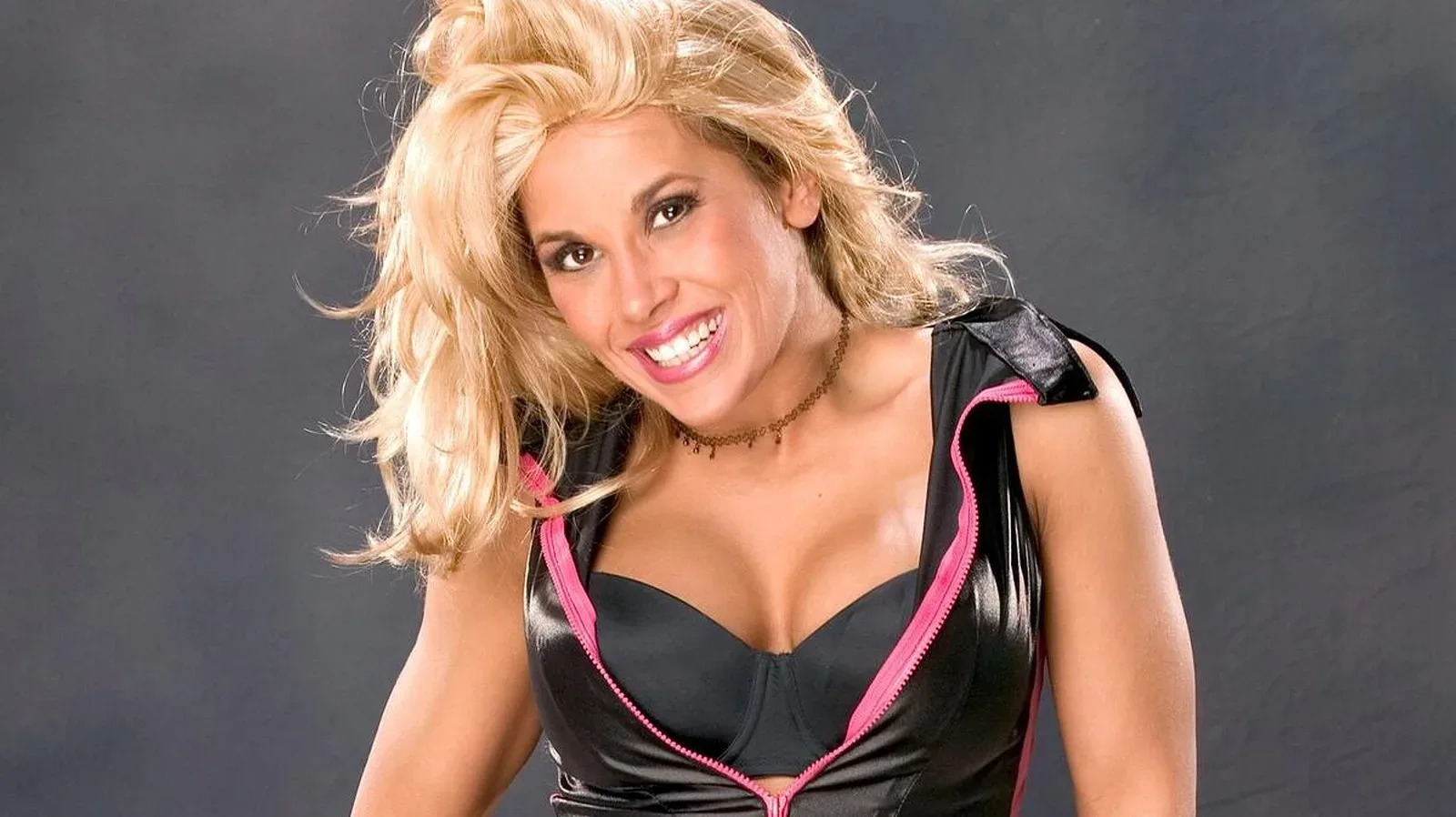
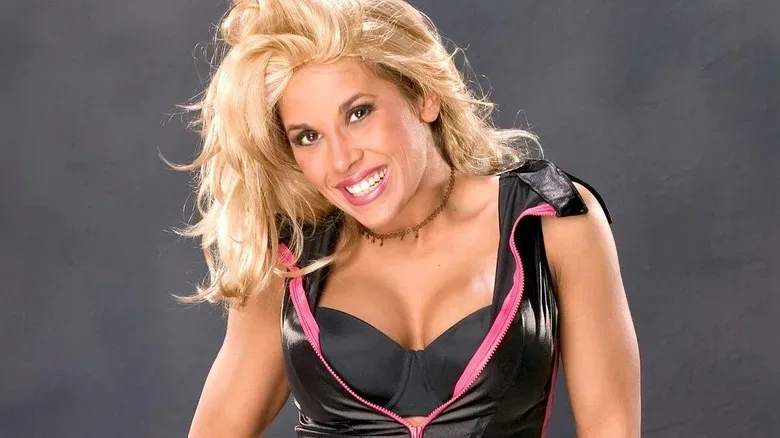
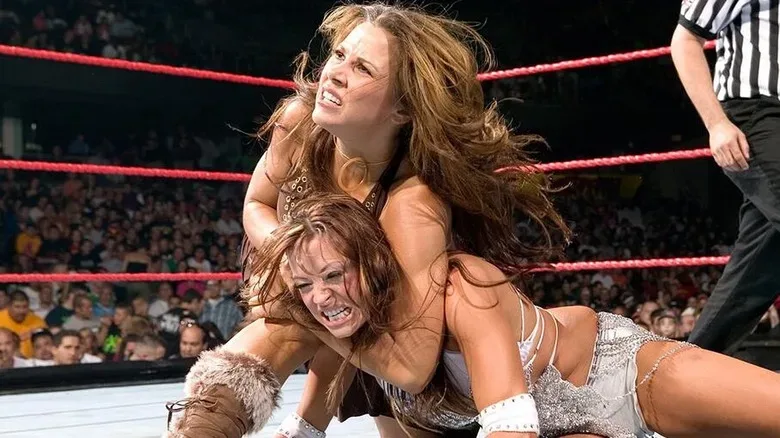
Mickie James’ arrival on WWE television remains one of the most memorable women’s division debuts of its era. Her initial presentation as an intensely devoted Trish Stratus fan quickly evolved from admiration into obsession, creating a storyline that gave James a distinct identity before she ever stepped fully into the ring as a challenger. The program ultimately helped establish James as a major player, but she has revealed that the road to that breakthrough came after a period in which she was seriously considering walking away from WWE.
Speaking with Wrestling Life Online, James reflected on the uncertainty she experienced while working in Ohio Valley Wrestling. She said she had been discussed for a main-roster promotion on multiple occasions, but the creative ideas presented to her did not feel like the right fit. Rather than simply waiting for another possible opportunity, James reached a point where she questioned whether WWE saw a place for her at all.
That internal struggle eventually led to the character concept that launched her WWE run: a superfan whose affection for Stratus became increasingly unsettling. James said she was responsible for pitching the core idea, drawing from pop-culture influences, real-life fan behavior she had observed, and performers who had made eccentric character work feel believable. What began as a desperate effort to find a path to television became an angle that remains closely associated with both James and Stratus.
A series of proposed call-ups that never felt right
Before the Trish Stratus storyline materialized, James said she had been lined up for possible call-ups five different times. One proposed direction would have introduced her under the name Vicki Adams as a manager for CM Punk. James recalled seeing that unused identity continue to surface on her Wikipedia page long after the idea was abandoned.
For more background on this topic, read Perry Saturn Details the Rapid Chain of Events Behind The Radicalz’ WWE Jump.
“Where does this Vicki Adams keep coming from on my Wikipedia? Can somebody delete that? I don’t know who she is?” James said on Wrestling Life Online.
The abandoned CM Punk concept was only one example of the uncertainty surrounding her status. James had entered WWE’s developmental system after already choosing professional wrestling as her career and making considerable personal sacrifices to pursue it. She had earned a position in OVW, watched peers pass through the territory and reach national television, and still found herself waiting for a defining opportunity.
For a wrestler in developmental, the wait can be difficult even when there is a clear plan. In James’ case, the repeated suggestion of call-ups without a direction she believed in created a deeper concern. She was not merely anxious about how long it was taking; she was increasingly unsure that the kind of performer WWE wanted in its women’s division was the kind of wrestler she was.
“I just had this real moment of like, maybe this isn’t the journey for me? Because I chose wrestling, and did all the sacrifices and finally got the job, and now I feel like I’m not who they’re looking for,” James recalled.
Questioning whether WWE wanted wrestlers
James described speaking with Tommy Dreamer when she was nearing a decision to quit. She said she had watched friends lose their jobs and did not have a clear backup plan if she left. At the same time, she felt the women receiving opportunities on the main roster were not necessarily being selected because of their wrestling backgrounds.
That observation weighed heavily on James. She had worked to broaden her presentation, taking acting and modeling classes in an attempt to become more of what was then often described as a WWE “Diva.” But the extra effort did not erase her feeling that her identity as a wrestler was not what the company was seeking. James said she wondered if she had committed herself to the wrong place and the wrong approach.
“They don’t want wrestlers, so I was like, ‘Maybe I’m in the wrong place, maybe I’m doing the wrong thing,’” James said.
Her concerns reflected a broader reality of that period in WWE’s women’s division. Athletic ability and ring experience could certainly lead to opportunities, but appearance, character presentation, and crossover appeal were also major priorities. James had the experience and personality to be a valuable performer, yet she believed she needed a concept that would demonstrate exactly how she could fit into WWE television rather than relying on a standard debut.
She went home and spoke at length with her mother. James noted that her mother was not always the biggest wrestling fan, but the conversation proved pivotal. Rather than encouraging her to leave, her mother persuaded her that quitting at that stage would be a serious mistake. The discussion gave James the push to move from frustration into action.
Turning frustration into a character pitch
In the days after deciding not to walk away, James began developing the character that would become her WWE introduction. The concept was not built around a conventional rookie challenging a champion. Instead, it centered on a fan who idolized an established star so intensely that the admiration could no longer be viewed as harmless.
James said the initial inspiration included the film Single White Female, a psychological thriller known for its themes of fixation and identity. She also cited Sensational Sherry as an influence, pointing toward the kind of heightened personality work that had long been part of professional wrestling. James additionally mentioned the Selena biopic starring Jennifer Lopez, which portrayed the story of Selena Quintanilla-Pérez and her murder by a fan.
While those references helped shape the tone, James said the “superfan” aspect also came from fans she had encountered in her own life. That detail gave the character an important layer. She was not playing a villain who arrived with obvious malicious intent; she was playing someone who believed her devotion was sincere and justified, even as it crossed every reasonable boundary.
“I came up with this kind of superfan, and it was based off of fans that I had seen in my own life,” James explained on Wrestling Life Online.
The original plan, James said, was for Lita to be the object of the superfan’s fixation. She also recalled that the storyline was envisioned as an 18-week program. Those details illustrate how much thought was put into the premise before the version that aired took shape. In the end, Stratus became the central figure in the angle, and the pairing proved to be especially effective.
Why Trish Stratus was central to the angle’s success
James was complimentary of Stratus when discussing the storyline and credited her willingness to embrace the material. The angle required both women to commit fully to a delicate balance: James needed to make her character strange, funny, unnerving, and eventually threatening without losing the audience’s interest, while Stratus had to react in a way that made the escalating behavior feel meaningful.
Stratus was already one of the defining figures in WWE’s women’s division, making her an ideal target for a character driven by admiration. Her established status gave the superfan gimmick an immediate logic. James’ character did not simply choose a random wrestler to obsess over; she was fixated on a star whose success, appearance, and reputation made her a natural object of fandom.
The story also gave James room to reveal different dimensions over time. At first, she could appear eager and supportive. Later, the same qualities became possessive and threatening. That gradual progression was crucial because it allowed viewers to follow the transformation rather than being asked to accept an extreme character without context.
For James, the payoff was much larger than a single program. The storyline introduced her to the WWE audience with a memorable personality and a clear connection to one of the company’s top stars. It established that she could handle character-driven television, not just wrestling matches, at a time when that versatility was particularly important for women seeking a sustained role on the main roster.
From uncertainty to a last-minute debut
Once James had developed the pitch, she took it to Michael Hayes. James said Hayes encouraged her to speak directly with Vince McMahon. Even after presenting the idea, however, she did not immediately receive reassurance that it had been accepted. She recalled a lengthy stretch of silence that left her fearing she could be included in the next round of cuts rather than being prepared for a debut.
“I’m like, ‘Oh man, I’m surely on the next cuts,’” James recalled.
James said she did not learn the full details of her WWE debut until the night of Raw. That last-minute uncertainty makes the eventual impact of the angle even more notable. A performer who had been close to concluding that WWE did not want what she offered arrived on the flagship program with a role tailored to her strengths.
James’ recollection is a reminder that memorable wrestling characters do not always emerge from a smooth, carefully mapped corporate plan. Sometimes they come from a performer recognizing a gap, developing a solution, and finding the conviction to advocate for it at the moment when leaving might seem easier. Her storyline with Stratus became a cornerstone of her WWE legacy, but its origins were rooted in a far less certain period.
Instead of accepting the idea that she did not fit, James found a way to show exactly why she did. The superfan character opened the door, the program with Stratus made the audience pay attention, and James went on to become one of the most accomplished women of her generation.
In pictures

Darryl Polo
Darryl Polo is a passionate wrestling fan covering WWE, AEW, TNA and beyond. He loves great rivalries, breakout stars and the moments that keep fans talking long after the bell. How we work.