
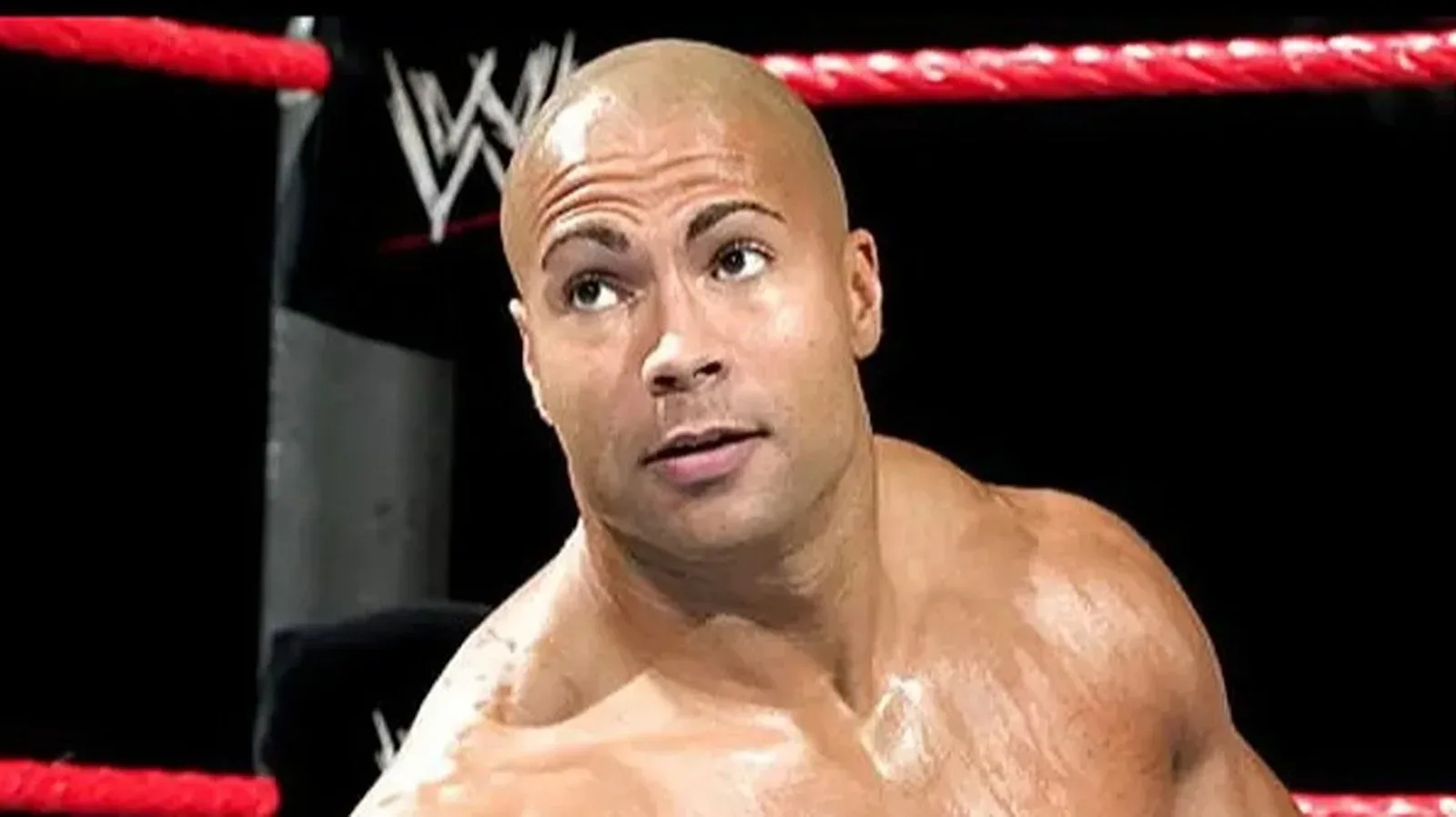
WWE has returned to the reality-development format with WWE LFG, a series built around prospects pursuing the chance to become WWE Superstars. For Maven Huffman, that premise naturally recalls Tough Enough, the competition that helped launch his own career in the company. But while he sees clear similarities between the two concepts, the former WWE star believes their approaches to developing talent are notably different.
Maven won the first season of Tough Enough alongside Nidia, entering WWE through a format that placed aspiring wrestlers in a high-pressure environment. In reflecting on WWE LFG on his YouTube channel, Maven said both shows begin with a familiar objective: taking WWE hopefuls and training them with the goal of producing future Superstars.
That shared mission, however, does not mean the experience is the same. Maven’s biggest takeaway from watching WWE LFG is that the program appears to create a different emotional environment for the people trying to earn their place.
“WWE takes WWE hopefuls, train them with hopes of turning them into Superstars,” Maven Huffman said. “If that sounds familiar, it’s because the WWE already did a show just like that: Tough Enough.”
For more background on this topic, read Trish Stratus Reflects on Rebuilding WWE’s Women’s Division After Chyna’s Exit.
Fear Was Central to the Tough Enough Experience
For Maven, the most important distinction is the atmosphere surrounding the competitors. He described the original Tough Enough as a program in which fear was intentionally part of the process. The recruits understood that the opportunity in front of them could disappear at any moment, and that uncertainty was meant to affect how they handled the training and competition.
“One monumental difference I’m noticing from LFG and Tough Enough is the atmosphere created,” Maven Huffman said. “When we were on Tough Enough, they wanted that element of fear within all of us. They wanted us to know what we were fighting for and fear that it could be taken away just like that!”
That is a significant observation from someone whose WWE journey began inside the format. A developmental competition can test performers in many ways: their athleticism, resilience, ability to absorb instruction, confidence in front of cameras, and readiness to perform under scrutiny. Maven’s recollection suggests that Tough Enough also used the possibility of losing everything as a key motivational force.
The underlying message to contestants was clear: the opening was valuable, limited, and never guaranteed. In that setting, the stress of competition was not simply a byproduct of the show. It was part of what the participants were expected to navigate.
By contrast, Maven sees WWE LFG as placing greater emphasis on allowing prospects to reveal who they are. He noted that the trainees seem to be encouraged to bring out their personalities and to be themselves, an approach he said he enjoys.
That distinction matters because personality is not separate from professional wrestling development. In-ring training remains essential, but WWE performers are also asked to connect with audiences, communicate a character, and stand apart within an increasingly crowded field of aspiring talent. Maven’s view is that LFG appears to leave more room for those traits to emerge rather than focusing primarily on the anxiety of potentially being eliminated.
WWE LFG’s Mentor Model Stands Apart
Maven also identified a major structural difference in how the talent is trained. During his season of Tough Enough, recruits worked with a collection of trainers: Al Snow, Taz, Jacqueline, and Tori. The group trained the contestants collectively rather than assigning each aspiring wrestler to one particular coach.
“There wasn’t one trainer for one talent,” Maven Huffman said.
That approach positioned the trainers as a shared instructional unit. Every participant could be evaluated and trained by the same core group, with each coach bringing a different background and perspective to the process. The contestants were being shaped within one overall system rather than working under an individual mentor’s guidance.
WWE LFG, in Maven’s view, operates differently through its pairing of a Superstar prospect with a Legend. Rather than merely being a presentation change, he believes that system creates a direct sense of responsibility for the coaches involved.
“I like how they’re assigning a Superstar to the Legends, and the reason I like it is because it’s giving the Legends responsibility,” Maven Huffman said. “They’re gonna take pride in what these trainees are learning, and they’re also gonna view it as failure if the trainees don’t perform the way they are instructed.”
Maven’s point centers on investment. If a Legend is connected directly to a particular prospect, that relationship can become more than a series of training sessions. The mentor has a reason to be personally engaged in the trainee’s progress, while the prospect has a clearly defined person to learn from and represent.
It also adds another dimension to the competition itself. The trainees are still trying to prove they belong in WWE, but the Legends have a stake in the outcome as well. Strong performances can reflect well on the mentor’s guidance. Conversely, a prospect struggling to execute lessons may be viewed by that mentor as a disappointment within the coaching relationship, not simply an individual setback for the participant.
Two Formats With the Same Goal
Despite the contrasts Maven outlined, he did not present WWE LFG and Tough Enough as unrelated ideas. Their common purpose remains evident. Both formats give wrestling hopefuls an opportunity to train in a WWE environment while attempting to demonstrate that they possess the qualities needed to advance.
The difference is in how each show frames the road to that goal. Maven remembers Tough Enough as an environment designed to make contestants feel the stakes in a constant, immediate way. The pressure came from knowing that their chance could be removed suddenly, making fear a defining part of the experience.
His assessment of WWE LFG is almost the reverse. The newer series may still be competitive and demanding, but Maven sees it as a setting that is more willing to nurture the identity of its trainees. Instead of treating pressure as the dominant feature, the program appears to give prospects room to display the individual personality that could ultimately make them memorable.
Neither model eliminates the demanding nature of the industry. A WWE hopeful still has to learn, perform, listen, adapt, and deliver under scrutiny. But Maven’s comments point to two separate philosophies about what brings the best out of emerging talent. One relies more heavily on the fear of loss. The other, as he reads it, leans more into mentorship and the confidence to be authentic.
Maven’s Perspective Carries Unique Weight
Maven’s comparison carries particular relevance because he is not looking at Tough Enough from the outside. He lived through the first season’s process and emerged as one of its winners. That experience makes his recollection of the show’s emotional climate especially meaningful, while also giving context to what he is noticing from WWE LFG.
His comments are not a suggestion that one series lacks standards or that the other failed to develop talent. Instead, they identify how the same broad ambition can be pursued through different methods. WWE can place prospects in a pressure-filled contest where the risk of losing the opportunity is front and center. It can also use a mentor-driven framework that asks Legends to take ownership of the prospects assigned to them.
For Maven, the latter element is especially appealing. He sees value in creating accountability for the mentors as well as the trainees. If the Legends take personal pride in their prospects’ development, the coaching relationship becomes more immediate and potentially more meaningful for everyone involved.
Ultimately, Maven’s view is that WWE LFG is not simply a modern reworking of Tough Enough. It may share the same basic purpose of identifying and training future WWE talent, but he sees a clear change in tone. Where Tough Enough made contestants acutely aware of how quickly their dream could be taken away, WWE LFG appears to put more focus on bringing out personality while pairing prospects with Legends who are invested in their growth.
That makes the two programs similar in destination, but very different in the path they ask aspiring WWE Superstars to take.
In pictures

Darryl Polo
Darryl Polo is a passionate wrestling fan covering WWE, AEW, TNA and beyond. He loves great rivalries, breakout stars and the moments that keep fans talking long after the bell. How we work.