
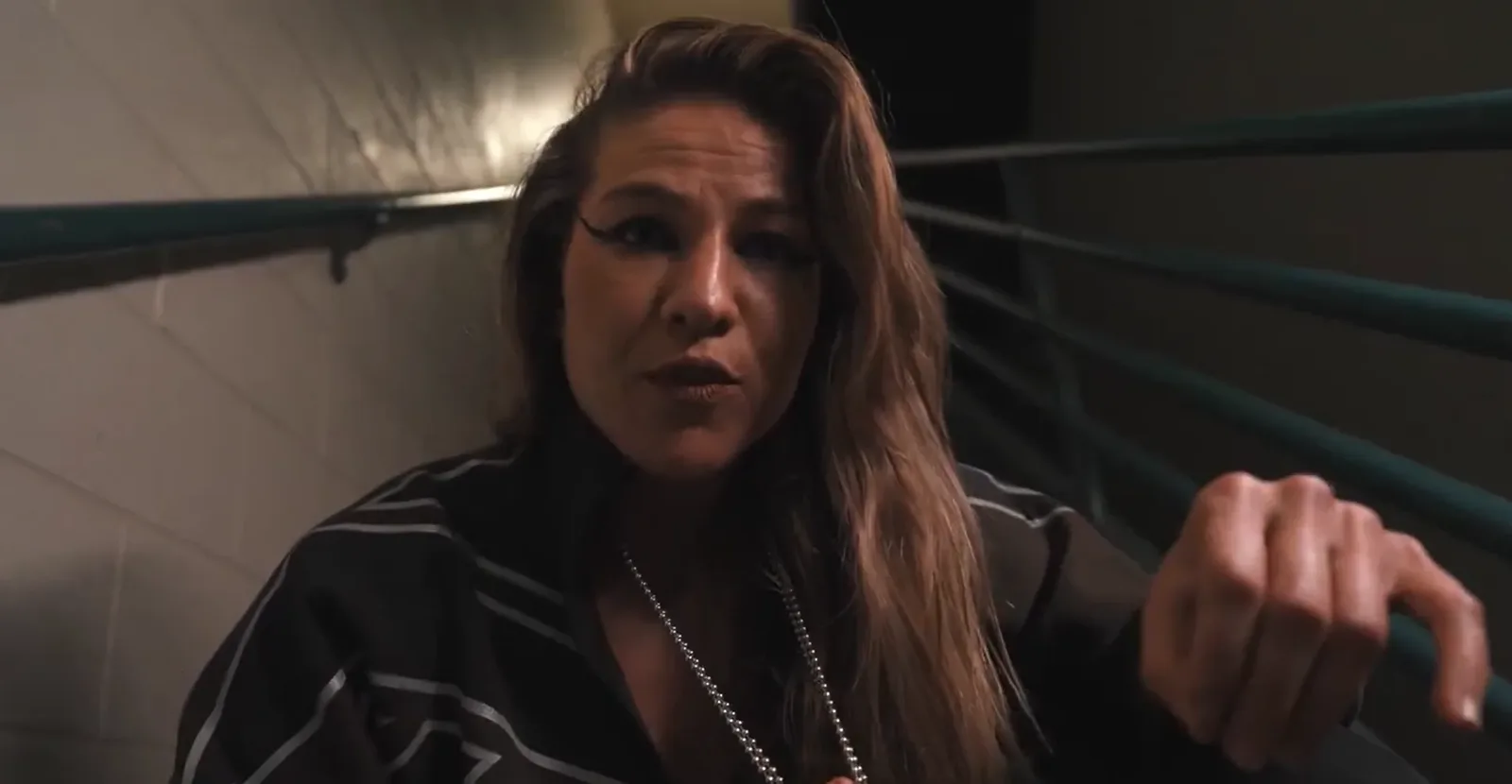
Marina Shafir has intensified her pursuit of Mercedes Moné, delivering a pointed message following AEW Collision that frames a potential meeting as a test of identity as much as competition.
The confrontation has developed quickly in the wake of WrestleDream. On the previous edition of AEW Dynamite, Shafir interrupted Moné while the champion was celebrating her successful title retention at the event. Shafir’s message in the ring was brief and deliberately provocative: she told Moné not to be a “pussy.”
In a digital exclusive released after AEW Collision, Shafir explained that the comment was meant to force Moné to pay attention. At the same time, she made clear that the challenge is not rooted in dismissing Moné’s accomplishments. Shafir said she has respect for the champion and views both women as performers who belong at the highest level.
View the referenced post on X
“Mercedes, we all know you’re not a pussy. I just needed to get your full attention. I actually have a lot of respect for you. You are in a league of your own, and as much as it might pain you to think or to even say, you know that I am too.”
For more background on this topic, read Jay White Declares The Last Outfit Is ‘The Cut’ in Warning to Jon Moxley and Death Riders.
That combination of respect and confrontation gives Shafir’s message a different tone than a simple attempt to antagonize a champion. She is not presenting Moné as unworthy of her position. Instead, Shafir is arguing that Moné has built her presentation around a very different kind of dominance, while Shafir’s confidence comes from the work she has put in without the same outward displays.
Shafir identified that contrast as the central distinction between them. Her comments took aim at what she sees as Moné’s need to project power through attention, affirmation and spectacle. Shafir, meanwhile, said she does not need those things to know what she brings to the ring.
“But that’s where the difference lies between you and me. I know. You need to swing your dominance in between your legs, and I don’t. I can’t even compliment myself. I don’t need bells and whistles. I don’t need affirmations. I don’t need a dance. I don’t need production. I just need the opportunity to work.”
The statement is a direct challenge to Moné’s public persona, but it is also an explanation of Shafir’s own approach. Shafir positioned herself as someone seeking an opportunity rather than a spotlight. In her view, the path to this moment has been shaped by sustained effort over the last three years, and the next step is not merely receiving recognition but proving herself against one of AEW’s most prominent champions.
That distinction matters because Shafir did not stop at saying she wants a title opportunity. She focused repeatedly on the idea of standing across the ring from Moné. Her objective, as she described it, is to show the audience who she is while also making Moné understand exactly what kind of opponent is calling her out.
“All of the work that I have been doing these last three years has gotten me here. Here. But there’s something else that I need. I need to stand across the ring from you and I want to show everyone exactly who I am. But most importantly, I need to show you.”
A Challenge Built on Contrast
Moné’s WrestleDream celebration gave Shafir a natural opening to enter the champion’s orbit. A champion celebrating a successful defense is usually emphasizing momentum, status and control. Shafir’s interruption was designed to disrupt that image immediately. By returning to the moment after Collision and explaining why she used such blunt language, Shafir ensured that her challenge would not be treated as a passing interruption.
Her message is built around contrast. Moné is being described by Shafir as someone who has a highly visible presence and who embraces the elements that accompany major championship success. Shafir does not deny that Moné is elite. In fact, she openly says Moné is “in a league of your own.” But Shafir also insists that she belongs in that discussion and that the differences in how they carry themselves should not be confused with a difference in capability.
For Shafir, the contrast is not simply about personality. It is about how each wrestler establishes credibility. Moné’s confidence is portrayed by Shafir as external and performative, tied to the production, presentation and acknowledgement around her. Shafir’s confidence is presented as internal. She says she does not need affirmation, a dance, bells and whistles, or production to validate herself. She wants the bell to ring and the chance to work.
That framing gives a potential match a clear emotional foundation. Shafir is not asking Moné to accept her as a peer based solely on her words. She wants to force that acknowledgement through competition. The emphasis on being face-to-face in the ring suggests that Shafir sees a match as the only meaningful way to settle the question she has raised.
Respect Does Not Reduce the Threat
It is notable that Shafir’s strongest comments were not solely insults. She gave Moné a measure of credit before explaining why she believes they are fundamentally different. That respect makes the challenge more pointed, not less. Shafir is not claiming that Moné has accomplished nothing or that the championship was obtained without merit. She is saying that Moné’s accomplishments should lead her to recognize Shafir as a serious threat.
Shafir’s line that she needed to get Moné’s “full attention” clarifies the intention behind her Dynamite interruption. The initial remark was provocative by design, but the longer statement after Collision suggests Shafir was seeking a response from someone she considers difficult to ignore. Moné had just retained her title at WrestleDream, and Shafir made the decision to confront her at a moment when the champion’s focus was on celebration.
Now, Shafir has followed that interruption with a more detailed explanation of what she wants. She wants a match. She wants Moné to be present for it. And she wants the encounter to reveal that her work over the past three years has prepared her for this level of competition.
The challenge also places the burden of response on Moné. Shafir has stated that she respects the champion’s ability and standing, while simultaneously arguing that Moné relies on elements Shafir does not need. Whether Moné responds through words, action, or by accepting a match, Shafir has established the terms of her argument: she believes the ring will reveal which version of dominance holds up when the presentation is stripped away.
What Comes Next for Moné and Shafir
No match between Mercedes Moné and Marina Shafir was announced in Shafir’s comments. The immediate facts are that Shafir interrupted Moné’s post-WrestleDream celebration on Dynamite and then used the AEW Collision digital exclusive to make her intentions unmistakable.
Shafir’s message makes clear that she is not satisfied with simply being noticed. She wants the opportunity to compete against Moné and prove her place directly to the champion. Her insistence that she does not need external validation is paired with an equally strong insistence that this particular match matters to her.
That leaves Moné with a challenger who is openly complimentary about her accomplishments but unwilling to be intimidated by her status. Shafir has made her case in uncompromising terms: she believes Moné is exceptional, believes she is exceptional as well, and wants the chance to establish the difference between them under AEW’s brightest competitive pressure.
For now, Shafir’s challenge stands as one of the clearest statements of intent to emerge following WrestleDream. She has called for Moné’s attention, explained the motivation behind her words, and made it clear that her ultimate goal is to stand across the ring from the champion and show her exactly who Marina Shafir is.

Darryl Polo
Darryl Polo is a passionate wrestling fan covering WWE, AEW, TNA and beyond. He loves great rivalries, breakout stars and the moments that keep fans talking long after the bell. How we work.