
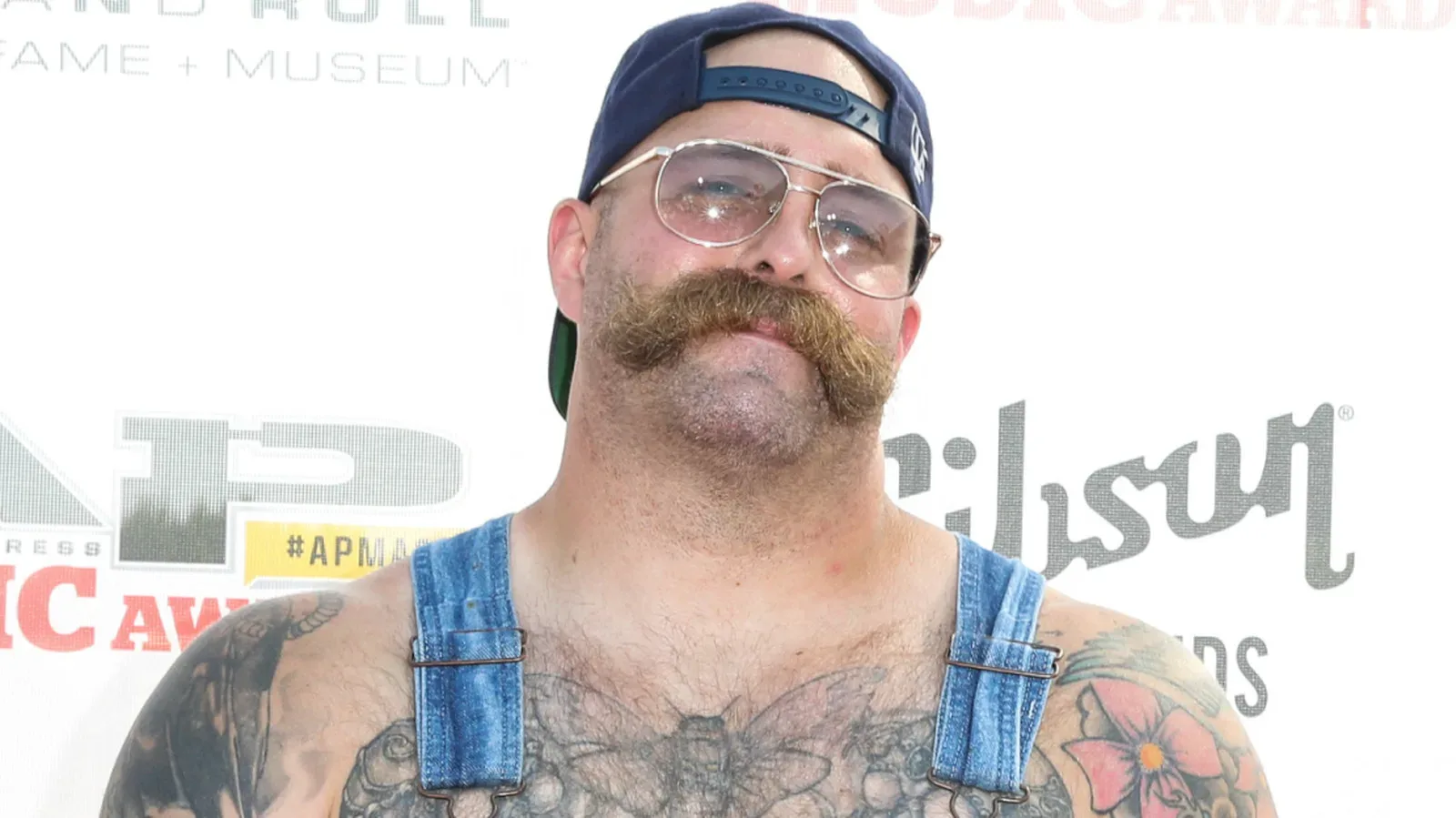
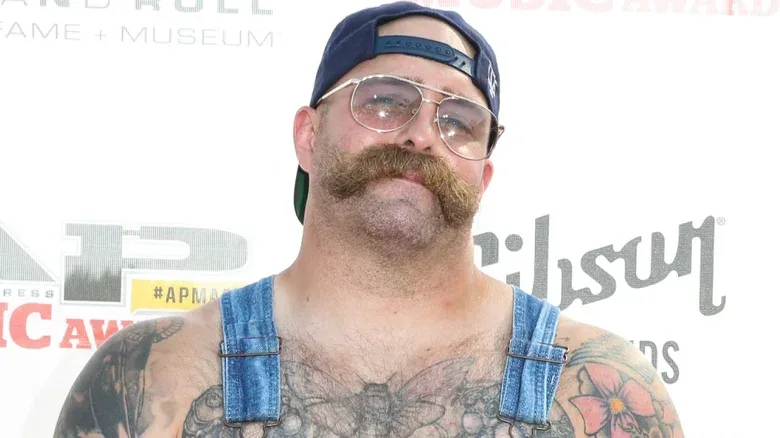
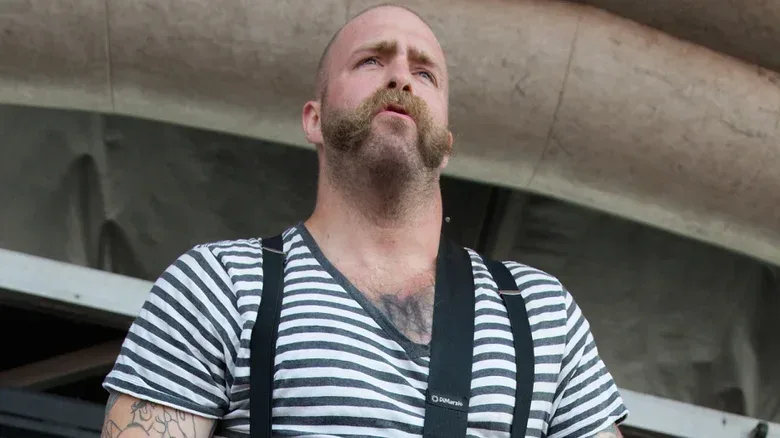
Malakai Black has delivered an emotional remembrance of Andy Williams, the musician and professional wrestler best known to wrestling audiences as The Butcher. Williams died unexpectedly on September 5 at the age of 48 after suffering an undisclosed medical emergency during a tag team match for Enjoy Wrestling. His death sent shockwaves through both wrestling and heavy music, two communities in which Williams had built deep, lasting relationships.
For Black, the loss was especially personal. The former WWE and AEW star knew Williams not merely as a respected peer, but as one of his closest friends. Speaking on Zelvx and Charlie Girl, Black described Williams as a rare person whose kindness, encouragement and character made an impact far beyond his imposing appearance.
“He will always have an effect on me,” Black said. “What if it’s like stupid conversations about food or sending me music? Because he always sent me music from his projects.”
Williams’ life in music was every bit as significant as his wrestling career. Before becoming nationally recognized as The Butcher, he was a founding member of the Buffalo metalcore group Every Time I Die. He continued making music in subsequent projects, and Black recalled that Williams remained eager to share his creative work with the people closest to him.
For more background on this topic, read Rush Pushes Back on Injury-Prone Narrative, Says He Is Ready for Every AEW Opportunity.
Black said Williams had sent him material from a newer band months earlier because Black wanted to hear it. The former AEW star praised the music while emphasizing that Williams’ greatest quality, in his view, was not limited to the ring or the stage.
“I’ve never met a person who was really good at being a human being,” Black said. “Andy Williams was fantastic at being a human being.”
That sentiment has been central to the tributes that have followed Williams’ death. Many who worked with him have remembered a large, intimidating-looking man who was generous with his time, enthusiastic about the accomplishments of others and dependable when friends needed support. Black’s memories similarly painted Williams as somebody who made people around him feel valued.
“I will do my absolute best to be more like you every single day for as long as I’m still here,” Black said. “I hope that the effect of Andy’s passing will have a similar effect on everybody who had known Andy because Andy deserves that. The first guy to cheer you on and the last guy to ever leave just to make sure that you’re not by yourself. I love you, Andy.”
Black learned of Williams’ death while preparing for a major PROGRESS match
The circumstances in which Black received the news made the loss even more difficult to process. He was in England for PROGRESS Wrestling’s September 6 event, where he was scheduled to challenge Cara Noir for the PROGRESS World Championship in the main event. Thousands of miles from Pennsylvania, Black was preparing for one of the most important matches of his recent career when he overheard Donovan Dijak offering condolences during a backstage interview.
At first, Black did not know who Dijak was referring to. He approached his fellow wrestler to ask which performer had died. Dijak told him it was Williams. Black said his initial reaction was confusion and disbelief, requiring Dijak to repeat that he meant Andy “The Butcher” Williams.
“I fell down and he just caught me,” Black recalled. “I’m just hanging in his arms. I’m going, ‘Wait, no, no, no!’ I’m kind of clawing against him. It’s like, ‘No, no, wait, what?’ I just started sobbing. I became almost hysterical.”
Black explained that such an outward reaction was foreign to him. At 41, he considers himself largely stoic, which made the sudden emotional collapse all the more telling. The news had arrived without warning and contradicted everything he expected from a friendship that had felt constant in his life.
He described being frozen in the moment, unable to fully understand what Dijak had told him. For a brief period, Black said, he found himself almost pushing back against the information as though it could not possibly be true.
“I couldn’t compute it,” Black said. “I was fighting it as if he’s purposely telling me something that is not true, as if he’s lying to me. I’m almost getting mad at him.”
Black ultimately apologized to Dijak after regaining some composure, recognizing that Dijak had simply answered his question and had been placed in a difficult situation himself. The exchange underscored the abruptness of the tragedy: Black had traveled to England focused on a championship opportunity, only to be confronted backstage with the death of a longtime friend.
A difficult attempt to carry on with the show
Even while processing his own grief, Black initially tried to shield his wife, Xelina, from the news before her match against Myla Grace. Xelina, formerly known in WWE as Zelina Vega, was already aware of Williams’ death, as was PROGRESS co-owner Big Damo. Still, Black’s instinct was to protect her from the pain until he believed the timing was right.
The night went on, and Black still had a world championship match ahead of him. He challenged Cara Noir in the main event and was able, by his own account, to compartmentalize the grief long enough to compete. That ability did not erase the loss. It only delayed the full weight of it until the match had ended.
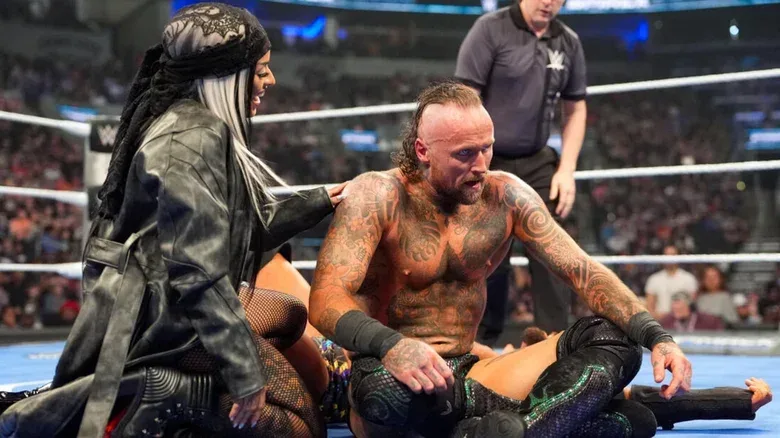
Black defeated Noir to win the PROGRESS World Championship. Once the three-count was made, however, the mental barrier he had constructed during the contest gave way.
“We do the deal. I cover him, and in my head I hear, ‘You can cry now,’” Black said. “I rolled through the corner and that’s the first thing I did.”
The newly crowned champion then addressed the crowd. He mentioned the travel problems and expensive flight that he had overcome to make the show, but his remarks became a tribute to Williams. Black asked the audience to give his late friend one final loud cheer. The fans in attendance responded, giving Black a public moment of remembrance in the middle of what should have been an uncomplicated celebration of a title victory.
The emotions became even more intense when Xelina entered the ring. Black said he had not known she was coming out, and her arrival removed what remained of his composure. The reality of the loss became immediate: the understanding that there would be no future phone call, no familiar voice memo, no exchange about food or music, and no return to the friendship he had known.
“Then the realization hits that I’m never going to speak to my friend ever again,” Black said. “I’m not going to hear his voice. I’m never going to see him again, never have that interaction with him that I had grown so accustomed to.”
Black said that, even in the days after Williams’ passing, he found himself having to remind himself each morning that it had truly happened. He has sought comfort in revisiting voice memos, older interviews, photographs and the memories shared by others who loved Williams. Those reminders have preserved Williams’ presence while also making the suddenness of the loss harder to escape.
Williams’ legacy in AEW, independent wrestling and music
Williams became a prominent figure in modern wrestling as one half of The Butcher and The Blade. Alongside Jesse Guilmette, known as The Blade, Williams made a memorable AEW debut in 2019, arriving as part of an attack on Cody Rhodes and quickly establishing the duo as a distinctive act in the company’s tag team division. Their visual presentation, physical style and association with The Bunny gave them a unique identity on AEW programming.
Though many fans discovered Williams through AEW, his connection to wrestling was rooted in the independent scene, where he competed for a variety of promotions and continued working in environments that were closer to the communities he knew personally. His final match took place at Enjoy Wrestling before he was taken to a local hospital in Pennsylvania, where he later died.
Outside the ring, Williams’ legacy is inseparable from his work in music. Every Time I Die became one of the most influential names in metalcore, and Williams was widely recognized not only for his performance on guitar but for the loyalty and passion he brought to Buffalo’s music community. His transition into high-profile wrestling did not replace that identity. Instead, it showed the range of a performer who could make an impression in two demanding creative worlds.
Black’s tribute focused less on Williams’ accomplishments than on the person behind them. That is perhaps the clearest measure of the bond between the two men. Championships, tours, television appearances and celebrated performances all form part of Williams’ story. But for Black, the details that endure are the small gestures: music sent to a friend, ordinary conversations, encouragement offered freely and the dependable knowledge that Williams would be there.
Black’s PROGRESS World Championship win will remain a major professional milestone. It is also now permanently connected to one of the most painful nights of his life. By asking the crowd to cheer for Williams and speaking candidly about his grief afterward, Black ensured that the moment became a tribute as much as a celebration.
For those who knew Andy Williams as The Butcher, as a musician, as a colleague or as a friend, the accounts emerging after his death have shared a common message. Behind a fearsome wrestling persona and a commanding presence onstage was a man remembered for warmth, loyalty and an exceptional ability to make the people around him feel supported.
In pictures
Darryl Polo
Darryl Polo is a passionate wrestling fan covering WWE, AEW, TNA and beyond. He loves great rivalries, breakout stars and the moments that keep fans talking long after the bell. How we work.