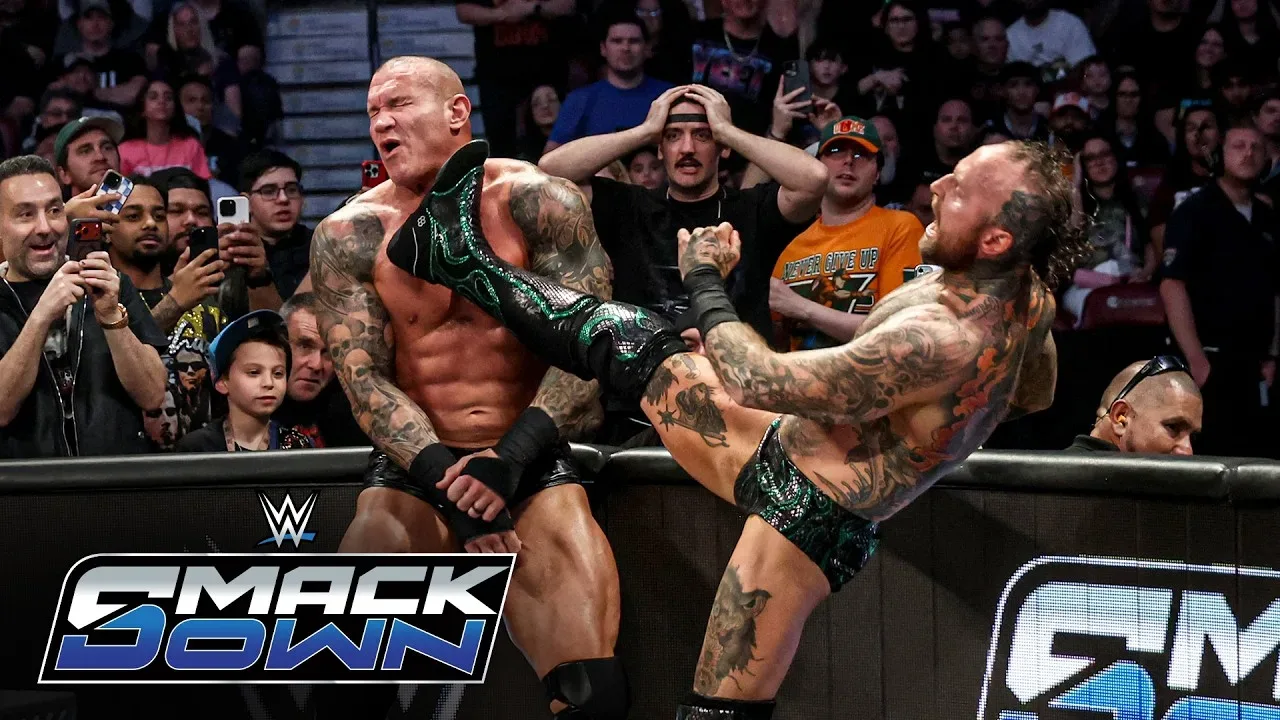
Malakai Black has revealed that a WrestleMania 42 match against Randy Orton was once pitched during his final stretch in WWE.
Black and Orton were connected on SmackDown in the early part of 2026, creating the possibility that their issues could grow into a major WrestleMania program. That direction did not come together. Black did not compete on the WrestleMania card, while Orton instead went on to challenge Cody Rhodes for the Undisputed WWE Title.
Speaking on ZELVX and CHARLIE GIRL with Xelina and Charlie, Black explained that a smoking jacket he recently introduced at PROGRESS had originally been conceived for a WrestleMania entrance. The gear concept, including a concealed smoke mechanism, was tied to the proposed Orton match before the plan was no longer pursued.
“I was able to debut my smoking jacket, which is a funny story because four months before WrestleMania, this is not a knock on Seth because Seth had no idea, but I started talking to Jason (Baker), and I said, ‘I have this smoke device, and I want to put it under my cloak, and during our entrance, she would have the remote and when I roll in and sit, she would press the button and smoke would come out of my jacket.’”
For more background on this topic, read Malakai Black Details Frustration With WWE Return, Says Promised Plans Became a ‘Dud’ Year.
Black continued by making clear that the entrance presentation was not merely a general idea he hoped to use someday. It had specifically been intended for the stage he expected to have at WrestleMania, at a point when his proposed opponent was Orton.
“Initially, the plan was for WrestleMania because up until that point, the pitch for me and Randy Orton was WrestleMania. Obviously, that never saw the light of day, but I didn’t want to dump the jacket.”
A WrestleMania Direction That Did Not Materialize
The revelation offers a clearer look at a WWE direction that was discussed but never reached the screen in its intended form. Black and Orton being intertwined on SmackDown early in 2026 gave the potential rivalry an obvious big-match framework. Orton’s stature, his connection to the WWE audience, and Black’s character-driven presentation could have made the match a notable contrast in styles and personas.
Instead, the WrestleMania picture changed. Orton challenged Rhodes for the Undisputed WWE Title, placing him in one of the event’s most prominent championship matches. Black was not part of the card, meaning the proposed singles bout never had the opportunity to progress from a pitch into a WrestleMania payoff.
Black’s comments do not establish how far the match discussions advanced beyond the pitch he referenced, nor do they identify the reason WWE changed course. They do, however, confirm that a Black-versus-Orton match was considered for WrestleMania 42 while the two were involved in the same SmackDown orbit.
In professional wrestling, especially around WrestleMania season, creative plans can shift rapidly as title programs, television developments, talent availability, and broader card construction come into focus. Black’s account is an example of how a potential program can influence presentation plans even when the match itself never takes place. The smoking jacket had already been imagined as part of an entrance designed for the scale and atmosphere of WrestleMania.
The Smoking Jacket Found a Different Stage
Rather than abandon the concept after the WWE plan changed, Black kept the jacket and brought it to PROGRESS. The detail is significant because the gear was not simply a piece of attire. It was designed around an effect: smoke concealed under the cloak and released after Black rolled into the ring and took his seat.
The entrance concept fits the theatrical identity Black has long cultivated. His presentation has frequently placed emphasis on visual mood, deliberate pacing, and an ominous presence before a bell rings. A smoking jacket with a hidden effect extends that approach, giving the entrance an additional visual beat rather than relying solely on standard ring gear or lighting.
Black credited Jason Baker in describing how the idea came together. Baker has been associated with elaborate wrestling presentation and special-effects concepts, making the collaboration a natural fit for an entrance that required a practical smoke device to be incorporated into clothing. Black’s description also shows that the effect required timing and coordination, with another person operating the remote while he moved into position.
What had been planned as a possible WrestleMania visual was therefore preserved and adapted rather than discarded. Black said he did not want to “dump the jacket,” and his PROGRESS appearance allowed the idea to finally be used in front of an audience.
That choice speaks to the value performers can place on creative concepts independent of the promotion or event for which they were first developed. Wrestlers often invest time in designing gear, entrances, and character elements around possible future programs. When plans shift, some concepts disappear entirely. Others are reworked, held back, or eventually introduced in a different environment. In Black’s case, the jacket moved from an unrealized WWE WrestleMania proposal to his post-WWE presentation.
Black and Xelina Were Released After WrestleMania
Black and Xelina were released by WWE shortly after WrestleMania. The timing means the proposed match with Orton, as well as the entrance prepared for that scenario, belonged to the closing period of Black’s WWE run.
The early-2026 SmackDown interactions with Orton now stand as a thread that appeared to point toward a much larger destination. The eventual WrestleMania outcome went elsewhere, with Orton pursuing Rhodes and Black left off the event. Black’s comments add a previously unknown creative layer to that period: WWE had at least pitched the possibility of Black meeting Orton on the company’s biggest show of the year.
There is also a practical lesson in the jacket story. A major event can serve as the original motivation for a piece of presentation, but the creative work itself can outlive the plan. Black had a specific image in mind for the ring entrance, worked toward making it technically possible, and retained the concept after the WrestleMania idea failed to materialize. The eventual PROGRESS debut gave the jacket its own identity rather than leaving it as an unused WrestleMania footnote.
What the Disclosure Adds to Black’s Final WWE Chapter
Black’s remarks do not rewrite the WrestleMania 42 card, but they provide additional context to the paths WWE explored beforehand. Orton’s title challenge against Rhodes became the WrestleMania destination that viewers saw. The Black match remained an internal pitch that never reached that stage.
For Black, the matter is also closely connected to creative presentation. The proposed Orton bout was not only a potential match on a major card; it was the setting around which he planned a new entrance flourish. The smoking effect, cloak, jacket, and seated reveal were all part of a larger vision for how he wanted to arrive at WrestleMania.
Instead, the presentation has begun a life outside WWE. Black’s decision to use the smoking jacket at PROGRESS ensures that the concept was not lost, even if the Randy Orton match attached to its original plan was never realized.
As for the Black-Orton matchup itself, it remains one of the WrestleMania 42 possibilities that was discussed but never delivered. Black’s account confirms the pitch, while also underscoring the uncertain nature of WrestleMania season: even plans with a distinctive entrance already being developed can change before they become part of the final show.

Darryl Polo
Darryl Polo is a passionate wrestling fan covering WWE, AEW, TNA and beyond. He loves great rivalries, breakout stars and the moments that keep fans talking long after the bell. How we work.