Lil Yachty’s first WWE match gave him the kind of live-pressure introduction that few celebrity participants receive, and the rapper has already begun evaluating how he can improve if he gets another opportunity between the ropes.
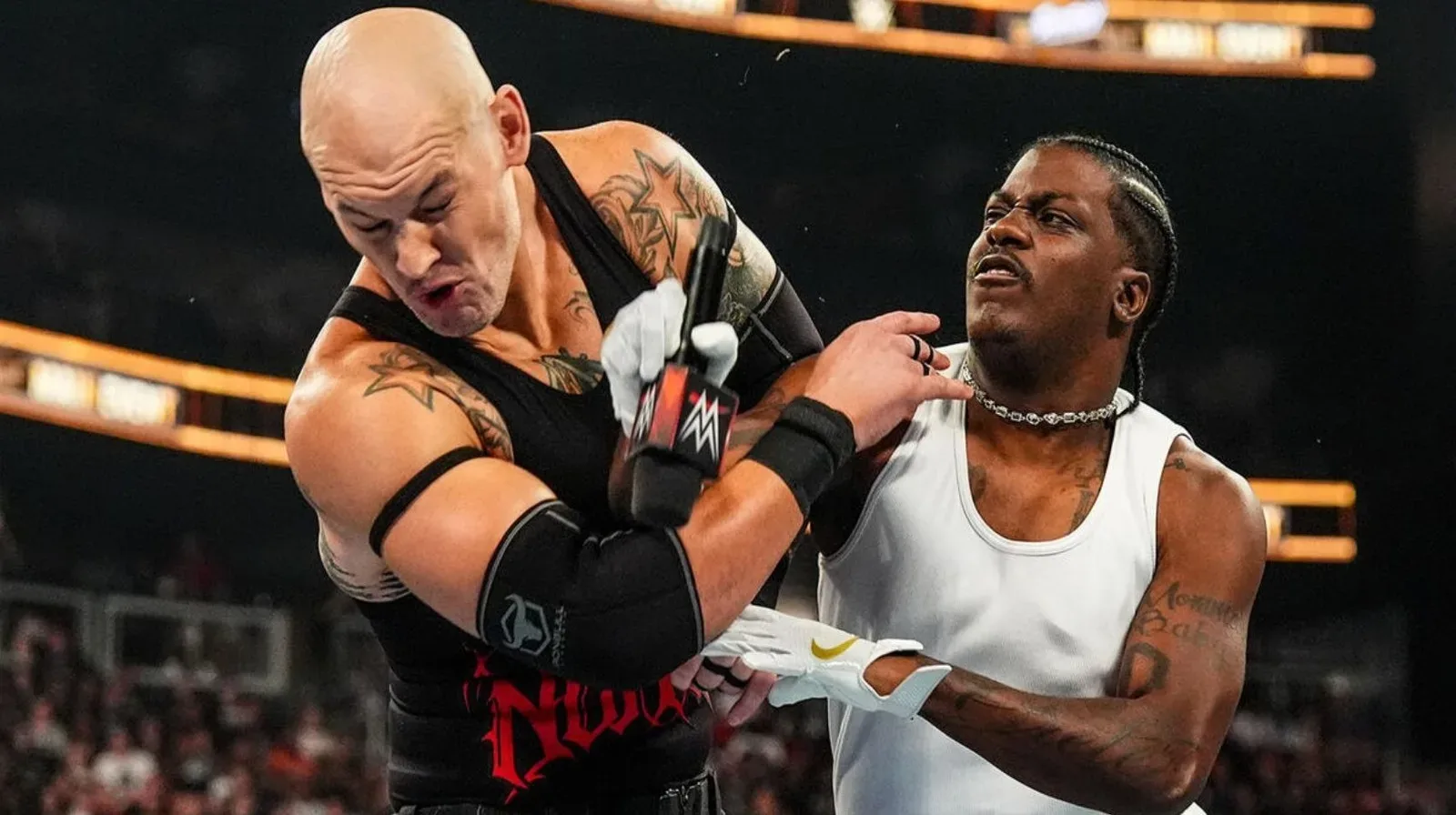
At WWE Sunday Night’s Main Event, Yachty survived five minutes against Baron Corbin. The stipulation carried real consequences for the surrounding storyline: by lasting the full five minutes, Yachty earned Trick Williams a shot at the United States Championship. It was a notable result for a performer making his in-ring debut against an experienced WWE wrestler, especially in a match designed around a ticking clock and the challenge of avoiding one decisive mistake.
Yachty had spent months training at the WWE Performance Center before stepping into that spotlight. In comments on Insight with Chris Van Vliet, he explained that nerves were not the biggest issue for him on the day of the match. Instead, after watching the bout back, he found himself focused on presentation details and the ways he believes he could have made the performance feel more like an extension of his own personality.
That self-critique is important in WWE, where a successful match is not only measured by athletic execution or whether a performer reaches the stipulated finish. Crowd engagement, facial expressions, body language, timing and an ability to create memorable visual moments can all matter just as much. Yachty’s assessment centered heavily on those elements.
For more background on this topic, read Rey Horus vs. Bendito Announced for Lucha Fresca as PRODUCE, GCW and WWE Updates Emerge.
“I would’ve taunted more, because I have personality,” Yachty said on Insight with Chris Van Vliet. “I would have interacted with the crowd more. I would’ve charged up more. I would have just like gave it more character.”
His comments point to a clear takeaway from the experience. Yachty did not simply see the match as a five-minute endurance test against Corbin. He saw it as an opportunity to connect with the audience and make a distinct impression, and he believes he left some of that potential on the table.
One specific change he said he would make involved his ring attire. Yachty said he would have removed his tank top. While that may sound like a small decision, presentation choices are frequently magnified in a WWE environment. A wrestler’s look is part of the visual language of a match, particularly for someone appearing in front of a national audience for the first time. The decision to remove a layer of clothing, pause for the crowd or show confidence before an important sequence can make a moment feel larger.
Yachty also highlighted the ending of the match as an area he would approach differently. As the countdown reached its conclusion, he was positioned on the top rope. The final seconds were built around whether he could hold on long enough to complete the challenge and secure the title opportunity for Williams. Looking back, Yachty felt there was more he could have done to maximize that scene.
“I think I would have ended differently on that top rope,” Yachty said. “I think I would have ended that moment differently when it was counting down.”
The observation reflects an understanding of how WWE’s biggest moments often work. A countdown invites audience participation, but it also gives the wrestler in the ring an opportunity to guide the emotion of the scene. A defiant gesture, a louder reaction to the crowd, a more dramatic physical struggle or a stronger final pose can change how fans remember an ending, even when the official result remains exactly the same.
For Yachty, the positive side of that evaluation is that none of the changes he described concern a lack of investment in the process. He had trained for months, completed the match’s central objective and emerged with a clearer view of what he wants to bring to a future appearance. The desire to add more character and crowd interaction suggests he is thinking beyond simply participating as a celebrity guest.
Backstage Reaction Following the Match
Yachty said he did not receive criticism backstage after the match. He specifically noted that he expected Paul “Triple H” Levesque to speak up if there had been an issue with his performance. Instead, he said he received two hugs and congratulations from Levesque.
That response appears to have been meaningful to Yachty, who described the walk back through gorilla position as one of the most memorable aspects of the night. For performers at every level of WWE, returning backstage after a major segment can be an anxious moment. The immediate reaction from producers, talent and executives can reveal whether the company felt the segment landed as intended.
“It’s like, ‘I pray everyone’s clapping when I walk back through the curtain,’” Yachty said on Insight with Chris Van Vliet. “And everyone’s back there clapping. It was dope.”
The applause helped confirm that his work had been received positively by those behind the scenes. It also came after a match in which he was asked to work with Corbin, a veteran who has spent years in high-profile WWE situations and has experience helping structure matches around a wide range of opponents and scenarios.
For a first-time wrestler, surviving a timed stipulation is a useful format. It creates urgency from the opening bell, establishes a straightforward story for viewers and allows the newcomer to show resilience without requiring an immediate conventional victory. In Yachty’s case, the match also served a larger WWE purpose by directly leading to Williams receiving a United States Championship match.
That structure placed Yachty in a role with tangible narrative stakes rather than treating his appearance as a disconnected novelty. His performance affected a championship picture, and that link to Williams gave the five-minute challenge an added reason for viewers to follow every second of the clock.
Yachty Emphasizes His Commitment to Wrestling
Beyond the match itself, Yachty was emphatic that his interest in WWE is genuine. Celebrity involvement can sometimes bring questions about whether a guest is appearing solely for publicity or a major payday. Yachty addressed that perception directly, saying his motivation comes from his affection for professional wrestling and not financial gain.
“I f*** with this s***, man. I really do,” Yachty said on Insight with Chris Van Vliet. “I never tried to make anyone believe how invested and how much I love this, because it’s not for the money. I don’t want nobody to think I’m just getting some crazy check. I’m losing money doing this. But, I love it. I love everything about this s***.”
His comments add context to the months of Performance Center training that preceded Sunday Night’s Main Event. Training for a WWE match requires more than learning a few signature sequences. Newcomers have to adapt to the physical demands of the ring, timing around an opponent, safe execution, positioning for cameras and the responsibility of performing in front of a crowd that can immediately respond to every action.
Yachty’s willingness to review his own work closely is another sign of that investment. Rather than presenting the debut as a finished product, he spoke about it like a performer who has identified adjustments for the next outing. He wants more crowd interaction. He wants more taunting. He wants to make stronger aesthetic decisions and improve a pivotal closing visual. Those are specific goals rooted in the performance side of WWE rather than broad claims about wanting to return.
There is no indication in Yachty’s comments about when or whether he will wrestle again. Still, his remarks make clear that he came away from Sunday Night’s Main Event encouraged by the experience. He completed the challenge against Corbin, helped place Williams into contention for the United States Championship, received a warm reaction backstage and left with a sharper idea of the performer he wants to be in a WWE ring.
For now, Yachty’s debut stands as a successful first step. The next question is whether WWE gives him another chance to apply the lessons he took from watching the match back. If that opportunity comes, he has already outlined the difference he intends to make: more confidence, more interaction and more of the personality he believes the audience has yet to fully see.
In pictures
Darryl Polo
Darryl Polo is a passionate wrestling fan covering WWE, AEW, TNA and beyond. He loves great rivalries, breakout stars and the moments that keep fans talking long after the bell. How we work.