
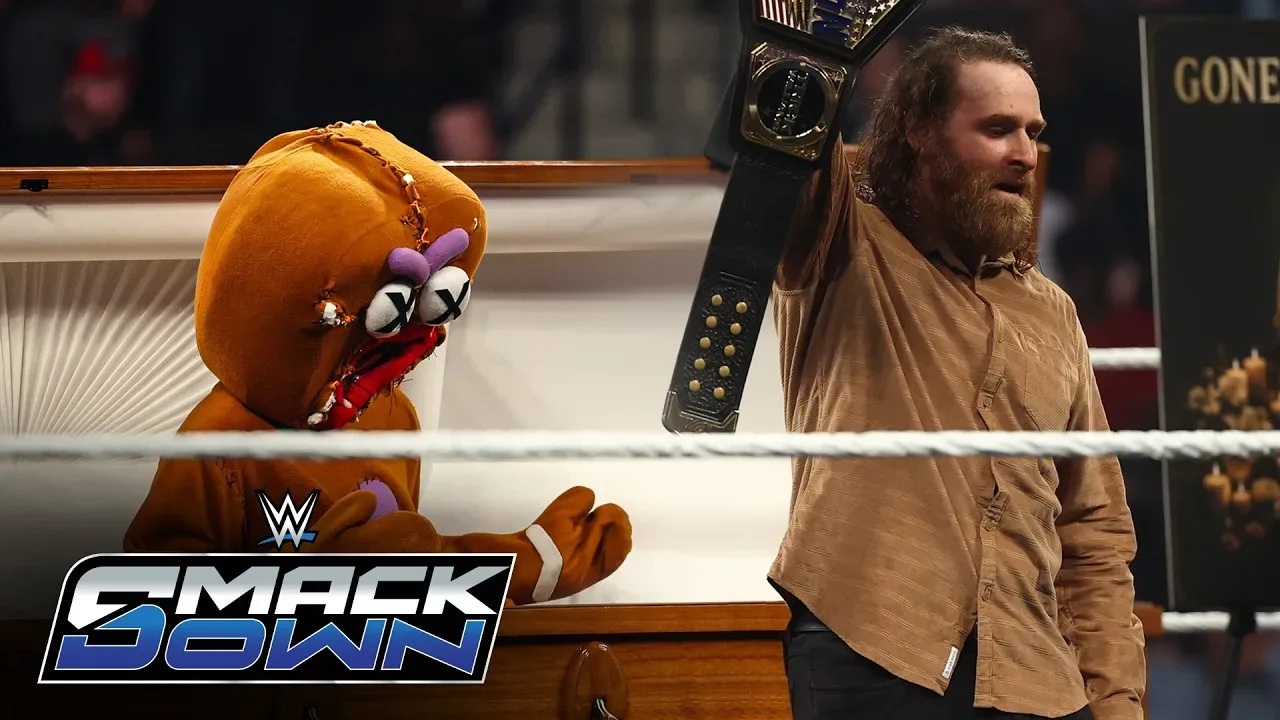
Lil Yachty has offered a behind-the-scenes explanation for the unlikely rise of the Gingerbread Man during his WWE program with Trick Williams and Sami Zayn, stressing that the character began as a joke rather than a heavily mapped-out creative plan.
What started with Yachty and Williams making fun of Zayn’s ginger hair developed into a recurring element of the feud. The joke eventually expanded beyond a nickname: it involved gingerbread-themed apparel, cookies, music, an elusive Gingerbread Man character and, finally, a funeral after Zayn caught the figure and “killed” him. It was an intentionally exaggerated detour in a wrestling rivalry, and Yachty believes that was precisely the point.
Speaking on Insight with Chris Van Vliet, Yachty said he and Williams initially had doubts about whether the concept would connect. Rather than abandoning it, though, they committed to making the material as entertaining as possible.
“So funny, it was not supposed to work. I remember when me and Trick got in, we were like, man, y’all sure? But then we just tried to make the most of it.”
For more background on this topic, read Roxanne Perez Calls For Clearer Boundaries Between WWE Stars And Fans.
Yachty explained that the phrase “Gingerbread Man” itself was not initially presented to them as part of a larger angle. Instead, it came from the two performers joking about Zayn being ginger. Once they began using the line, they continued to find ways to build around it.
“Funny enough, they didn’t actually pitch Gingerbread Man. That was something we said, because he was ginger. Just me and Trick clowning and calling him Gingerbread Man. Then I got the gingerbread cookies and we just had fun with it.”
An Improvised Idea That Kept Growing
The explanation illustrates how a relatively simple bit can become a larger part of a WWE story when the people involved find a rhythm with it. Yachty’s account does not frame the Gingerbread Man as a carefully plotted character conceived from the beginning. Instead, he describes an idea that evolved through conversations with Williams, with both looking for lines, jokes and visual details that could keep the rib of Zayn moving forward.
That process apparently included substantial time spent brainstorming in Yachty’s dressing room. Yachty said he and Williams would call, text and work through possible ways to antagonize their on-screen rival. The goal, as he described it, was not merely to repeat the same nickname, but to figure out how they could continually deliver the joke in fresh ways.
“Me and Trick, we always get on the phone or text and sh*t, be together and we just think of ideas. How we gonna say this? What we gonna do? We’ll spend the whole day in my dressing room just trying to figure out what, how we gonna clown, or what jokes we gonna make, and it just stuck, and then it turned into a thing, and it was so fun.”
In a major wrestling program, a nickname can often be a passing insult. The Gingerbread Man became more than that because the joke was repeatedly escalated. The shirt and cookies gave it recognizable props. The music added another layer. Then the idea was personified by the man Zayn could not catch, turning a taunt aimed at Zayn into a physical presence within the storyline.
That escalation also gave Zayn a clear target for his mounting frustration. He grew increasingly angry over the repeated Gingerbread Man business before eventually catching the character and “killing” him. The aftermath took the absurdity one step further, as a funeral was held for Gingy.
Why the Funeral Was Part of the Point
The funeral could easily be viewed as a sharp stylistic change from a conventional wrestling confrontation, but Yachty made clear that the silliness was deliberate. He called the segment “so silly” and argued that wrestling has room for that kind of entertainment alongside technically acclaimed matches and serious rivalries.
“It was so silly. It was so silly. I mean, again, people forget it’s entertainment, and it’s supposed to be funny. It’s supposed to be fun, and yeah, it’s good wrestling, but it’s entertainment and fun and have fun, man. Don’t be so uptight. Sometimes I be thinking it’s like, damn, you just want a card full of five-star matches.”
Yachty’s comments speak to a familiar discussion among wrestling audiences: the balance between in-ring performance, dramatic storytelling, comedy and spectacle. WWE programming has long featured all of those elements, sometimes within the same show or even the same rivalry. A segment such as the Gingerbread Man funeral is not designed to be judged by the same standards as a match constructed around athletic difficulty or ring psychology. Its function is to create a memorable visual, extend a personality-driven rivalry and give viewers something intentionally ridiculous to react to.
For Yachty, the value of the bit was tied directly to its willingness to be unserious. He did not present it as an attempt to redefine wrestling storytelling or as something that needed to appeal to every fan. Instead, he emphasized fun, suggesting there should be room for material that is knowingly cartoonish when the performers are committed to it.
That is particularly relevant to an angle built around an impossible-to-catch Gingerbread Man. The premise naturally draws from a familiar fairy-tale image, and its absurdity increases when it is inserted into a feud involving wrestlers attempting to settle a conflict. Rather than treating that contrast as a problem, Yachty and Williams used it as the central joke.
Trick Williams and Lil Yachty’s Creative Chemistry
Yachty repeatedly credited his collaboration with Williams as the engine behind the idea’s development. Their exchanges, planning sessions and shared interest in “clowning” Zayn turned a casual observation into a continuing piece of the program.
The rapper’s description of their approach suggests that the key was less about finding one major punchline than maintaining a steady creative back-and-forth. They would consider how to phrase something, which joke to make and what step could add to the ongoing gag. That sort of preparation can be especially important in a comedic wrestling angle, where timing and commitment often determine whether a strange premise becomes memorable or simply disappears.
The fact that Yachty said he and Williams were uncertain at first makes the eventual result more notable. Their initial reaction was reportedly to wonder whether the idea would work at all. But once they chose to lean into it, they found a way to make the Gingerbread Man a distinctive feature of the issue with Zayn.
It also demonstrates the flexibility of a wrestling feud when performers have an idea they can keep expanding. The premise moved from a verbal jab to themed accessories and a song, then to a character and a funeral. Each addition raised the stakes of the joke without changing its basic premise: Williams and Yachty were mocking Zayn by calling him the Gingerbread Man.
Comedy, Conflict and the WWE Presentation
While Yachty acknowledged the appeal of “good wrestling,” he pushed back on the notion that every segment needs to pursue a five-star-match level of seriousness. That does not diminish the importance of the ring work in a rivalry. Rather, it recognizes that professional wrestling has always used a broader range of presentation styles.
Comedy can establish personalities, create crowd interaction and give a serious character a reason to become increasingly exasperated. In this case, Zayn’s growing anger was crucial to the structure of the story. The more the joke continued, the more viewers had a reason to see whether he could finally put an end to it. When he did catch the Gingerbread Man, the story produced a payoff that led directly to the deliberately over-the-top funeral.
Yachty’s view is ultimately straightforward: not every wrestling segment is meant to carry the same tone, and audiences do not have to approach every moment with the same expectations. The Gingerbread Man was created to be playful, strange and funny. By his account, that was never an accident. Even if the nickname was initially improvised, the effort he and Williams put into developing it shows that they understood exactly what kind of reaction they were pursuing.
Elsewhere in the conversation, Yachty also discussed his in-ring debut against Baron Corbin. But his comments on the Gingerbread Man offered the clearest look at how he and Williams approached their work with Zayn: start with a joke, keep adding to it, and do not be afraid to embrace the silliness when the story calls for it.
Darryl Polo
Darryl Polo is a passionate wrestling fan covering WWE, AEW, TNA and beyond. He loves great rivalries, breakout stars and the moments that keep fans talking long after the bell. How we work.