
Kyle Fletcher has built much of his reputation in AEW on athleticism, aggression and the kind of in-ring output that has made him one of the promotion’s most closely watched younger performers. But Fletcher’s development has not been limited to his matches. As his role has expanded and his character has become more forceful, the Australian wrestler has also placed greater emphasis on becoming a stronger, more natural speaker.
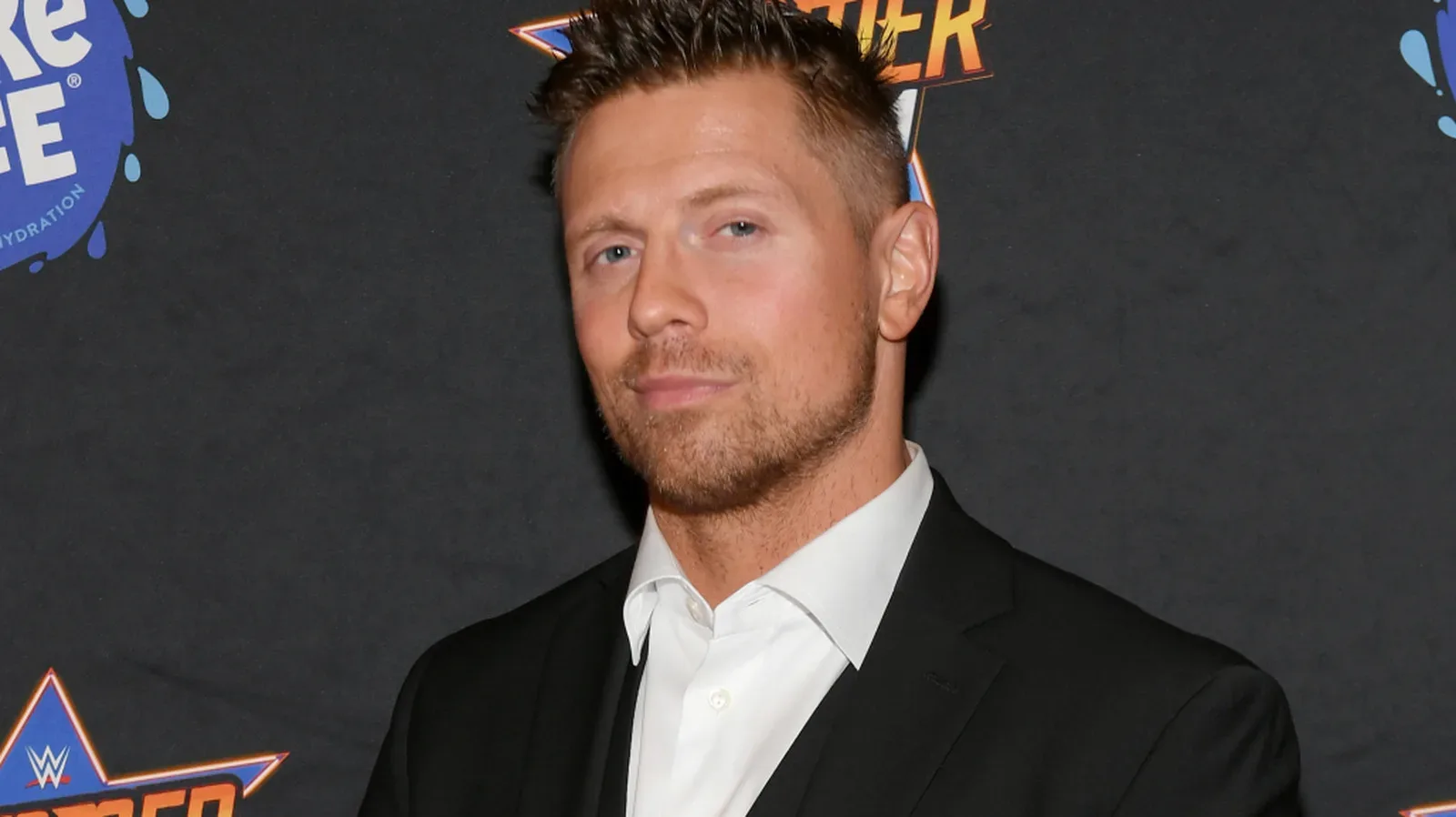
For that part of his evolution, Fletcher has pointed to an influence from outside AEW: longtime WWE performer The Miz.
Speaking on the Battleground Podcast, Fletcher discussed what stands out to him about The Miz’s promo style. Rather than focusing merely on volume, insults or a wrestler directly addressing fans in the building, Fletcher highlighted the importance of genuine interaction. In his view, The Miz has repeatedly demonstrated an ability to allow the audience’s response to determine the direction and rhythm of a promo.
“I think how much he interacts with the crowd, and not just in a sense of turning to the crowd and yelling at them or whatever,” Fletcher said. “A lot of people go into promos and nowadays, I don't want to say people using scripts, but there's a lot of people that have their stuff written for them and they memorize it and they go out there and they say it. That works for some people. It's great.”
For more background on this topic, read Jake Hager Reportedly Undergoes Second Eye Surgery After Power Slap Injury.
Fletcher made clear that having material planned and memorized is not inherently a weakness. Different performers need different structures, and a prepared approach can be effective when it fits the person delivering it. His admiration for The Miz instead comes from the confidence required to work with the unpredictability of a live crowd.
That distinction matters in professional wrestling, where a promo is not simply a speech delivered to an audience. The best segments often feel like a conversation, even when only one person holds the microphone. A reaction can speed up a promo, slow it down, lead to an unscripted line, force a wrestler to pause, or give a performer a chance to sharpen the central point of the segment. A crowd can also be uncooperative, and the ability to use that response rather than fight against it is a skill developed through repetition.
Fletcher sees The Miz, along with John Cena, as examples of wrestlers capable of thriving in that environment.
“The Miz, it's him, it's Cena, it's all these different guys, they might not know anything that they're going to say when they go out there, and then it's literally all impacted by how the crowd's reacting and what they're doing,” Fletcher said. “I think that's something that I definitely looked at, I was inspired by, and something that I've tried to do in my own stuff.”
Why spontaneity has become a major lesson for Fletcher
The point Fletcher raised goes beyond simply speaking without notes. His comments describe a mindset built on listening as much as talking. A wrestler who is too committed to reciting every line can risk missing an opportunity created by the room. Conversely, a performer with a clear objective, a command of their character and trust in their instincts can adapt to changes in real time.
For Fletcher, that adaptability has also meant confronting a personal tendency to overthink promos. He acknowledged that overthinking comes naturally to him, particularly when he is preparing to speak. That is understandable for any performer working in front of a live audience and television cameras, where each word is judged immediately by fans.
Memorization can offer security. It gives a performer a road map and can reduce the fear of losing a thought in the moment. Yet Fletcher has been encouraged by The Miz’s example to move in the other direction: to put more faith in his own ability to communicate and to react naturally when the audience gives him something to work with.
That is an especially valuable lesson for a wrestler whose on-screen presentation has changed substantially in recent years. Fletcher has not remained in a static role, and the expectations placed on him as a promo performer have risen along with the intensity of his character work. Finding an authentic speaking voice is often one of the most difficult stages of a wrestler’s development, particularly for someone already known for technical ability and explosive action between the ropes.
The Miz’s long-established reputation on the microphone
The Miz is an understandable model for a performer seeking to sharpen that side of the craft. Over more than 20 years in WWE, he has become known as one of the company’s most durable talkers. Whether positioned as an arrogant antagonist, a self-promoting celebrity personality or a wrestler defending his place at the top of the card, The Miz has consistently relied on timing, verbal confidence and his ability to play off a crowd.
One of the defining examples remains his 2016 confrontation with Daniel Bryan on Talking Smack. The segment became widely remembered because of its intensity and because The Miz delivered his message with a level of emotion that made the exchange feel immediate. It was a prominent illustration of how a performer’s personality, character history and ability to respond in the moment can create a lasting wrestling promo.
Fletcher is not suggesting that he should imitate The Miz line for line or adopt the same character. In fact, the value of his comments lies in the opposite idea. He is taking a principle from a veteran performer—engage the crowd, remain flexible and trust the moment—and applying it to a persona that is distinctly his own.
That approach is important because promotional styles cannot be copied wholesale. The Miz’s history, delivery and relationship with WWE audiences are unique to him. Fletcher’s voice has to fit his own presentation in AEW. The common ground is the willingness to embrace the audience as an active part of the segment rather than treating them as background noise.
Fletcher’s AEW character evolution
Fletcher’s comments arrive after a significant shift in his AEW run. In 2024, he turned heel, shaved his head and aligned himself with The Don Callis Family. The change gave Fletcher a harder edge and created more opportunities for him to state his ambitions directly rather than letting his in-ring performances do all the talking.
Since joining the group, Fletcher has delivered promos with an increased sense of hostility and self-assurance. The character change has provided a natural setting for him to explore the kind of crowd interaction he discussed. A heel performer must often manage competing reactions: boos, chants, heckling and, at times, admiration from fans who recognize the quality of the work. Knowing when to acknowledge those reactions and when to press forward can make a major difference in how a promo lands.
His recent speaking work has carried elements of the forceful, emotionally charged style that Fletcher admires, while remaining tailored to his own AEW identity. That balance is crucial. The goal is not merely to be loud or confrontational; it is to make the audience understand exactly who the character is, what he wants and why viewers should care about what happens next.
The Don Callis Family affiliation also places Fletcher in an environment where verbal presentation is central. Callis is a prominent on-screen talker, and the group’s identity depends heavily on its members communicating a shared sense of arrogance, ambition and menace. Fletcher’s continued growth on the microphone strengthens his position within that framework while also helping establish him as an individual presence.
A useful standard for AEW’s rising performers
Fletcher’s perspective offers a practical reminder that promo development is not solely about producing a perfectly written monologue. Preparation remains valuable, and many successful wrestling promos begin with careful planning. But live performance requires room for instinct. Audiences are different from city to city, reactions change without warning, and the most memorable moments can come from a wrestler recognizing an opening that was not there in rehearsal.
The Miz’s career provides Fletcher with a useful standard because it shows how long-term success on the microphone can be built through responsiveness as well as material. Fletcher’s task is to continue turning that lesson into something that works for him in AEW.
At this stage, Fletcher’s willingness to identify an area he wants to improve is notable in itself. He has already proven he can command attention in the ring. By studying performers such as The Miz and trusting himself to react more freely in front of a crowd, Fletcher is working to make his words carry the same impact as his matches.
For a wrestler still shaping the fullest version of his AEW persona, that growth could be just as important as any move in his arsenal.
In pictures

Darryl Polo
Darryl Polo is a passionate wrestling fan covering WWE, AEW, TNA and beyond. He loves great rivalries, breakout stars and the moments that keep fans talking long after the bell. How we work.