
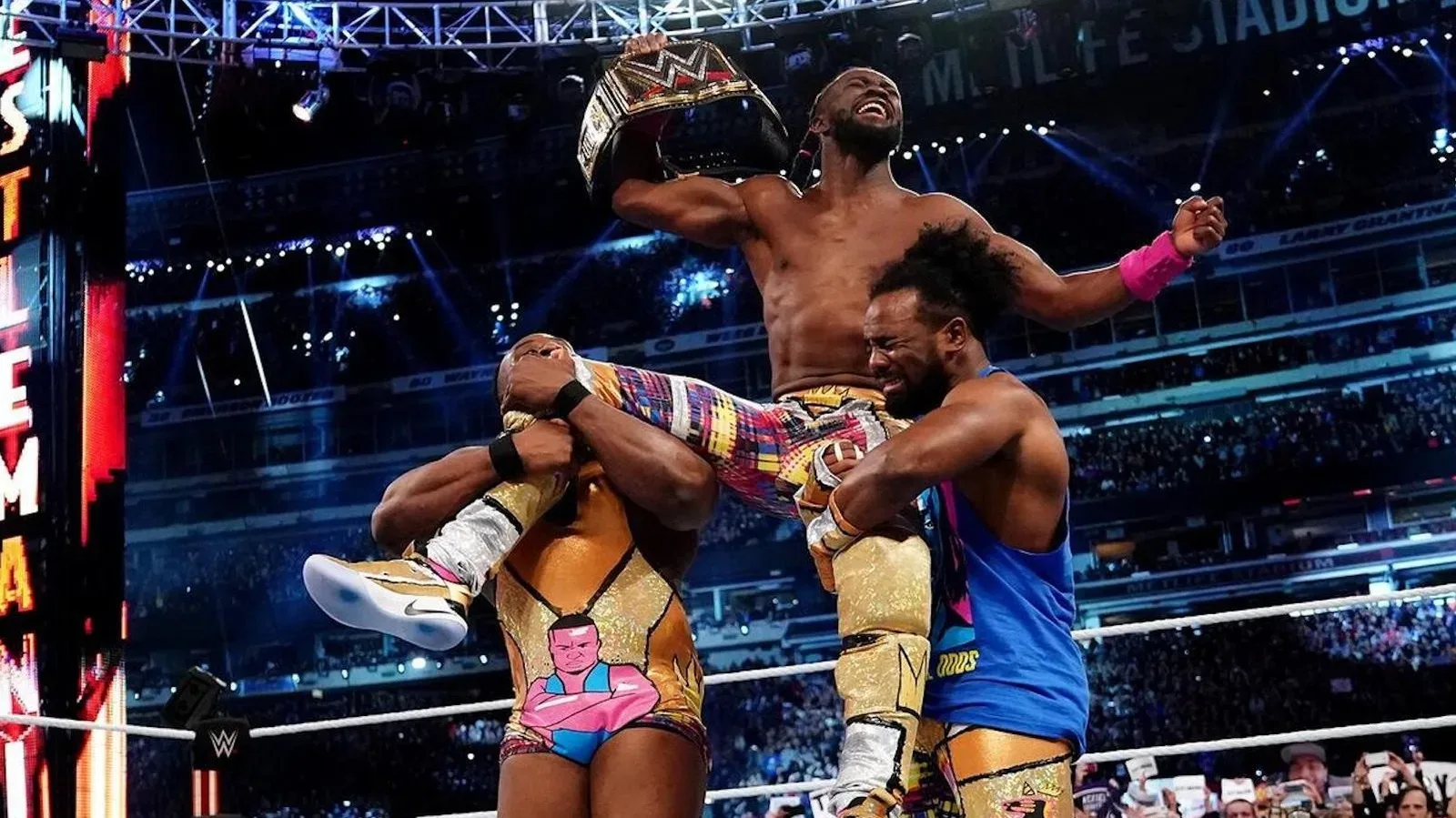
Kofi’s WrestleMania 35 triumph remains one of the defining championship moments of modern WWE history, and the AEW star recently reflected on why the experience still carries such personal and cultural weight.
At WrestleMania 35 in 2019, Kofi defeated Bryan Danielson to capture the WWE Championship after months of overwhelming audience support transformed an unexpected opportunity into the fan-driven phenomenon known as KofiMania. The victory fulfilled a lifelong ambition for Kofi, who described becoming WWE Champion as the realization of a childhood dream.
The route to that match was not a straightforward one, however. Kofi also acknowledged that the circumstances surrounding his rise were connected to Mustafa Ali’s injury, a development that changed WWE’s plans and opened the door for Kofi to receive a larger spotlight. While KofiMania became a historic success, Kofi made clear that he remains aware of the alternate possibility that could have unfolded had Ali remained healthy.
A WrestleMania Moment Years in the Making
Kofi’s WWE Championship win represented more than a title change. It was the climax of a story that began with a veteran performer receiving an opportunity and rapidly grew into a movement fueled by viewers who wanted to see him elevated to the company’s top prize.
For more background on this topic, read Penta Reflects On Roman Reigns WWE World Heavyweight Title Match In Mexico City.
The audience reaction was central to every stage of KofiMania. What initially appeared to be a temporary opening became something WWE could not ignore. Kofi consistently received major support, and fans rallied behind the idea that his long tenure, in-ring accomplishments, charisma, and connection with the audience had earned him a place in the WrestleMania main-event picture.
That organic response ultimately brought Kofi to WrestleMania 35, where he challenged Danielson for the WWE Championship. Their match carried the pressure of an enormous crowd investment, as well as the importance of a title bout that many fans viewed as overdue recognition for Kofi’s body of work. When Kofi won, the reaction reflected the release of months of anticipation and a much longer period of support from fans who had wanted to see him reach that level.
For Kofi, the accomplishment was directly tied to the dreams he had as a child. He recalled imagining WWE stardom while taking part in neighborhood Royal Rumble-style games with other children, with the winner envisioning a future WrestleMania appearance. Those memories made the eventual reality of standing on WWE’s biggest stage as champion especially meaningful.
Winning a world championship in professional wrestling is often presented as a destination. In Kofi’s case, it also served as confirmation that the ambitions he held long before entering the industry were possible. He had spent years building a career as a singles competitor and as a member of The New Day, but the WWE Championship victory gave him a singular achievement that had once existed only in childhood imagination.
The Wider Significance of KofiMania
Kofi emphasized that the moment’s value was not limited to his own career. He recognized that the championship victory had a positive impact on many people who saw themselves in the story and in the image of Kofi holding WWE’s top title.
His place in history was particularly significant. Kofi became the first African-born WWE Champion, an achievement he identified as a major part of what made the moment resonate beyond the ring. Representation has long been an important component of wrestling’s most memorable breakthroughs, and KofiMania gave fans a championship moment that carried meaning across generations and communities.
That significance helped KofiMania endure long after the title reign ended. Championship reigns can be measured in days, defenses, opponents, and results, but certain victories take on a larger life because of the story surrounding them. Kofi’s win is frequently remembered through the emotional context of his rise: a performer many believed had waited too long for a chance, an audience determined to support him, and a WrestleMania conclusion that delivered the payoff those fans had demanded.
It also stood as an example of the unpredictable relationship between wrestling plans and fan response. WWE had not initially positioned Kofi’s WrestleMania championship pursuit as the destination, yet the support became too strong to dismiss. Kofi’s ascent demonstrated how quickly audience investment can reshape the direction of a major storyline when a performer connects at the right time.
Mustafa Ali’s Place in the Story
Even while looking back proudly on the outcome, Kofi did not overlook the difficult circumstance that preceded it. Mustafa Ali’s injury created the vacancy that changed the direction of the story, and Kofi reflected on the possibility that Ali could have been the performer receiving the defining WrestleMania push had events unfolded differently.
That acknowledgment adds an important layer to the KofiMania narrative. Wrestling opportunities are often shaped by timing, health, creative decisions, and momentum, and Kofi’s breakthrough came at the intersection of all of those factors. His rise was powered by extraordinary fan support, but it also began because a different wrestler was unable to continue in the role he had been set to occupy.
Kofi did not claim to know exactly what would have happened if Ali had stayed healthy. Instead, he raised the natural question of whether the movement might have taken a different form, potentially becoming MustafaMania rather than KofiMania. It is an uncertainty that cannot be resolved, but it highlights the respect Kofi has for Ali and the awareness he brings to his own career-defining opportunity.
That perspective does not lessen the importance of Kofi’s achievement. Once he was placed in the position, he connected with audiences in a way that produced one of WWE’s most celebrated modern stories. Still, recognizing Ali’s role in the chain of events is a reminder that wrestling’s biggest moments can emerge from circumstances that are both fortunate and painful.
A Reign That Ended Quickly, a Legacy That Did Not
Kofi’s WWE Championship reign eventually came to an abrupt end, lasting far less time than many supporters hoped. The brevity of that reign remains part of the discussion around KofiMania, particularly because the WrestleMania victory had created expectations for an extended run at the top of the company.
Yet the shortness of the reign has not erased the power of the win. If anything, the enduring reaction to KofiMania shows the difference between a championship reign’s duration and a moment’s historical impact. The WrestleMania 35 conclusion is still recalled with admiration because it delivered a payoff that felt authentic to the audience response around it.
The image of Kofi as WWE Champion continues to stand as the heart of the story. It represented perseverance from a performer who had already achieved major success, but who had not previously reached that individual pinnacle. It represented the influence of fans who made their preferences unmistakable. And it represented a milestone for an African-born champion on one of wrestling’s grandest stages.
Kofi’s reflections underline why the story remains important. He does not present the victory simply as a personal accomplishment or as a famous segment in WWE history. He sees it as something shared with the people affected by it, including fans whose support made the rise possible and those who found inspiration in the result.
Why KofiMania Still Matters
Seven years after WrestleMania 35, KofiMania remains a benchmark for a fan-powered wrestling story. It had the essential elements of an enduring WrestleMania narrative: a clear emotional objective, a talented performer ready to seize an opening, sustained crowd support, and a decisive championship victory at the event where wrestling dreams are most often realized.
The story also continues to invite discussion because it was never purely simple. There was the joy of Kofi’s breakthrough, the larger historical importance of his title win, and the unresolved question of what might have happened for Mustafa Ali without injury. Those realities can coexist. Kofi’s willingness to recognize them gives his recollection added humanity.
Ultimately, the legacy of KofiMania rests on the fact that it made people believe in the possibility of a dream being fulfilled. Kofi went from imagining WrestleMania glory as a child in neighborhood games to defeating Danielson for the WWE Championship on WrestleMania 35. The road there was shaped by unexpected circumstances, but the response to it was real, immediate, and lasting.
For Kofi, it was a childhood dream realized. For wrestling fans, it remains one of the clearest examples of an audience helping turn an unlikely opening into an unforgettable championship moment.
In pictures

Darryl Polo
Darryl Polo is a passionate wrestling fan covering WWE, AEW, TNA and beyond. He loves great rivalries, breakout stars and the moments that keep fans talking long after the bell. How we work.