
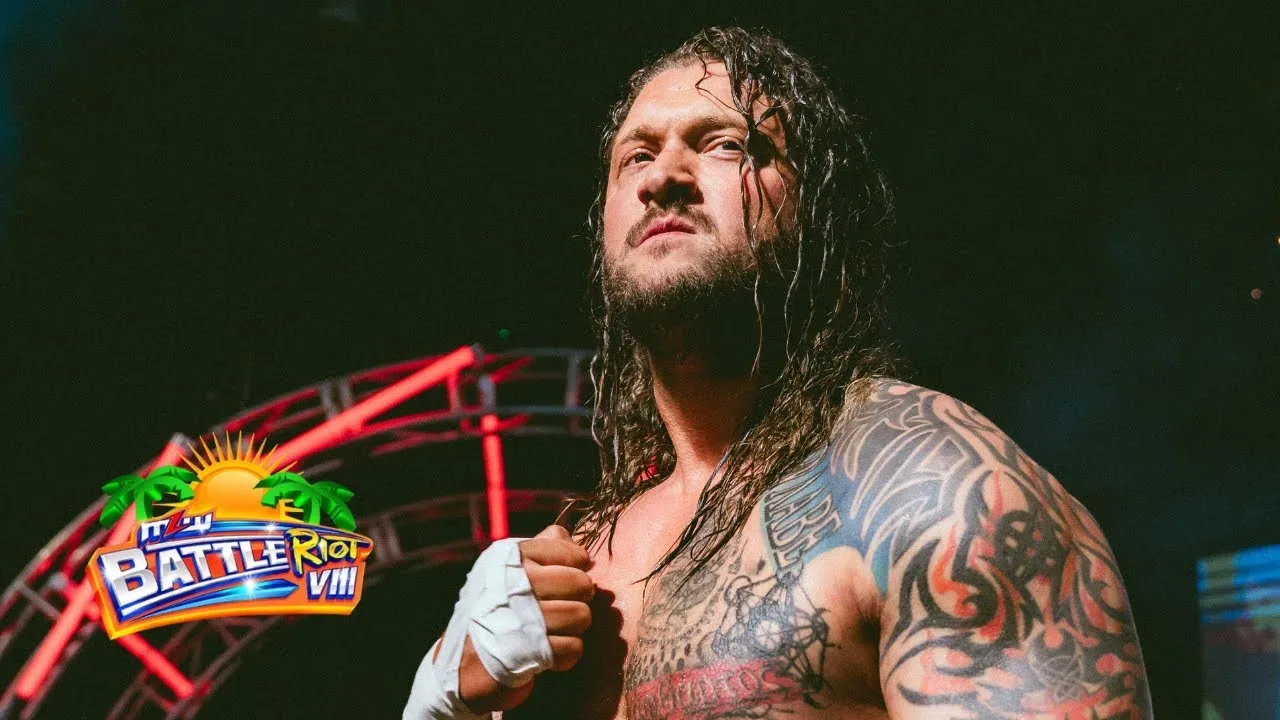
Killer Kross has offered a blunt assessment of the direction professional wrestling is taking, arguing that the increasing emphasis on advertising and sponsorships is cutting into the in-ring action and storytelling that fans tune in to see.
Kross, the reigning MLW World Champion, discussed the subject while addressing a broader question about who could lead wrestling into its next era. Rather than naming a particular performer as the industry’s future standard-bearer, Kross focused on the changing structure of wrestling television and his concern that too much of the available airtime is being given to commercial interests instead of the talent, matches, and narratives on the card.
His position was clear: he understands the financial reasoning behind sponsorships and advertising, but he does not believe the current balance serves the viewing experience as well as it should.
“A lot of what we see in the programming is a reflection of society,” Kross said. “To say who can carry it in the future, I don’t know what the future is going to look like. So far, I actually don’t like the direction that wrestling is going in with cutting down so much time in the program away from the actual wrestling and stories.”
For more background on this topic, read Saquon Shugars Set To Challenge Chad Gable For Intercontinental Title At NXT House Show.
Kross wants wrestling programming to feel like a complete show
The point Kross raised is not simply that commercial breaks exist. Advertising has long been part of television wrestling, and promotions rely on revenue streams beyond ticket sales to operate at a major level. His objection is centered on how prominently promotional material can be placed within the wrestling presentation itself, including moments that would traditionally be used to build momentum after a match or advance a storyline.
Kross compared the desired experience to attending a theatrical performance. In his view, wrestling works best when the audience is able to remain engaged with the show’s world, its characters, and the consequences of what they have just watched.
“If you go to theater, you want to watch the show and be immersed in it,” Kross said. “Constantly blasting you with advertisements; even after a match, they’re dropping commercials. I don’t like that.”
That idea of immersion is central to pro wrestling’s appeal. A match can establish rivalries, elevate championships, introduce new dynamics between performers, or create an emotional payoff that has been building for weeks or months. The moments immediately following a match can be equally important. A winner may celebrate, a defeated wrestler may react to a loss, an opponent may issue a challenge, or a larger story may take a sudden turn.
When attention is quickly redirected away from those moments, Kross believes the core product loses valuable room to breathe. His criticism is aimed at the overall direction of programming, not at the basic reality that wrestling is a business and requires revenue to sustain itself.
He recognizes the business rationale
Kross did not dismiss the commercial side of the industry outright. He acknowledged that promotions have legitimate financial reasons to pursue advertising partnerships and use airtime in ways that create additional income. The MLW champion’s concern is instead about the creative cost of treating wrestling airtime primarily as space to be monetized.
“I understand there is revenue to be generated, but treating the airtime for wrestling like it’s real estate time for other stuff to generate revenue, I understand the business practice of it, but I don’t like it,” Kross said.
That distinction matters. Kross is not claiming that promotions should ignore the realities of modern media. He is saying that the wrestling content itself should remain the priority. For a performer, time on a televised show is where character work, rivalries, victories, defeats, and championship stakes become meaningful to viewers. If that time is reduced, wrestlers have fewer opportunities to make audiences invest in what happens next.
The issue also reaches beyond any one match. Wrestling television depends on pacing. A program needs time for bouts to develop, for promos to establish motivation, and for storylines to move from one chapter to the next. Advertisements and sponsorship mentions can coexist with that material, but Kross’s comments reflect concern that the volume and placement of such material are increasingly shaping the show itself.
In that sense, his remarks are a defense of wrestling as a presentation designed around performance and narrative. He wants the audience to feel that the action in the ring and the stories surrounding it are the main event of the broadcast, rather than material being squeezed between commercial obligations.
The future of wrestling depends on what wrestling becomes
Kross’s comments came in response to a question about who he sees as the future of professional wrestling. He declined to frame the answer around a single name, partly because he does not believe the industry’s future is clear enough to make that call yet.
“When you ask who is going to lead us into that, it could be anybody; what does it matter?” Kross said.
For Kross, the answer is tied directly to the kind of product wrestling chooses to be. If promotions continue to make changes that move the format away from a more traditional wrestling-and-storytelling focus, then the traits required of the people at the top could also change. If the business remains centered on the fundamentals of pro wrestling, however, he believes the wrestlers best equipped to thrive will be the ones who can deliver in that environment.
“If it’s pure pro wrestling, the pure pro wrestlers will be able to do that,” Kross said.
It is a concise philosophy, but one with broad implications. “Pure pro wrestling,” as Kross describes it, places the emphasis on the performers and their ability to connect with audiences through matches, character development, conflict, and storytelling. It suggests that the next generation of leaders should emerge from excellence in those areas rather than from a television format that gives less space to those skills.
At the same time, Kross left the question open-ended. He did not identify a specific wrestler as the person most likely to carry the industry forward, nor did he predict exactly what wrestling will look like years from now. His uncertainty is part of his argument: the direction of the medium will determine which performers are positioned to lead it.
Kross speaks from the perspective of a reigning champion
Kross is making those points while holding one of the most prominent championships in MLW. As the reigning MLW World Champion, he occupies a role that puts him at the center of a promotion’s competitive and storytelling identity. A world champion is expected to anchor major programs, represent the stakes of the top title, and give fans a reason to care about the outcomes of headline matches.
That role naturally makes the value of time and focus on a wrestling broadcast especially important. Championships gain significance through presentation. Rivalries gain intensity through carefully built segments. Wrestlers build their connection with fans through the chance to show who they are before, during, and after the bell.
MLW has also recently reached a deal with Tubi, a development that places the promotion within an evolving media environment of its own. The continuing changes in how wrestling is distributed and financed make Kross’s concerns especially timely. Promotions must find sustainable ways to reach audiences and generate income, while performers and fans alike will continue to judge whether the programming preserves the drama that made them care in the first place.
A call to protect the viewing experience
Kross’s argument ultimately comes back to a simple preference: when fans sit down to watch wrestling, he believes they should be allowed to become absorbed in the wrestling. The performances, the stories, and the emotional aftermath of each match should have room to register before the show shifts attention elsewhere.
His comments do not offer a specific blueprint for balancing sponsorship revenue with creative presentation. They do, however, place the concern plainly on the table. As wrestling programming continues to evolve, Kross wants promotions to remember that the most valuable part of the product is the reason viewers arrived in the first place: the wrestlers and the stories they tell.
Darryl Polo
Darryl Polo is a passionate wrestling fan covering WWE, AEW, TNA and beyond. He loves great rivalries, breakout stars and the moments that keep fans talking long after the bell. How we work.