
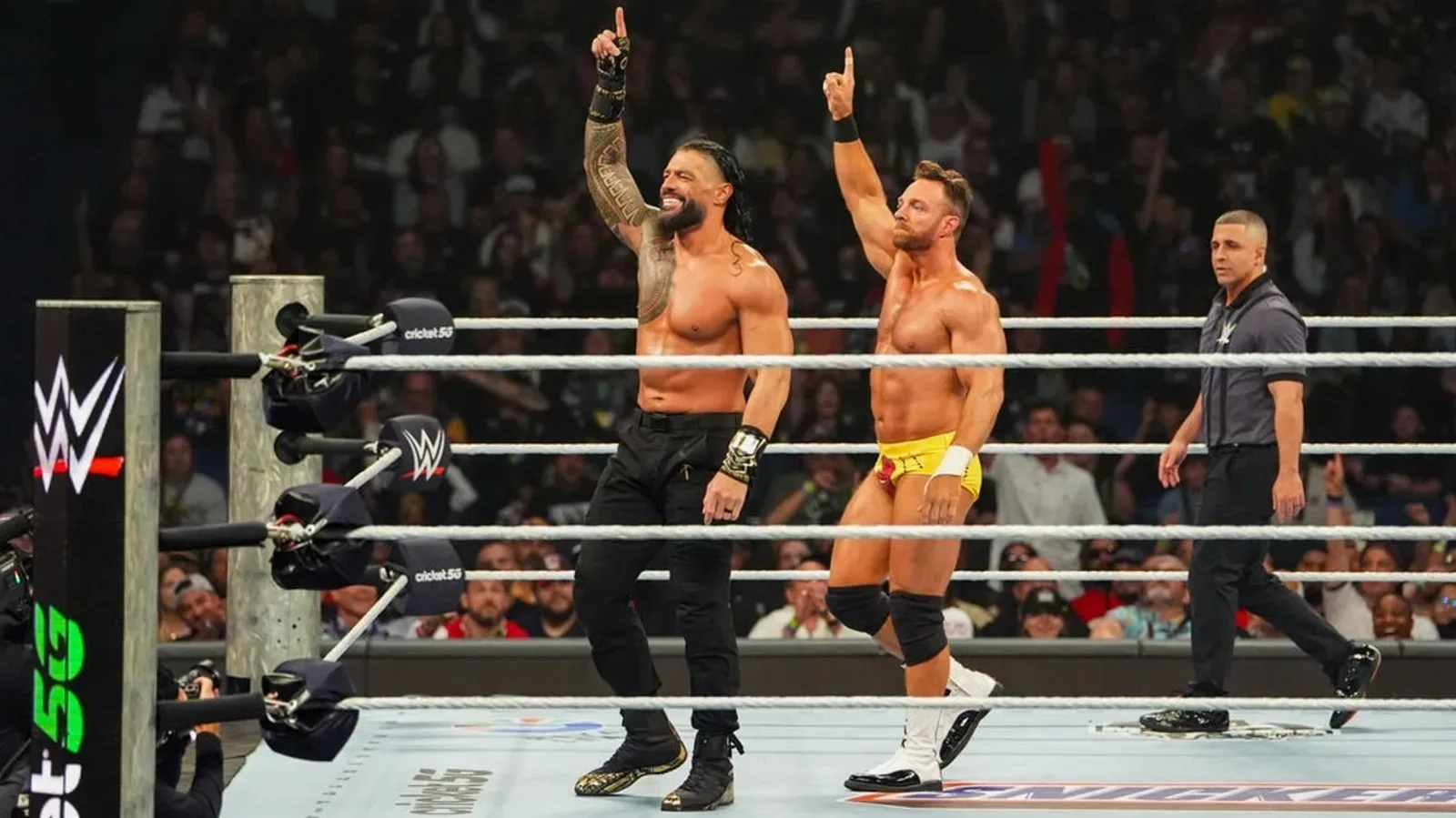
Roman Reigns’ WWE World Heavyweight Championship defense against LA Knight at Money in the Bank carried the weight of a major main-event attraction despite taking place at the very beginning of the premium live event. Reigns retained the title, but the bout was built around the possibility that Knight could finally pull off the breakthrough victory many fans had been anticipating.
For WWE Hall of Famer Kevin Nash, the placement of the match was part of the statement. Speaking on Kliq This, Nash said the championship contest was designed to give the rest of the card an immediate challenge. Even though he entered the match believing Reigns was unlikely to lose, Nash felt the performers delivered exactly what an opening title match needed to accomplish: establish a high bar and make the audience invest in every near fall.
“I knew he wasn’t going to lose,” Nash said. “It was the opening match. It was kind of a ‘follow that’ motherf***ers match.”
That assessment reflects the unusual balance WWE had to strike in presenting Reigns and Knight. Reigns’ title reign and stature made him the established favorite, while Knight had enough momentum and crowd support to make the challenger feel credible. A match does not need a surprise title change to create drama, but it does need moments that convince an audience that the expected result may no longer be secure. Nash believed Reigns and Knight found that balance.
For more background on this topic, read Sol Ruca Says Becky Lynch Taught Her How To Speak Up Creatively.
“They had a great match,” Nash added, praising both men and specifically noting the importance of the match’s false finishes. In a championship encounter where viewers may assume the champion will retain, those sequences can be essential. The challenger has to look dangerous enough to make the crowd question the forecast, and the champion has to sell that danger without losing the authority that made the title reign meaningful in the first place.
A crucial showcase for LA Knight
Knight’s performance was a major part of why the match resonated with Nash. The challenger has long been a performer capable of connecting with a live crowd through confidence, timing, and the ability to make every major moment feel important. Against Reigns, Knight was working opposite one of WWE’s most protected stars and in a match where the championship itself was central to the story.
Nash said simply that “LA Knight was great,” a concise endorsement that still speaks to the size of the opportunity. Sharing the ring with Reigns in a world title match is a test of a wrestler’s ability to operate at the highest level of the card. The challenger must look like he belongs in that environment, not merely like a popular opponent selected for one big night. Knight’s showing helped create the kind of emotional swings Nash referenced, turning a match with a seemingly obvious favorite into one that gave fans multiple reasons to react.
Reigns also earned praise from Nash for maintaining his side of the equation. The champion’s role was not just to survive the challenger; it was to make the audience believe Knight had pushed him closer to defeat than expected. Reigns has built much of his modern WWE identity around composed control, calculated intensity, and the sense that every title defense has consequences. A successful defense against a fired-up opponent like Knight requires him to show vulnerability at the right moments without diminishing the significance of his eventual win.
The result kept the WWE World Heavyweight Championship with Reigns, but Nash’s reaction suggests the match accomplished more than a routine retention. It served as a showcase for Knight, reinforced Reigns’ place at the center of WWE’s championship picture, and gave Money in the Bank an opening bout strong enough to influence how the remainder of the event would be received.
Nash points to the Street Fighter factor
While Nash praised the in-ring execution, he also raised a potential real-world reason why WWE may have preferred Reigns to remain champion heading into the release of Street Fighter. Reigns plays Akuma in the film, giving him a prominent entertainment platform beyond wrestling. Nash’s point was not presented as a confirmed creative explanation, but as a practical consideration involving WWE’s most visible champion crossing over into a major movie promotion cycle.
Nash argued that there is additional value in having Reigns appear at high-profile film events while still holding WWE’s top prize. In his view, a red-carpet appearance is different when the performer can be introduced not only as an actor but as the reigning WWE World Heavyweight Champion. That distinction can help WWE, the film, and Reigns himself by maintaining a clear association between a mainstream entertainment appearance and the company’s biggest championship.
“Do you just say, ‘Hey, man, that’s the WWE champion?’” Nash said while discussing the potential promotional upside.
The Hall of Famer framed the situation as a rare chance for a wrestler to bring championship status into a setting that reaches beyond the usual wrestling audience. Major film premieres and red-carpet events can place a performer in front of viewers who may not watch weekly WWE programming or premium live events. With Reigns cast as Akuma, the visual of him attending such events as an active world champion could strengthen the broader perception of WWE’s reach and of Reigns’ individual star power.
Nash also described the possible moment as one wrestlers do not receive often: being recognized as both a film star and the promotion’s current champion. Whether that consideration played any role in the Money in the Bank booking remains unconfirmed. Still, it is a logical industry observation from Nash, particularly given the longstanding value WWE has placed on having its champions represent the company in mainstream media environments.
Reigns moves forward as Bloodline tensions continue
With the Knight defense now behind him, Reigns appears to have shifted away from that one-on-one rivalry. The focus has moved back toward The Bloodline, where Reigns and the group’s wider internal issues continue to shape the WWE landscape. The next apparent opposition is 946, with the two factions seemingly heading toward a confrontation at Survivor Series.
That direction underlines why the Money in the Bank match mattered. Reigns was able to leave the event with his championship intact before returning to a larger group conflict, while Knight emerged from the match having delivered a performance Nash considered worthy of significant praise. The title did not change hands, but the match still had stakes for both competitors: Reigns protected the championship’s prestige, and Knight demonstrated that he could thrive in a major world-title setting.
For Nash, the opening-match placement only enhanced the achievement. Money in the Bank began with a title defense that had the crowd responding to the possibility of an upset, featured the type of false finishes that can elevate a match’s suspense, and left the rest of the card with a difficult act to follow. Reigns’ retention may have been the result Nash expected, but he did not see that predictability as a weakness. Instead, he saw a match that made the expected outcome feel far less certain while it was unfolding.
As Reigns heads toward the next chapter of the Bloodline story and the likely Survivor Series collision with 946, the Money in the Bank opener stands as an important reminder of what a championship match can accomplish without a title switch. In Nash’s view, Reigns and Knight delivered a statement bout: one that showcased Knight’s ability, reinforced Reigns’ championship standing, and gave WWE a compelling standard for the night from the opening bell.
In pictures

Darryl Polo
Darryl Polo is a passionate wrestling fan covering WWE, AEW, TNA and beyond. He loves great rivalries, breakout stars and the moments that keep fans talking long after the bell. How we work.