
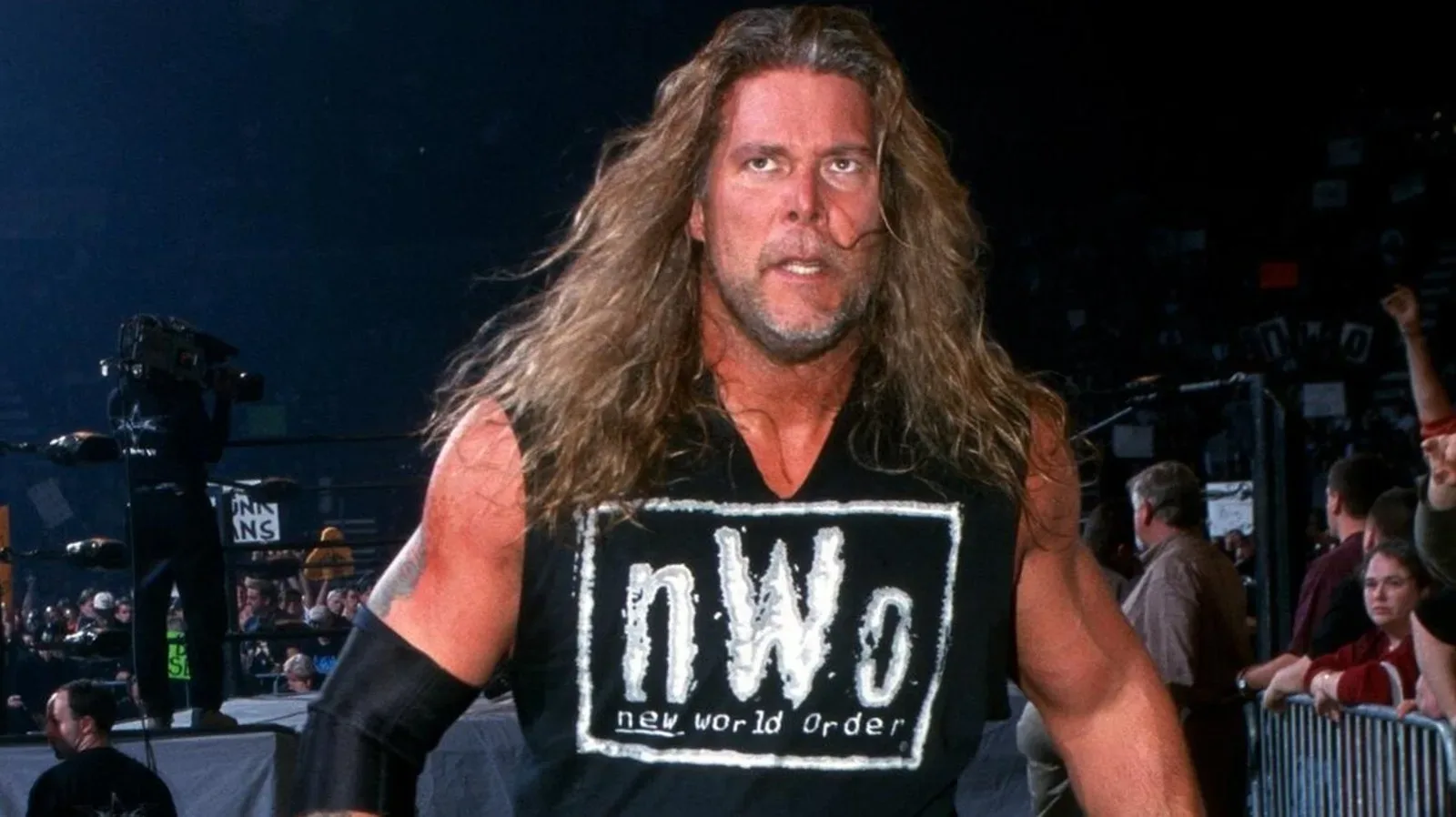
Kevin Nash has explained why the pursuit of additional world championships never carried the same personal weight as his first WWE Championship victory.
During a Q&A session on Kliq This, Nash was asked whether he had ever wanted to hold either the NWA World Heavyweight Championship or the TNA World Championship. Both titles remained absent from his resume, despite Nash’s lengthy career and his prominent role in multiple major promotions. His response made clear that he was not driven by the need to add every possible world title to his list of accomplishments.
Nash said he would have been open to winning either championship if a promotion had wanted him in that role. But the former Diesel said that his central objective had already been achieved when he captured the WWE Championship in 1994.
“No [I wasn't interested in winning TNA or NWA world titles], I mean I would have if somebody would have told me that they wanted me to do it. But I mean once I won the WWE Championship, I was a world champion. I attained a goal when I broke in. I wanted to be a world champion. I knew that it didn't mean you were the best. I just knew that it meant you were in a good position, and I wanted to be in that position.”
For more background on this topic, read Chad Gable Explains How Amateur Wrestling Helped Him Endure the Shorty G Era.
That distinction is central to Nash’s view of championship success. He did not frame the title as a definitive measurement of who was the greatest wrestler in a company or in the industry. Instead, he viewed becoming world champion as evidence that he had reached a significant level of trust, visibility and importance within the business.
For Nash, that was the aspiration from the beginning. The goal was not necessarily to accumulate the greatest possible number of title reigns across different organizations. It was to reach the point where he was positioned as a world champion. Once he had reached that point in WWE, the larger ambition that had motivated him when he entered professional wrestling had been realized.
The Diesel breakthrough in 1994
Nash’s one and only WWE Championship reign began in 1994, when he was performing as Diesel. He defeated Bob Backlund for the championship at a house show, creating the defining world title moment of his WWE career.
The victory remains particularly meaningful in light of Nash’s comments because it was not simply another entry on a championship record. It was the moment that fulfilled the objective he had set for himself when he broke into the business. In his own words, becoming WWE Champion meant that he had become a world champion, and that accomplishment answered the question he had carried with him throughout his rise.
His remarks also underline a reality that can be lost when championship histories are viewed only through statistics. A wrestler’s relationship with a title can be shaped by the timing of a reign, the circumstances surrounding it and what the opportunity represents in that wrestler’s own career. For Nash, the first WWE Championship win stands apart because it was the first confirmation that he had reached the position he wanted.
That does not diminish the championships Nash held later, nor does it suggest he would have rejected other title opportunities. He specifically said he would have won the NWA or TNA world titles if someone had asked him to do so. The difference was one of personal necessity. By that stage, another world championship was not required to validate the goal he had already achieved.
Five WCW title reigns, but one singular memory
After his WWE run, Nash moved to WCW and became a multiple-time WCW World Heavyweight Champion. He held the company’s top championship five times, beginning with a major victory over Goldberg in 1998. That win launched Nash’s first reign with the Big Gold Belt and marked another major chapter in a career that placed him at the center of wrestling’s most prominent main-event scenes.
Yet Nash said that even several of his world title victories have blurred together in his memory. He noted that he can see footage of himself winning championship matches and still have no recollection of the occasions.
“So after that, it's just like I said, there's several times in my life that I see clips of me winning world championship matches, and I have no idea or recollection of them.”
The comment places even greater emphasis on the uniqueness of the WWE Championship win over Backlund. Nash has made clear that his initial WWE title victory is the exception among his various world championship moments. It is the one reign that remains firmly attached to the original dream he had when he entered the profession.
There is a difference between having an impressive list of achievements and having a moment that defines the completion of a personal journey. Nash’s career contains both. His five WCW World Heavyweight Championship reigns reflect the major role he played in that company, while his WWE Championship victory as Diesel remains the achievement he associates most directly with the ambition that first drove him.
Why the title represented position, not absolute status
Nash’s explanation also offered a candid perspective on what a world championship signifies in professional wrestling. He acknowledged that holding the championship does not automatically mean its holder is “the best.” That statement avoids treating title lineage as a simple ranking of talent.
Instead, Nash associated the championship with being in “a good position.” In wrestling terms, the top title places a performer in an important role in a promotion’s presentation. It indicates that the wrestler has been selected for a featured spot and entrusted with a level of responsibility that comes with being champion. Nash wanted that position, and he recognized the WWE Championship as proof that he had attained it.
That outlook helps explain why the NWA and TNA championships did not become unfulfilled ambitions for him. Their absence does not appear to be a source of regret in Nash’s telling. Once he had won WWE’s top prize, he did not feel a personal need to pursue other versions of the same milestone simply for the sake of completing a broader collection.
At the same time, Nash did not dismiss the value of those championships or the possibility that he could have held them. His answer was conditional: if he had been asked to take either title, he would have done it. The key point was that the opportunity would not have changed how he viewed his own career goal. He was already a world champion in the sense that mattered most to him.
A career measured by the first summit
Nash’s record includes one WWE Championship and five WCW World Heavyweight Championship reigns, giving him six world title reigns across the two promotions named in his comments. But his reflections show that the number itself is not the primary story from his perspective.
The defining achievement was becoming WWE Champion in 1994. That was the summit he had targeted when he started in wrestling, and it was the moment that told him he had reached the position he sought. The later WCW title wins added to an already notable career, including the 1998 victory over Goldberg that began his first run with the Big Gold Belt. Still, they did not replace the meaning of the first one.
For Nash, the answer to whether he wanted the NWA or TNA World Championship is ultimately rooted in that personal benchmark. He had already completed the mission he set for himself: to become a world champion. Everything that followed could be important, but none of it needed to redefine the accomplishment that came when Diesel defeated Bob Backlund for the WWE Championship.
In pictures

Darryl Polo
Darryl Polo is a passionate wrestling fan covering WWE, AEW, TNA and beyond. He loves great rivalries, breakout stars and the moments that keep fans talking long after the bell. How we work.