
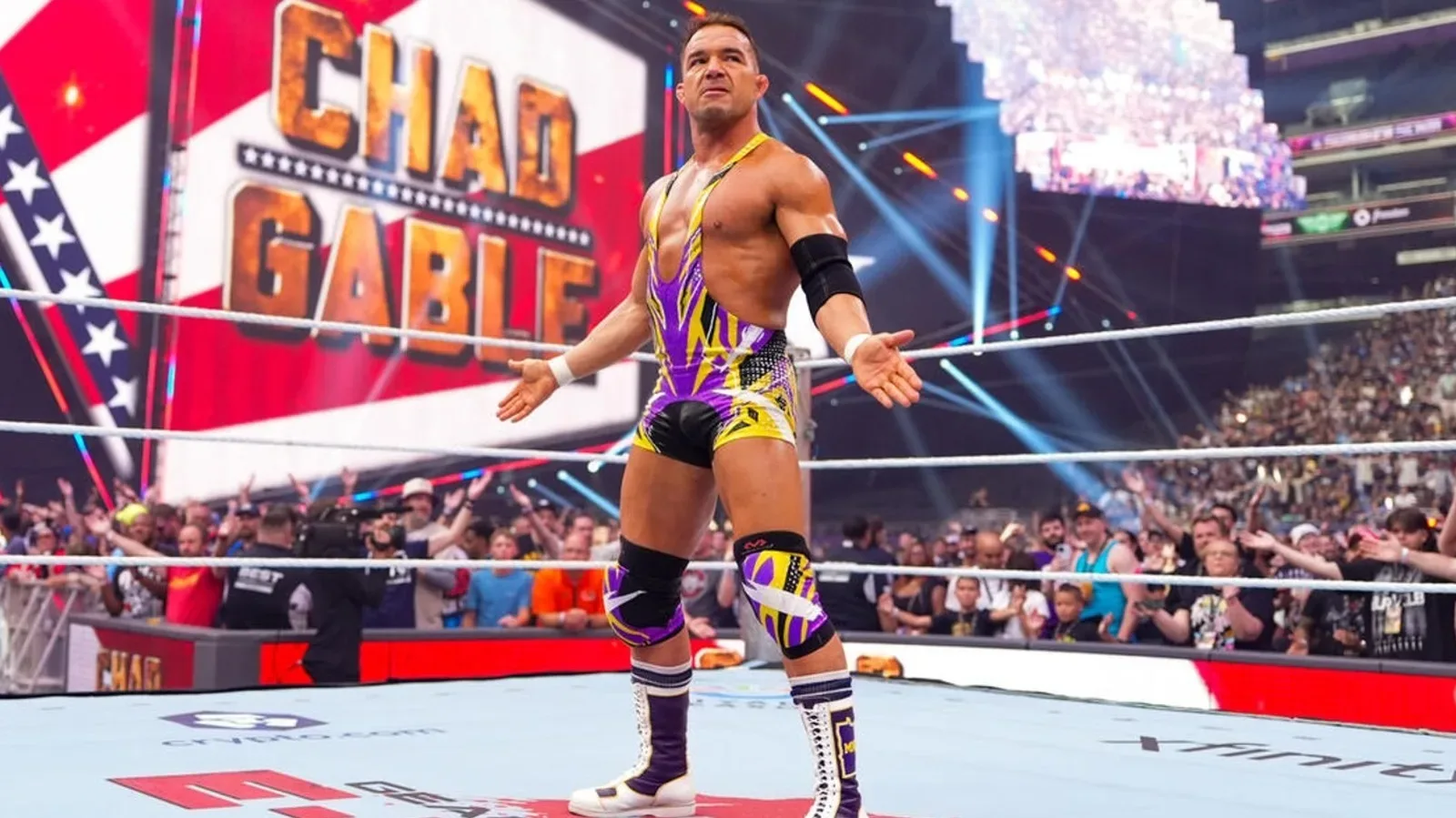
Chad Gable has never hidden the fact that the Shorty G period was not a creative high point of his WWE career. Years after the character was introduced, Gable has offered a candid explanation of why he continued to commit to it anyway, pointing to the discipline and resilience built during his amateur wrestling career.
Speaking with WittyWhittier, Gable discussed the mentality that has helped him work through WWE roles that did not always align with the performer he wanted to present. For Gable, the answer begins well before his arrival in WWE. His background in amateur competition, including reaching the Olympic level and winning national championships, instilled an ability to keep moving forward when circumstances become difficult.
That outlook was especially important during the run of the Shorty G character, a presentation built around Gable's height that many fans viewed as an unnecessary reduction of a wrestler with his technical credentials and athletic résumé. Gable himself acknowledged that it was among the aspects of his WWE career he is least proud of. Still, he did not allow his dislike of the idea to become an excuse to disengage.
“I think a lot of that goes back to my amateur wrestling days and I've credited that a lot with my ability to kind of see things through character-wise,” Gable said. “Even if it's something that I mean, quite transparently, I wasn't always on board with as far as like you think of things like Shorty G and these aspects of my career that I'm not the proudest of.”
For more background on this topic, read John Cena Reveals Private Moment That Became One of His Favorite Memories From WWE Retirement Day.
Gable's point was not that every assignment becomes easier through effort alone. Rather, he explained that his response to an unwelcome situation has been shaped by the same persistence that carried him through the demanding amateur wrestling system. At that level, setbacks are unavoidable, and an athlete who abandons the process at the first major obstacle will not reach the goals that initially drove them.
“But I forced myself to say we're going to see this through because had I given up in my amateur wrestling career when things got hard I would have never found myself on the Olympic team. I would have never national championships,” Gable said.
That perspective offers important context for Gable's long WWE journey. He entered the company with an exceptional legitimate sports background and quickly earned recognition for his in-ring ability. His speed, mat wrestling, timing and ability to adapt to different opponents made him stand out, but a professional wrestling career demands more than performance quality. A WWE talent can control preparation, execution and attitude, but does not have complete control over character direction, screen time or the opportunities that follow.
Gable openly recognized that distinction. Amateur wrestling rewards a comparatively direct relationship between preparation and result. The athlete trains, competes and must earn success against another competitor. WWE has a very different structure, in which the creative side of the business introduces decisions that are outside a wrestler's individual control. Working hard remains essential, but hard work is not the only factor that determines a performer's immediate position.
Rather than framing that reality as a reason to lose focus, Gable said it has reinforced the need for patience. He has tried to bring his amateur work ethic into professional wrestling while accepting that the path toward a desired role may be longer and less linear than it was in sport.
“You kind of have to set your standards — it's about the journey, hoping that someday it's going to pay off because some of the decisions here, some things are out of your control. And you have to accept that,” Gable added.
The Shorty G presentation remains a notable chapter in that journey because it became so closely associated with the frustrations fans had about Gable's booking. The name and character direction put the focus on a trait that had long been used against him in storyline settings, despite his extensive amateur credentials and the explosiveness he consistently showed inside the ring. It was a sharp departure from the version of Gable many viewers believed could thrive with a more serious platform.
Gable's comments, however, make clear that he views the period through a broader lens than simply disappointment. He did not claim to have supported every creative decision. In fact, his remarks were direct in identifying Shorty G as material he was not fully on board with. But he also stressed the value of seeing a responsibility through, especially when quitting mentally would not improve the situation.
That is a significant part of the difference between being unhappy with a role and refusing to perform it. Gable chose to continue doing the work, trusting that maintaining his standards would matter when a better opening eventually appeared. The lesson he carried from amateur wrestling was not that every struggle produces an immediate reward. It was that a wrestler must be able to endure the difficult stretches if he wants to be ready when the next opportunity arrives.
As Intercontinental Champion, Gable now speaks from a position that gives added weight to that patience. His current standing does not erase the frustrations of previous creative eras, nor does he attempt to rewrite his feelings about the Shorty G character. Instead, he presents that experience as part of a longer professional process, one in which persistence helped him survive stretches that could have derailed his momentum.
The comments also underline why Gable's amateur pedigree has remained central to his identity in WWE. It is not merely a list of accomplishments used to establish credibility in promos or match introductions. The background has affected how he approaches adversity. Reaching an Olympic team and winning national championships required years of discipline, repeated competition and an ability to continue after failure or disappointment. Those habits have remained useful even in a business where the variables are far more complicated.
Professional wrestling often asks performers to balance confidence in their own potential with the humility to work within a system they cannot fully dictate. Gable's approach has been to control the areas available to him: preparation, execution, commitment and the willingness to stay engaged. He believes the payoff may not come on the schedule a wrestler wants, but that does not make the work in the meantime meaningless.
For fans who saw the Shorty G era as an example of Gable being placed in an ill-fitting role, his explanation offers a clearer look at how he handled it internally. He did not pretend it represented his ideal vision. He also did not let it convince him that the larger pursuit was over. The same mindset that pushed him through the hard moments of amateur competition allowed him to treat a difficult WWE character as another test of resolve.
Gable said he brought that work ethic with him from amateur wrestling, while also learning that the professional wrestling journey can take longer than anticipated. That patience has become one of the defining themes of his career. Even when a character or creative direction did not reflect his ambitions, he continued to work toward the version of success he believed was still possible.
In Gable's view, the Shorty G chapter was not something to celebrate, but it was something to survive. His refusal to give up on the process helped keep him moving toward the opportunities that followed. For the Intercontinental Champion, that is the practical value of his amateur wrestling foundation: not simply the ability to outwork an opponent, but the ability to keep going when the road in front of him is not the one he would have chosen.
In pictures

Darryl Polo
Darryl Polo is a passionate wrestling fan covering WWE, AEW, TNA and beyond. He loves great rivalries, breakout stars and the moments that keep fans talking long after the bell. How we work.