
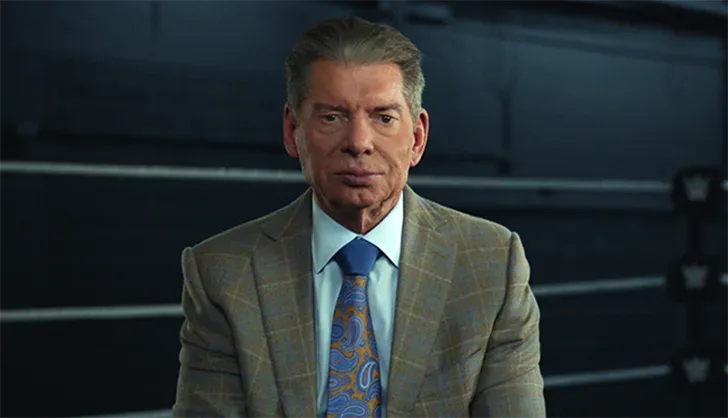
Kevin Nash says he has no issue with the people now guiding WWE under the TKO banner, but he does not believe returning to the company carries the same emotional meaning without Vince McMahon present.
Speaking on Kliq This, Nash discussed the way WWE veterans were treated during an earlier era, including the small but meaningful financial considerations extended to former performers. The conversation led into a broader reflection on the personal relationships that tied many longtime wrestlers to McMahon, who resigned from WWE in January 2024 following the lawsuit filed by Janel Grant that included sex trafficking allegations.
For Nash, the difference is not framed as an attack on WWE’s current leadership. Instead, he described it as the absence of a shared history with the people currently running the company. Nash specifically said he had been treated warmly in his limited interactions with WWE President Nick Khan, while emphasizing that familiarity and professional goodwill are not necessarily the same thing as the bond built through decades in wrestling.
Nash Draws a Line Between Respect and History
Nash made clear that his comments were not meant to criticize TKO or the executives overseeing WWE’s present-day business. He said he simply does not know many of them personally.
For more background on this topic, read Rey Fenix vs. Ethan Page, Becky Lynch vs. Liv Morgan Set For October 5 WWE Raw.
“I’ve got nothing against anybody at TKO. I really don’t. I just don’t know them,” Nash said. “I’ve run into Nick Khan two times, and he was one of the kindest, sweetest people. He introduced me to his wife and his children.”
That positive description of Khan was followed by Nash’s explanation of what feels missing when a veteran returns to WWE now. In his view, McMahon represented a specific connection to the wrestlers who lived through the company’s earlier periods, shared the road, worked through difficult circumstances, and helped make WWE what it became.
“It’s just that it’s not coming back and seeing Caesar, seeing Vince,” Nash said. “Seeing the guy who, when he looks at you, you’re not just some Legends Contract suck-ass. You’re one of the guys who ate the sandwiches, you know what I mean? Like, ‘Hey, I owe you.’”
The wording reflects Nash’s belief that the most important part of the relationship was not a ceremonial appearance or a contractual designation. It was the recognition that came from a promoter and performer having gone through the same demanding business together. Nash’s point was that, to him, McMahon was not merely an executive associated with WWE’s past. He was a figure directly linked to the years of travel, physical sacrifice, locker-room relationships, and high-pressure work that defined Nash’s career.
That distinction helps explain why Nash’s comments are more personal than corporate. WWE remains a major professional wrestling organization with a new leadership structure, but Nash was speaking about what it feels like for a veteran to walk back into a place that once had a very specific central figure at its heart.
Remembering How Veterans Were Treated
The discussion began with Nash recalling an example of how older wrestlers could still be acknowledged and compensated even when they were not booked to perform. He pointed to Madison Square Garden, one of WWE’s most historic venues, and remembered a practice in which veterans would show up and receive a draw despite not appearing on the card.
“I remember when we used to run the Garden, and Arnie ran the payday at the Garden,” Nash said. “There’d be so many guys that would show up and get a draw that weren’t on the card, man. Old-timers, they’d get a $200 draw, and that was as close as you’ll ever get to what it must have been like.”
On its face, the amount Nash mentioned was modest. His recollection was about something larger than the money itself: the idea that wrestlers from a previous generation were still part of the fabric of the event. Their presence was recognized, and they were not treated as strangers to the operation they had helped build.
For a business built heavily around lineage, nostalgia, and the contributions of past stars, that type of gesture can carry emotional weight. Nash’s comments suggest that WWE’s historic culture included more than what happened in front of the audience. It also involved small locker-room and office traditions that let older performers know their work had not been forgotten.
His recollection also provides context for his feelings on McMahon’s absence. Nash is describing an era in which recognition often came through direct interaction, personal memory, and a sense of mutual obligation. Whether a wrestler was on a current show or simply visiting, the underlying message could be that they still belonged.
A Painful Memory From 2002
Nash also revisited one of the most difficult moments of his WWE career: the quad tear he suffered on the July 8, 2002 edition of Raw. The injury came in what Nash described as his first match back after recovering from a torn biceps, making the moment especially frustrating.
In recalling the incident, Nash said he had warned McMahon before going out that the situation created a risk of injury. Nash’s recollection was that he believed he was being rushed back before he was ready, and that the decision had been unnecessarily escalated.
“When I tore my quad in Philadelphia, he walked into the training room, and we made eye contact,” Nash said. “I never saw this part of Vince before. I looked up, and he was standing in the doorway with the door cracked, and I could see three-quarters of his face, and he mouthed, ‘I’m sorry.’”
Nash said he had directly raised the concern before the match.
“Because before I ever went out there, before I even got my gear on, I told him, ‘This is how you get hurt. You’re not ready, and you hotshot some shit.’”
The memory stands out because Nash did not present McMahon simply as an authority figure making a decision from a distance. He described seeing an unexpected moment of regret after the injury occurred. The apology, as Nash remembered it, left an impression because it was an emotional response he had not previously seen from McMahon in that way.
That moment also gives added meaning to Nash’s remarks about returning to WWE. His connection to McMahon was not limited to favorable memories, professional success, or Hall of Fame recognition. It included conflict, physical hardship, and a major injury that Nash believed could have been avoided. Even within that difficult experience, Nash remembers a human response from McMahon.
Why Nash’s Perspective Carries Weight
Nash’s career gives him a unique vantage point on WWE’s changing identity. He is a performer whose history with the company spans multiple eras, and his comments underline how much professional wrestling can depend on long-term relationships rather than just changing titles and corporate structures.
There is no indication in Nash’s remarks that he is unwilling to deal with WWE’s current leadership. In fact, he went out of his way to praise his interactions with Khan. But he also did not pretend that a cordial meeting can recreate the feeling of seeing someone who knew him as an active performer, understood his career from the inside, and carried memories of the same moments that shaped him.
That is the core of Nash’s point. A return to WWE can still involve appreciation from fans, respect from current executives, and the celebration of a legendary career. Yet for a wrestler who shared so much history with McMahon, the experience is inevitably altered by his absence.
Nash’s recollections of Madison Square Garden paydays, direct conversations with McMahon, and the aftermath of his 2002 injury all point to the same theme: wrestling history is often deeply personal for the people who lived it. For Nash, WWE without McMahon is not necessarily hostile or unwelcoming. It is simply not the same place he once knew.

Darryl Polo
Darryl Polo is a passionate wrestling fan covering WWE, AEW, TNA and beyond. He loves great rivalries, breakout stars and the moments that keep fans talking long after the bell. How we work.