
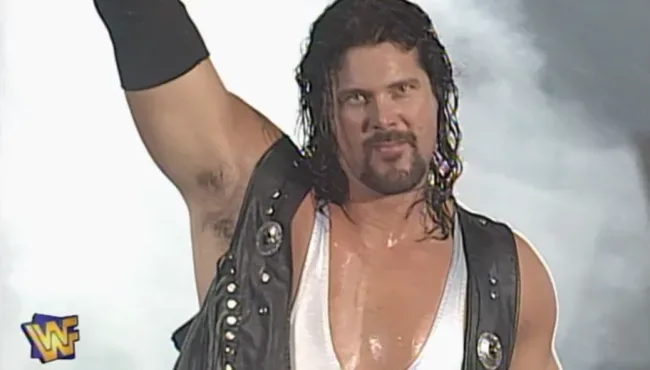
Kevin Nash has never been shy about looking back at his wrestling career with blunt honesty, and the former WWE Champion offered another candid assessment while discussing the opponent he least enjoyed being booked against.
During a listener-question segment on Kliq This, Nash named Bob Backlund as the wrestler he most dreaded working with. Nash was careful to distinguish between his feelings about Backlund personally and the challenges he experienced in the ring and in structuring their matches. In Nash’s view, the two men came from dramatically different generations of professional wrestling, with contrasting instincts, styles, and ideas about what their work should be.
That clash became especially significant because Backlund was the opponent Nash defeated to win his first WWE Championship. Their December 1994 meeting at Madison Square Garden remains a major turning point in WWE history, both as Nash’s first world-title victory and as a representation of the company moving away from one era into another.
Nash Says The Pairing Was A Difficult Fit
Asked to identify the wrestler he least looked forward to facing, Nash did not frame the answer as a personal issue with Backlund. Instead, he explained that their professional chemistry was hard to find because their respective approaches were so far apart.
For more background on this topic, read AJ Styles Revisits the Last-Minute Chain of Events That Created His Finn Balor Match at WWE TLC 2017.
“I had a really hard time with Backlund,” Nash said on Kliq This. “We were just so different. Different eras, different styles, different everything.”
Nash then reassessed his own wording in real time, admitting that he did indeed dislike the experience of working matches with the former WWE Champion even though he was not saying he disliked Backlund as a person.
“I didn’t hate him. I hated working with him, though,” Nash said. “So I would be lying to say I didn’t really not look forward to that.”
It is an important distinction, particularly in an industry where difficult matchups do not necessarily reflect animosity between performers. Wrestlers can be respected colleagues while still having trouble matching timing, pacing, physicality, or the broader philosophy each brings to a bout. Nash’s comments place his issues with Backlund squarely in that category.
Backlund was one of WWE’s defining stars of the late 1970s and early 1980s. His original WWF Championship reign, which began in 1978, established him as a clean-cut amateur-style champion whose matches emphasized conditioning, holds, reversals, and endurance. By the time he returned to WWE in the 1990s, Backlund had transformed his presentation into a more eccentric and intense character, but his technical wrestling foundation and old-school sensibilities remained central to his identity.
Nash, meanwhile, entered WWE as Diesel during a very different period. His imposing size, deliberate movement, power offense, and cool persona made him a distinctly modern main-event figure for the mid-1990s. Before becoming champion, he had gained major visibility as Shawn Michaels’ bodyguard and then rose on his own as one of the company’s most physically dominant attractions.
A Title Change That Signaled A New Direction
The Nash-Backlund pairing is inseparable from the WWE Championship change that took place on December 28, 1994. At a Madison Square Garden live event, Diesel defeated Backlund in seconds to capture the WWE Championship for the first time. The decisive nature of the outcome made the moment memorable, while also making it vastly different from the kind of lengthy, technically driven title defenses associated with Backlund’s earlier championship legacy.
The brief match was designed to establish Diesel as an overwhelming new champion. Rather than presenting a competitive, drawn-out struggle, the result immediately reinforced his power and placed him at the center of WWE’s main-event scene. Nash has previously discussed that championship win during a 2021 appearance on Broken Skull Sessions, and the victory remains one of the landmark moments of his WWE run.
From a historical perspective, the match also represented the tension Nash described on Kliq This. Backlund’s legacy was built in a wrestling environment where champions were frequently asked to carry long matches and demonstrate their credibility through technique and stamina. Diesel was built as a larger-than-life force whose appeal often rested in his ability to make an immediate impact. The champion-versus-challenger dynamic between the two men was therefore more than a routine booking assignment; it put two very different versions of a WWE top star into the same program.
That does not mean the rivalry lacked importance. On the contrary, WWE trusted Backlund with a meaningful role during a period of transition. Backlund had regained the WWF Championship from Bret Hart only weeks before Diesel defeated him, and his reign helped set the stage for a new champion to emerge. Diesel’s victory over a former longtime champion gave Nash an instant piece of championship history, even if he now recalls the working relationship as an uncomfortable one.
Different Generations, Different Expectations
Nash’s explanation did not get into specific disagreements over individual spots, match layouts, or backstage conversations. He did not accuse Backlund of misconduct, nor did he offer any particular incident as the reason for his frustration. His point was broader: the two men did not naturally operate from the same wrestling language.
That sort of generational divide is a recurring part of wrestling history. Every era develops its own rhythm. A performer trained around long, hold-based contests can approach a match differently than a wrestler whose career was shaped by television pacing, character-driven presentation, and larger-scale power-based main events. Neither method is inherently invalid, but the challenge comes when two performers have to create a coherent match while drawing from opposite traditions.
For Nash, whose 6-foot-10 frame and powerhouse offense were key elements of his presentation, a match with Backlund could require adjustments that did not come naturally. For Backlund, whose style had been refined long before Nash became a major WWE player, working with a performer of Diesel’s scale and cadence could create an equally unusual assignment. Nash’s remarks suggest that the contrast was never something he became comfortable with.
It is also notable that Nash’s answer was not softened into a diplomatic non-response. He initially said he did not hate working with Backlund, then immediately corrected himself to concede that he did. That willingness to revise his answer gave the comments their force. Nash did not present the experience as a minor inconvenience; he said it was a pairing he genuinely did not anticipate positively.
Nash Offers A Candid View Of His Younger Self
In the same discussion, Nash also reflected on how differently he views himself now compared with the man he was when he reached the top of WWE. He noted that he believed he had life figured out at age 40, only to look back decades later with a far more critical perspective.
“I thought at 40 I had s**t dialed in,” Nash said. “And I look back now, 27 years later, and go, ‘What a douchebag.’”
The remark adds context to the way Nash discussed Backlund. Rather than speaking as though his own outlook from the 1990s should be treated as beyond question, he acknowledged that age has changed his perspective. Nash still clearly remembers not enjoying the work, but he also recognizes that the version of himself who experienced those situations was younger, more certain of his own judgment, and not necessarily someone he evaluates without criticism today.
That self-awareness does not erase the contrast Nash felt with Backlund, and he did not walk back his central answer. Backlund remains the name that came to mind when Nash considered the opponent he least looked forward to being scheduled against. But Nash’s reflection makes clear that he is not simply retelling the story to assign blame. He is evaluating a difficult professional fit through the perspective of someone who has had decades to consider his career, his choices, and his own attitude.
For WWE audiences, Nash and Backlund will always be tied together by the night Diesel won the company’s biggest prize. It was a short match with an enormous historical effect, launching Nash’s first WWE Championship reign and further cementing the end of Backlund’s brief 1994 return to the title picture. Behind that iconic result, however, Nash now says there was a working relationship he found far more challenging than he would have liked.
Darryl Polo
Darryl Polo is a passionate wrestling fan covering WWE, AEW, TNA and beyond. He loves great rivalries, breakout stars and the moments that keep fans talking long after the bell. How we work.