
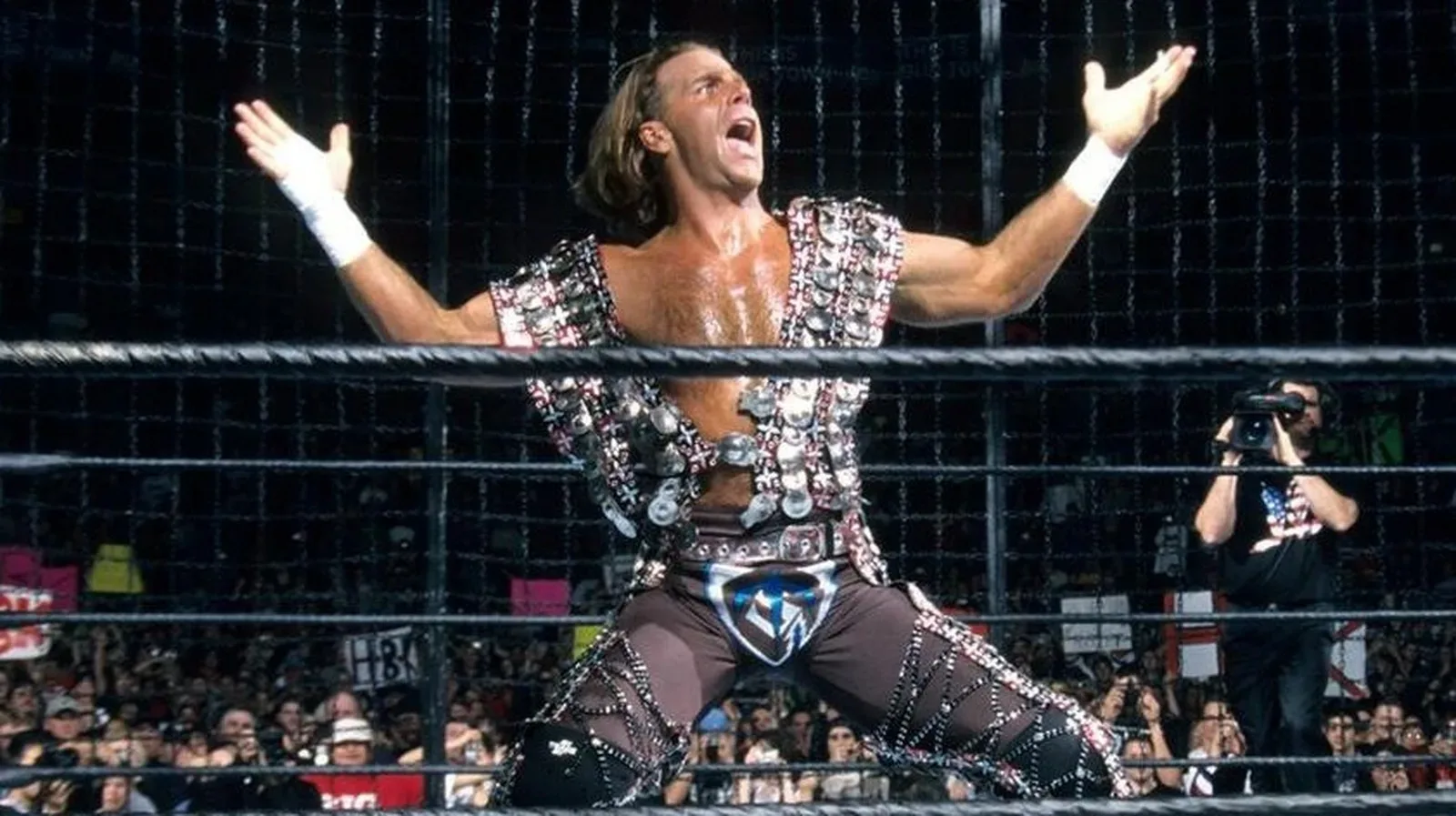
Kevin Nash believes one of professional wrestling’s most important tools is the ability to make an audience stop thinking about the mechanics of a performance and react emotionally to what is in front of them. Recalling a past WWE angle involving his longtime friend Shawn Michaels, Nash said the presentation became so convincing that fans reportedly called a Springfield hospital after Michaels was taken away as part of the storyline.
Speaking on Kliq This: The Kevin Nash Podcast, Nash described the planning behind an angle in which Michaels took a major blow, went down, and was removed from the scene. Rather than treating the moment like a conventional television beat with immediate narration and exaggerated reactions, Nash said he wanted the atmosphere around Michaels to communicate the seriousness of the situation.
“I remember when we did the Shawn Michaels thing, when he took the blow and he went down, and I remember when I pitched it, I said, ‘We can’t have the commentators talk... We have to have the locker rooms come out, heels and babyfaces, kind of standing to make sure that he’s f***ed, and then take him out...’” Nash said.
The distinction Nash made is central to the way major wrestling angles have traditionally been sold. A wrestler going down after an attack is not automatically enough to create concern. Viewers have seen countless post-match beatdowns, dramatic falls, medical checks, and stretcher scenes over the decades. For an angle to feel different, every person around it has to treat it differently. That includes the wrestlers in the ring, the officials, the broadcast team, the production choices, and even the wrestlers watching from the entranceway or the locker room.
For more background on this topic, read WWE NXT Announces Beyond The Bell Interview Series For The CW Network.
Nash’s recollection was that the response extended beyond the television audience simply accepting the segment as an entertaining storyline. He said Michaels was checked into a Springfield hospital as part of the effort to sustain the illusion, leading fans to make calls seeking details on the WWE star’s condition.
“I’m pretty sure we checked him into a Springfield hospital. So, people called. Shawn was in the hospital,” Nash said. “So... you can make s*** real. But you can’t make s*** half real.”
A lesson in selling the moment
Nash’s comments came during a wider discussion with co-host Sean Oliver about believability in modern wrestling. His point was not that every wrestling segment must be presented as a legitimate emergency. Wrestling has always relied on a wide range of tones, from serious personal rivalries to comedy, spectacle, and outright absurdity. Instead, Nash argued that once a promotion decides to present an angle as grave and consequential, the people involved have to commit to that approach from beginning to end.
That is why the reaction of wrestlers who were not directly involved in an angle can matter as much as the actions of the central performers. If rivals who have spent weeks trying to hurt each other suddenly emerge together, dropping their own issues to look worried, the audience receives a signal that something has broken through the usual rules of the show. The same applies when villains and heroes stand side by side, or when the normal rhythm of a broadcast changes to accommodate the apparent crisis.
For Nash, silence from commentators was also a key part of the concept. Wrestling announcers ordinarily guide viewers through the action, explain motivations, and keep the energy moving. But a quiet or restrained broadcast response can create discomfort. It gives a moment more room to breathe and lets viewers focus on the reactions around the ring rather than immediately being told how to interpret what they have seen.
In a format built on live reaction, small choices can dramatically alter the perception of an angle. A commentator shouting a familiar catchphrase, a wrestler posing for the crowd, or a quick cut to the next segment can make an attack feel routine. Conversely, concerned officials, a subdued arena, and a group of wrestlers looking unsettled can make a familiar wrestling device feel unpredictable.
Michaels and the value of emotional investment
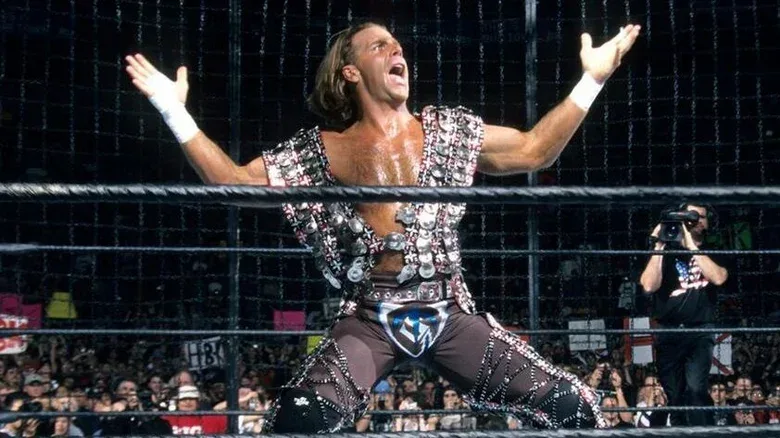
Michaels was one of WWE’s defining performers during some of the company’s most widely watched periods, and his connection with audiences was a major asset in a storyline designed to produce real concern. Known as “The Showstopper,” “Mr. WrestleMania,” and HBK, Michaels could generate excitement through his athleticism and charisma, but he was also capable of making audiences invest in his vulnerability.
That ability is especially important in an injury-related angle. Fans understand that physical risk is part of wrestling, even while they recognize that the show is a scripted form of entertainment. The emotional line becomes more complicated when a performer who is normally resilient is depicted as being in serious trouble. If the performance and presentation are strong enough, the audience may temporarily put aside what it knows about the format and respond to the apparent human stakes.
Nash’s story suggests that the Michaels angle reached that level for at least some viewers. The reported hospital calls are an example of fans looking for confirmation beyond the wrestling program itself. Whether people were fully convinced or simply concerned enough to check, the reaction reflected a level of engagement that wrestling companies often seek when building a major story.
There is an important difference between misleading an audience without purpose and drawing viewers into a compelling dramatic situation. Wrestling has long used uncertainty to make rivalries more engaging. A shocking attack, an unexpected return, a sudden betrayal, or an apparent injury can change the direction of a character’s story. The strongest versions work because the angle has internal logic and because the performers react in a way that makes the consequences feel meaningful.
Why total commitment matters
Nash’s phrase about not making something “half real” gets to the heart of his argument. In wrestling, a major angle can lose impact when the surrounding details contradict its intended mood. A promotion might promote an injury as devastating, only to have the injured wrestler appear casually elsewhere too soon. Wrestlers might act horrified during the segment and then immediately resume their usual on-screen behavior. Announcers might treat a supposed emergency as just another cliffhanger before moving on with little urgency.
Those choices do not necessarily make a show bad, but they can weaken the particular story being told. Once viewers recognize the pattern, they are less likely to believe that a future incident is different. Nash’s preferred approach is to protect the angle by making every element point in the same direction.
- Wrestlers should react as though an unusual and dangerous situation has occurred.
- Officials and security should create a sense that the regular flow of the show has been interrupted.
- Commentators should match the gravity of the moment rather than overexplain it.
- Production should avoid undercutting the scene with tonal shifts that make the situation feel routine.
- The aftermath should continue to reflect the stakes established in the original segment.
None of that requires presenting every development as a real-life emergency. It requires consistency. A lighthearted angle can be sold consistently as lighthearted. A heated championship rivalry can be sold consistently as intense. But when a promotion attempts to make a moment feel frightening or genuinely consequential, Nash’s view is that half-measures will expose the construction of the story.
The changing challenge of wrestling realism
The challenge is different now than it was in earlier eras of wrestling television. Fans have instant access to social media, clips, interviews, and backstage discussion. Information travels quickly, and performers regularly interact with audiences outside of their on-screen characters. That access can make it harder to preserve mystery, particularly when a storyline is built around a supposed injury or a shocking incident.
At the same time, the fundamentals Nash described still apply. A crowd can react strongly even when it understands the broad premise of wrestling. Believability does not always mean persuading every viewer that an event is literally unscripted. It can also mean convincing them that the characters are behaving honestly within the world of the show, that the stakes matter, and that the outcome is not immediately obvious.
That is the value of a unified presentation. Fans may know that a wrestler will eventually return, that a feud will continue, or that a major segment is intended to drive interest in the next event. But they can still be drawn in when the performers make them wonder what happens next and when the production avoids telegraphing the answer.
Nash and Michaels share a long history that gives Nash’s recollection added context. Their association dates back to their time together in WWE and the group later known as The Kliq, a circle whose members became influential figures in wrestling during a pivotal period for the industry. Nash’s remarks were therefore those of someone looking back on an angle involving a close friend and a performer whose audience connection was well established.
The specific takeaway from Nash’s story is straightforward: realism in wrestling is not created by one move or one dramatic visual alone. It is created by collective discipline. Michaels’ apparent hospitalization became memorable in Nash’s telling because the people around the angle treated it as something outside the ordinary boundaries of the show. That commitment was strong enough, Nash said, to prompt fans to call the hospital named in the storyline.
For a business built on emotion, that remains the goal. The audience does not need to forget what wrestling is forever. For a few minutes, though, the best angles make viewers feel that they need to know what happened, whether a performer is all right, and what the consequences will be when the story resumes.
In pictures

Darryl Polo
Darryl Polo is a passionate wrestling fan covering WWE, AEW, TNA and beyond. He loves great rivalries, breakout stars and the moments that keep fans talking long after the bell. How we work.