
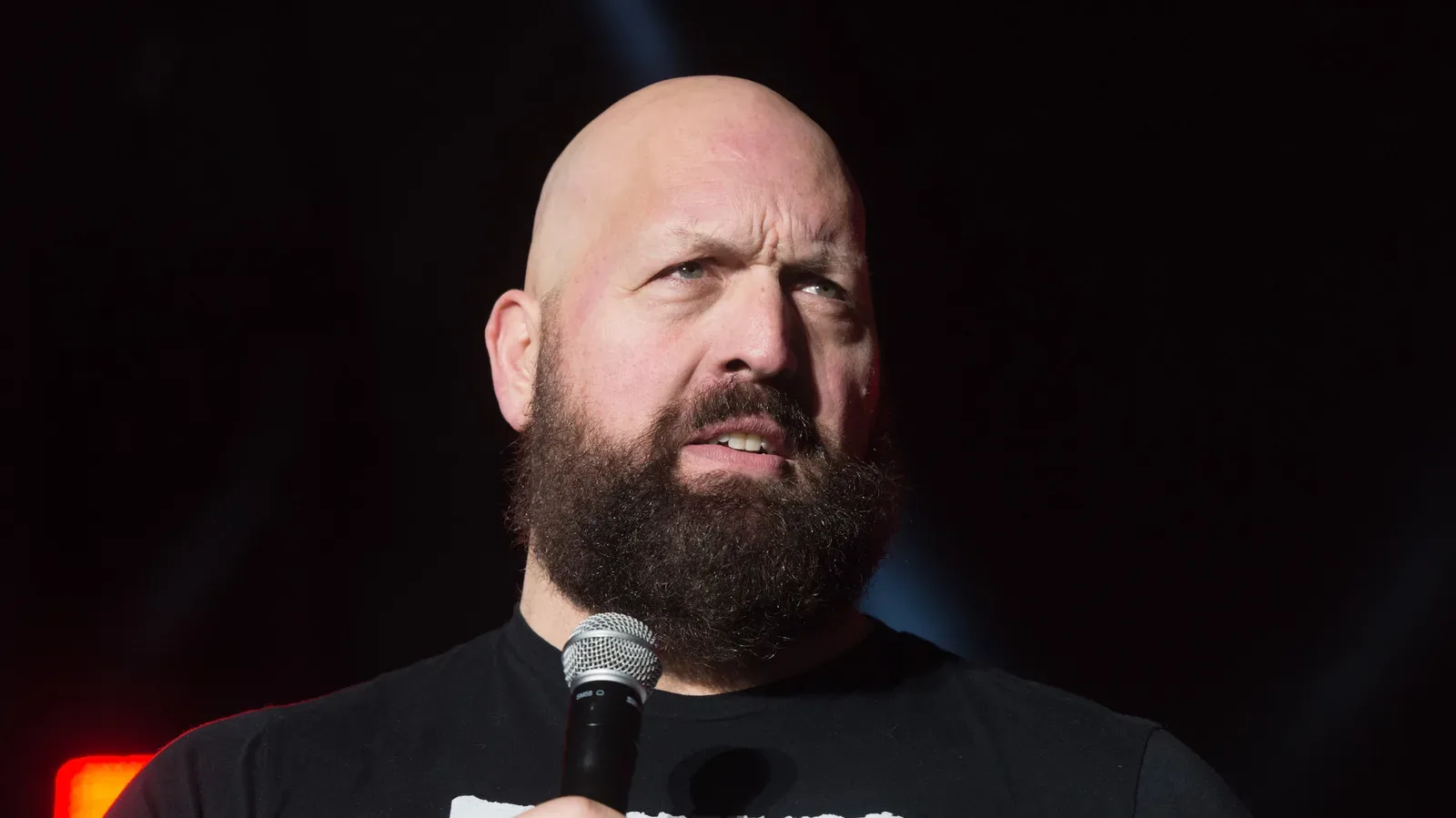
Kevin Nash has shared a warm assessment of Paul Wight, looking back on the many years the two towering stars spent together in WCW while also acknowledging Wight’s more recent efforts to improve his conditioning.
Nash and Wight have a history that reaches far beyond their status as two of professional wrestling’s most recognizable giants. They shared locker rooms, television time and major storylines during WCW’s hottest period, including their association with the nWo. They also worked opposite one another as rivals, placing them in the kind of frequent professional proximity that can reveal a great deal about a person beyond the role played on camera.
Speaking on Kliq This, Nash discussed traveling with Wight and the late Scott Hall. His comments focused on Wight’s personality, his visible physical progress and the reality that kindness can sometimes be misread in an industry known for intense personalities and difficult environments.
“Show eats a f****** car up,” Nash said. “He looks [good though]. I just saw a picture of him, someone took a picture, it looked like he was in a restroom. But...he looked great. He looked fit, he looked...he had the little f****** vein down his arm. He looked good.”
For more background on this topic, read Kevin Knight Says Don Callis Has Put Continental Classic Pressure on Him After Ciampa Win.
The remark about Wight’s appetite was delivered in the context of a long-running reputation attached to a performer of his extraordinary size. Stories about the food consumption of wrestling’s biggest athletes have always been part of locker-room culture, and Wight’s physical scale naturally made him a frequent subject of such conversation. But Nash’s larger point was about the contrast between those old impressions and the condition Wight appears to be in now.
Wight has publicly made an effort to become healthier as he works through several health issues and pursues the possibility of wrestling a limited number of additional matches for AEW. For a performer whose career has spanned decades under several names and across multiple eras of the business, maintaining mobility and improving overall conditioning represent meaningful accomplishments. Nash’s observation about Wight looking fit was not simply a comment on appearance; it was recognition of work that can be especially demanding for someone with Wight’s size and mileage.
Nash highlights Wight’s reputation away from the ring
More notably, Nash spoke at length about the impression Wight makes on people in ordinary interactions. He recalled seeing an Instagram clip in which a traveler encountered Wight on an airplane and offered him a fist bump. Nash believed the brief exchange showed the same character that those who worked closely with Wight had experienced for years.
“I saw a thing on Instagram, just a guy that got on a plane, and he saw Paul, and he just gave him a fist bump, but he filmed it,” Nash said on Kliq This. “And you can just see what a nice guy Paul is. You can just see what a genuinely nice f****** person he is.”
In wrestling, performers are often judged through amplified television personas. Wight’s career included giant-sized villains, heroic turns and moments built around the intimidating presence that made him such a natural attraction from the moment he entered the national spotlight. Those characters were designed to dominate a screen. Nash’s comments instead pointed to the person behind those roles: someone he viewed as unusually considerate in an often unforgiving line of work.
Nash added that Wight’s kindness stood out because professional wrestling has not always been a business defined by gentleness. The demanding travel schedule, physical toll, competitive atmosphere and public pressure can produce friction even among people who respect each other. Nash suggested that there were occasions when Wight would eventually reach his limit, but he did not interpret those moments as evidence of weakness.
“He was so nice in a business of just not nice people,” Nash said. “Sometimes he’d flip out because he’d had enough of it. I don’t think he was sensitive, I think he was just nice.”
That distinction is central to Nash’s assessment. Being patient, approachable and respectful does not mean someone is incapable of standing up for themselves when a situation goes too far. Nash’s framing was that Wight’s occasional frustration should be understood in the context of a person who was generally giving and accommodating, rather than as a defining trait.
A shared WCW history
The relationship between Nash and Wight was forged during a defining chapter of WCW history. Wight became one of the promotion’s major attractions early in his career, while Nash was already established as a central figure in the company’s shifting power structure. Their paths crossed in stories involving the nWo, one of the most influential factions in wrestling history, and in the broader heavyweight scene that defined much of WCW’s presentation during that era.
Both men carried a rare kind of visual credibility. Nash’s height, composure and in-ring presence helped make him a top-level figure across WWE and WCW. Wight, meanwhile, was presented as an athletic giant whose sheer dimensions distinguished him even in a business that has always featured larger-than-life personalities. Their shared status as elite big men created a natural connection, but their professional relationship also required them to work in multiple capacities: allies, opponents and colleagues navigating the day-to-day reality of a major wrestling promotion.
That history gives Nash’s praise added weight. The comments were not a passing compliment from a performer with only limited experience around Wight. Nash was describing someone he knew through extended travel and years of working in close quarters, including alongside Scott Hall, another key figure in the group of wrestlers commonly associated with the Kliq and the nWo’s early rise.
Wight’s longevity has made him a unique figure in the modern wrestling landscape. He has performed at the highest level in more than one major promotion, remained recognizable to several generations of fans and transitioned into a prominent broadcast role while still holding out hope of returning to the ring. Few wrestlers have had to adapt through as many changes in the industry while continuing to carry the expectations that come with being a giant attraction.
Wight remains visible on AEW Collision
While Wight works toward his personal goals regarding a potential return to action, he remains a familiar voice on AEW programming. He has become a regular part of AEW Collision, serving as a color commentator alongside Nigel McGuinness and Tony Schiavone. The booth pairing also connects Wight to another veteran of WCW, as Schiavone’s broadcasting history is closely tied to many of the same years in which Wight and Nash were major presences in the company.
Commentary has offered Wight another way to contribute without placing the entire burden of his AEW involvement on physical performance. His experience gives him a useful perspective on big-match presentation, the psychology of larger wrestlers and the pressures surrounding television wrestling. It also keeps him connected to the audience while his in-ring future remains dependent on his health and readiness.
Nash’s comments arrive as a reminder that Wight’s legacy cannot be reduced to one persona, one promotion or one famous visual. He has been a giant, a champion, a villain, a fan favorite, a teammate, an opponent and now a broadcaster. To Nash, however, the enduring quality appears to be Wight’s demeanor when the cameras are not framing a storyline.
For all the memorable images attached to Wight’s career, Nash’s description was notably simple: a genuinely nice person who has worked hard to get himself into better shape. In an industry where relationships can be complicated and praise is not always freely offered, that is a significant endorsement from someone who shared so much history with him.
In pictures

Darryl Polo
Darryl Polo is a passionate wrestling fan covering WWE, AEW, TNA and beyond. He loves great rivalries, breakout stars and the moments that keep fans talking long after the bell. How we work.