
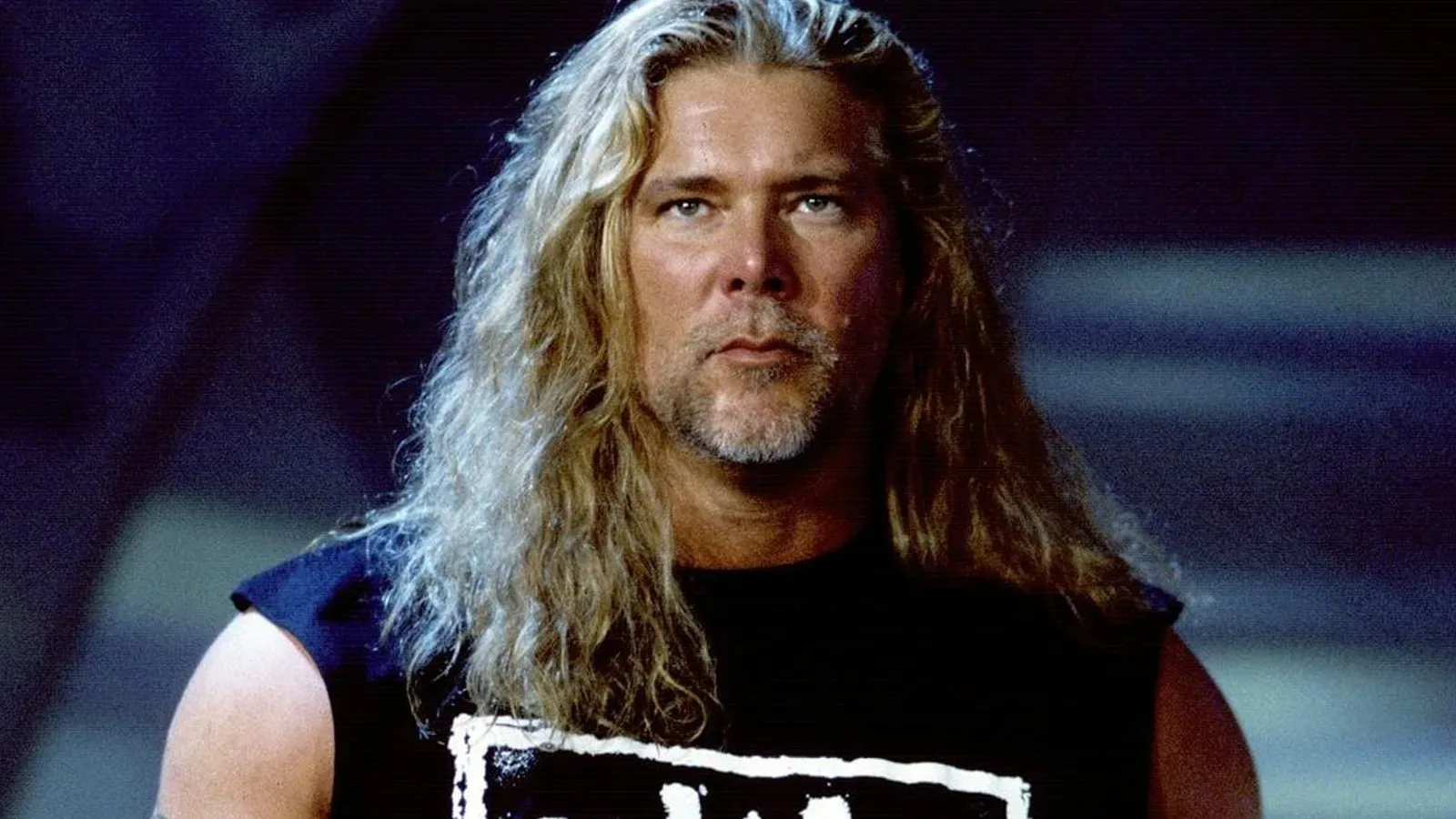
Kevin Nash’s return to WWE in the 2000s was intended to reconnect one of wrestling’s most recognizable factions with the company where its members first became major stars. Following the New World Order’s enormous impact in WCW, Nash, Hulk Hogan and Scott Hall came back to WWE with considerable attention around their arrival. For Nash, however, the run became defined as much by serious physical setbacks as it was by the on-screen reunion.
Nash has now looked back on one of those setbacks in sobering detail: the quad injury that left him unable to bear weight on his leg, dependent on a wheelchair for weeks, and facing difficult questions about whether he could return to full strength at all.
Speaking on Kliq This, Nash described the moment his surgeon, Dr. Andrews, gave him an unvarnished assessment of what a quad tear could mean for a wrestler in his early 40s. Nash said Andrews had helped him through injuries before, but did not offer false reassurance when discussing the challenge in front of him.
“I just want to tell you,” Nash recalled Andrews saying, “I’ve never had a 42 year old athlete come back 100% from a quad tear.”
For more background on this topic, read Alexa Bliss Reflects On Bray Wyatt’s Lasting Influence On Her WWE Creativity.
That warning hit particularly hard because Nash did not view the injured leg in isolation. He said the other leg had already endured major punishment, leaving him concerned that the injury had compromised the limb he had come to rely on most. Nash remembered immediately wondering whether his body would allow him to continue wrestling.
The concern was understandable. A quad tear is an especially daunting injury for any athlete, but the demands of professional wrestling create their own complications. Wrestlers need explosive movement, stability when taking falls, the ability to lift and be lifted safely, and confidence in both legs during every sequence. In Nash’s case, his size also made the recovery process more physically taxing. He recalled weighing around 340 pounds at the time.
Nash said the tendon had been sutured into place, meaning he could not put weight on the recovering quad while wearing an immobilizer. Crutches were not a practical long-term solution for him because of the strain they placed on his upper body. As a result, he spent approximately 40 days in a wheelchair.
“I ended up being in a wheelchair for like 40 days,” Nash said on Kliq This. “Because being on crutches with an immobilizer that I couldn’t put weight on was just so much weight on my shoulders.”
For Nash, that period may have had effects beyond the injured leg. He connected the physical load of maneuvering on crutches to what he believes was the beginning of his shoulder issues. The recovery was not simply a matter of waiting for one muscle and tendon to heal. Every adjustment required to protect the injured quad placed stress elsewhere, an all-too-common reality for athletes working through major lower-body injuries.
The situation was compounded by the way Nash had compensated before the injury. He recalled putting much of his bodyweight onto one leg after the other leg had been hurt. In retrospect, he felt that uneven burden played a role in how beaten down his body had become. Once the more dependable leg was compromised, the cumulative damage was impossible to ignore.
“Like, how did I get this beat up?” Nash remembered asking himself as he confronted the need to repair the other leg as well in order to become functional again.
That frustration captures the broader difficulty of an injury cycle in wrestling. A performer may be able to continue working through pain or compensate for one damaged body part for a period of time, particularly when major storylines and touring obligations are involved. But compensation can have consequences. The body often finds a way to distribute the workload, and eventually that altered movement can create new trouble. Nash’s recollection suggests that this was not one isolated medical event, but a period in which multiple accumulated issues had to be addressed.
A Long Recovery Away From Home
Nash said he remained in the area for more than 90 days during the recovery and did not go home. The time away was difficult, but it also became a turning point in how he viewed his career and his health. He said the experience made him stop taking things for granted.
For someone who had spent years in the ring at the highest levels of the industry, that perspective carried weight. Nash had already been through different eras of professional wrestling, from his rise in WWE to his central role in WCW’s New World Order story. His WWE return came with the expectation that established names could again make a major impact. Instead, injuries restricted the consistency of his time in the ring.
His recollection also underlines how different the timeline looks in hindsight. Nash noted that he was 42 when he tore his quad and expressed disbelief at how long ago that now feels. At the time, though, the issue did not feel like a distant chapter in a long career. It was an immediate threat to his mobility, his work, and his confidence that he could resume performing at the level expected of him.
There is an important distinction between returning to activity and returning at 100 percent. Nash’s doctor specifically framed that challenge around complete recovery for a 42-year-old athlete. Nash ultimately continued his wrestling career, but his story is a reminder of the uncertainty that exists at the beginning of a rehabilitation process. A wrestler can have access to expert medical care, resources, and motivation while still facing no guarantees about the outcome.
Triple H’s Recovery Offered a Road Map
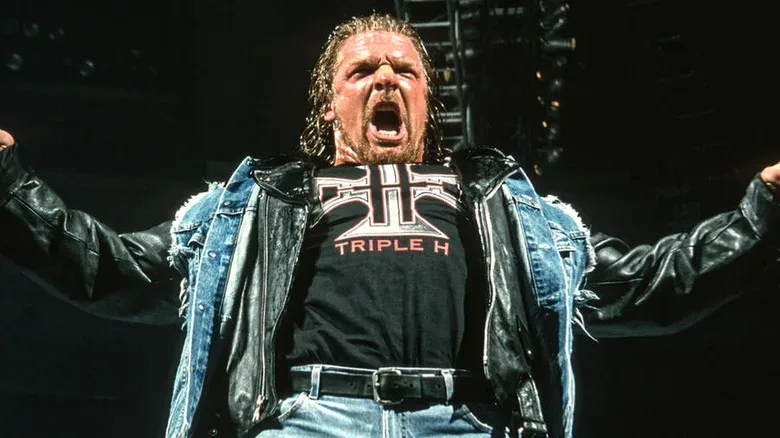
One factor that helped Nash navigate his own situation was the experience of his longtime friend Triple H, Paul Levesque. Triple H had suffered his own quad tear a year earlier. Nash said that, in an unfortunate way, Levesque’s experience gave him a valuable example of what the recovery process involved.
“I was blessed, I guess, because Paul had done it first,” Nash said. “He was three and a half hours away, but he was sitting down there doing the same thing I did.”
That sense of shared experience mattered. Major injuries can be isolating, particularly for performers accustomed to a constant schedule, regular travel, and a locker-room environment. Knowing that someone close to him had recently endured the same injury gave Nash a reference point while he dealt with the uncertainty of rehabilitation.
At the same time, Nash offered a candid admission about his own response when Triple H was recovering. Looking back, he felt he had not been the friend he should have been during Levesque’s rehabilitation. Nash said he was too focused on his own career at that point and should have made more of an effort to visit Triple H.
It is a revealing note because it adds emotional perspective to a story primarily centered on physical hardship. Nash did not only come away from his own injury with a renewed appreciation for being able to work. He also recognized, after experiencing the same confinement and struggle, what his friend had gone through before him.
An Unforgiving Chapter of a WWE Run
Nash’s WWE return was marred by more than the quad injury. He has referenced bicep issues, quad injuries and a neck injury from that period. The quad recovery nevertheless stands out because of the scale of the disruption: an immobilizer, no weight-bearing on the repaired tendon, weeks in a wheelchair, and more than three months spent away from home.
Those details put the phrase “injury-plagued run” into sharper focus. Wrestling injuries are often discussed in terms of missed appearances or altered creative plans. Nash’s account centers on the human side of that reality: the logistical limitations of daily life, the fear that a damaged leg may not fully recover, and the realization that age and previous wear can make a path back far more complicated.
Nash did return to the business after that difficult stretch, but his comments do not present the process as simple resilience or an effortless comeback. They present it as an ordeal. More than two decades later, he can look back at the injury with perspective, while still conveying how alarming it was to be 42, heavily reliant on an already battered body, and told that a complete recovery could not be assumed.
For Nash, the quad tear became a defining lesson in durability, gratitude and empathy. It forced him to reckon with the limits of his body, appreciate what he had previously taken for granted, and better understand the long rehabilitation his close friend had faced just a year before.
In pictures
Darryl Polo
Darryl Polo is a passionate wrestling fan covering WWE, AEW, TNA and beyond. He loves great rivalries, breakout stars and the moments that keep fans talking long after the bell. How we work.