
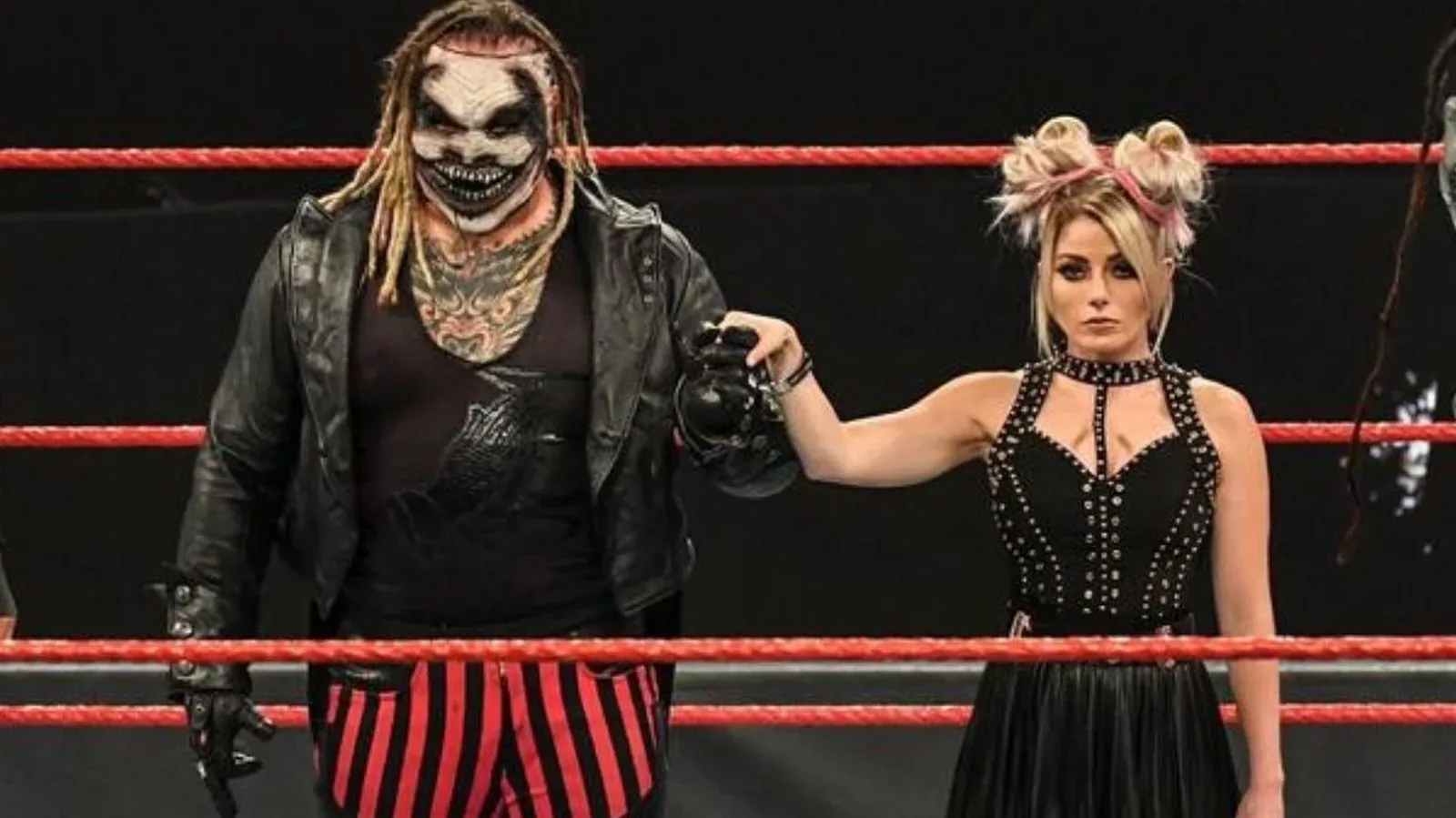
Alexa Bliss’ WWE career has included several major reinventions, but few transformations were as dramatic as the shift she made during the pandemic-era alliance with Bray Wyatt. Once presented primarily as “The Goddess,” a confident and cutting heel who leaned on polished promos and championship swagger, Bliss moved into a far darker and more surreal world alongside Wyatt and the Fiend.
That on-screen evolution remains one of the defining chapters of Bliss’ career. It also became deeply personal. Wyatt, whose real name was Windham Rotunda, died in 2023, but Bliss has consistently discussed the impact he had on her professionally and personally. In a recent appearance on Busted Open Radio, Bliss explained that working with Wyatt fundamentally altered the way she thinks about performing and building a WWE character.
The central lesson, as Bliss described it, was to look beyond simply delivering a promo, working a match, or playing a designated babyface or villainous role. Wyatt encouraged a more complete approach: a television character should have a world around them, internal logic guiding their behavior, and a story that reaches beyond whatever appears in a single segment.
From Heel Presentation To Full Character Construction
Before the dark Alexa period, Bliss had already become one of WWE’s most accomplished women’s division stars. Her “Goddess” presentation established her as an effective antagonist, capable of combining arrogance, manipulation, and verbal confidence. It was a role that made her a multiple-time champion and a major fixture on WWE programming.
For more background on this topic, read John Cena Explains Why Tapping Out Did Not Betray ‘Never Give Up’.
But the material involving Wyatt required something very different. Rather than relying only on the familiar rhythms of a heel character, Bliss was asked to inhabit an unsettling persona tied to the Fiend’s universe. The presentation included eerie imagery, altered mannerisms, supernatural themes, and the increasingly important presence of the Lilly doll. It was an unusual direction in WWE, one that demanded commitment to atmosphere and character continuity as much as traditional in-ring storytelling.
Bliss said Wyatt helped her recognize that a character could be treated as a living figure with a history and a future, rather than merely a collection of reactions for a given week’s television script. That perspective expanded her creativity and changed her preparation process.
The WWE star also noted that the research Wyatt introduced her to during the creation of dark Alexa remains part of her process. She still watches documentaries that Wyatt had recommended as she developed that incarnation of the character. The detail illustrates that the collaboration was not limited to costumes, entrances, or memorable visual moments. It involved studying how people behave, how stories build identities, and how performers can give fictional personalities emotional grounding.
Wyatt’s Creative Legacy In WWE
Wyatt was widely associated with ambitious character work throughout his WWE run. From the original cult-leader-inspired Bray Wyatt persona to the Firefly Fun House and the Fiend, he regularly pursued presentations built around layers of symbolism, shifting tone, and distinct visual language. His work often invited audiences to interpret clues, revisit prior segments, and look for connections between different phases of his characters.
For Bliss, becoming part of that creative space represented a significant departure from her earlier WWE identity. Her connection with Wyatt did not merely place her beside an established act. It repositioned her within a broader fictional universe, giving her a role that could be mysterious, vulnerable, frightening, and unpredictable.
That kind of transformation can be difficult in wrestling because audiences are accustomed to quickly defined roles. A wrestler may be heroic or villainous, aligned with a group or standing alone, pursuing a title or settling a rivalry. The dark Alexa character operated with a more abstract framework. Her motivations were often filtered through the unsettling influence of Wyatt’s world, making the smallest visual or behavioral choices part of the overall presentation.
Bliss’ comments make clear that she came to appreciate the discipline behind that approach. The character was not simply dark for the sake of appearance. It was developed with a past, a point of view, and possibilities for where it could go next. That is the creative lesson Bliss has carried forward.
WrestleMania 42 Tribute Carried Personal Meaning
The connection between Bliss and Wyatt was visible again at WWE WrestleMania 42. Bliss wore moth wings bearing the words “always connected”, a deliberate tribute to Wyatt. She explained that the moment held special significance because her previous WrestleMania appearance had been alongside him.
The tribute allowed Bliss to honor Wyatt without needing to turn the moment into an extended on-screen explanation. The message and the imagery were enough for those familiar with their shared history, while the moth-wing design fit naturally within the visual language associated with the darker side of her WWE presentation.
It also demonstrated the lasting place Wyatt occupies in Bliss’ current creative identity. WWE performers frequently evolve as their careers progress, and Bliss has had to adapt to changing divisions, storylines, partnerships, and presentation styles. Even so, she said she tries to carry a piece of Wyatt’s influence with her wherever she goes.
That does not mean every appearance must directly revisit dark Alexa or the Fiend era. Instead, it means the philosophy behind the work remains present. Bliss now considers the larger world surrounding a character, the details that can make an entrance or piece of gear meaningful, and the emotional history that informs a performer’s choices.
A Partnership That Changed Bliss’ Perspective
Bliss’ recollections underline why the Wyatt partnership continues to resonate. The storyline was divisive at times, as supernatural and cinematic concepts often are in wrestling, but it gave Bliss a chance to demonstrate a different range as a performer. She had already proven she could excel as a conventional WWE antagonist. The alliance with Wyatt added another dimension to her body of work.
More importantly, Bliss’ own account frames the experience as a turning point in how she sees the profession. Wrestling involves athleticism, live crowd connection, and the ability to tell stories in the ring. It also involves character construction, especially in an environment like WWE where entrances, wardrobe, backstage scenes, facial expressions, and promotional material all contribute to the audience’s understanding of a personality.
Wyatt’s influence, as Bliss describes it, encouraged her to approach all of those elements with greater intention. A character’s past matters. Their future matters. Details that may look small on the surface can help turn a television persona into someone who feels consistent and real within WWE’s storytelling world.
That is why the WrestleMania 42 tribute was more than a visual callback. It represented a continuing creative connection to a friend and collaborator whose ideas reshaped Bliss’ outlook. As she continues her WWE career, the influence of Windham Rotunda remains part of the way she develops, presents, and understands the characters she brings to life on screen.
In pictures

Darryl Polo
Darryl Polo is a passionate wrestling fan covering WWE, AEW, TNA and beyond. He loves great rivalries, breakout stars and the moments that keep fans talking long after the bell. How we work.