
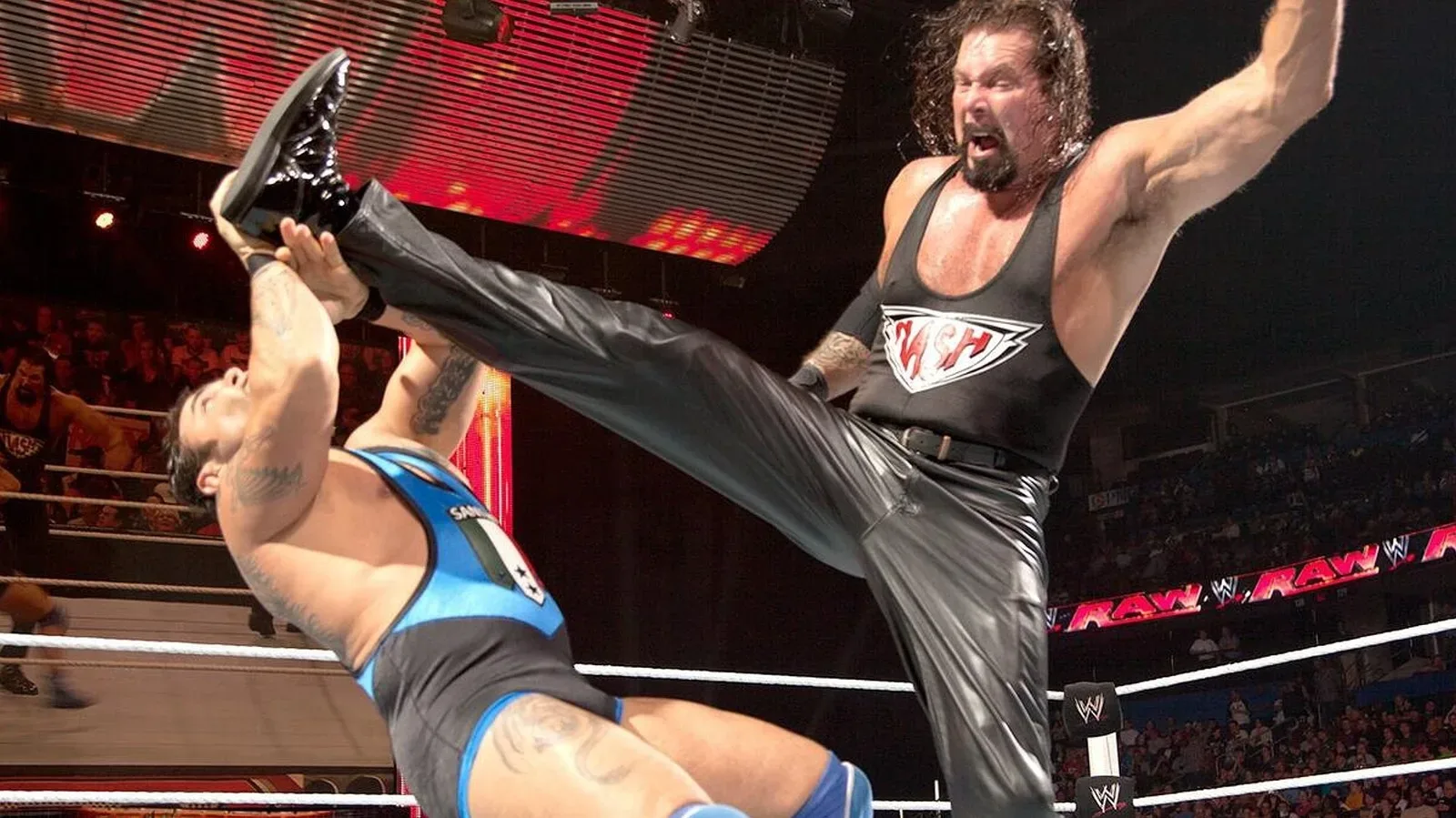
Kevin Nash’s 1995 WWE Championship reign as Diesel remains one of the more debated main-event runs of the era, and one particular SummerSlam decision continues to stand out in discussions of that period. Nash has now reflected on the choice to position King Mabel as his challenger at SummerSlam 1995, saying he believes Bam Bam Bigelow could have been a far stronger opponent for him on that stage.
At the event, Diesel defended the WWE Championship against Mabel in a match built around the challenger’s rise as a massive, destructive threat. Mabel had won the King of the Ring tournament earlier that year and was pushed into the title picture as a dominant heel. The SummerSlam bout, however, was frequently overshadowed by the night’s Intercontinental Championship ladder match between Shawn Michaels and Razor Ramon, Scott Hall, a contest that became one of the defining matches of WWE’s 1990s boom period.
Speaking on Kliq This, Nash was asked whether Mabel was the only wrestler WWE had considered for the SummerSlam assignment. He confirmed that Mabel was the planned opponent, while also naming Bigelow as a wrestler he would have preferred to face.
“They built [Mabel] for that spot,” Nash said. “[Bam Bam] was great. I could’ve actually tore it down with Bam Bam. Yeah, f**k yeah. If they would have used him better and made him a killer heel.”
For more background on this topic, read Omos Says Logan Paul’s WWE Success Comes As No Surprise.
Nash’s comments are less an attack on Mabel than an appraisal of what he feels Bigelow brought to the ring. Bam Bam was a rare kind of heavyweight athlete: a large, physically imposing wrestler who also possessed the speed, timing and willingness to work a more explosive style. With his distinctive flame tattooed head, powerful offense and surprising agility, Bigelow had all the visual ingredients of an upper-level WWE villain. Nash’s argument is that the missing piece was a sustained creative commitment to presenting him as an unstoppable heel.
Why Bigelow Was a Different Kind of Heavyweight Opponent
For Diesel, a wrestler of Bigelow’s profile would have offered an especially interesting contrast. Nash’s championship character was presented as an imposing powerhouse, but he was also a visibly taller and larger figure than nearly everyone around him. A challenger needed more than size alone to create the feeling that Diesel might be in genuine danger. Bigelow’s mobility could have supplied that additional dimension.
A Diesel-Bigelow match could have been built around two heavyweights capable of working with intensity while also moving at a pace not normally associated with wrestlers of their size. Bigelow was well known for his ability to execute athletic offense and for making high-impact moments look convincing. That style potentially would have allowed a title defense against Diesel to feel less like a straightforward size-versus-size encounter and more like a battle between two dangerous forces with distinct strengths.
Nash’s phrasing also points directly to presentation. He did not simply say that Bigelow should have been selected as the SummerSlam challenger; he said Bigelow needed to be used better and established as a “killer heel.” That distinction matters. In wrestling, particularly in a pay-per-view championship program, a challenger’s credibility is created over time through victories, positioning and a clear identity. Bigelow had the physical tools, but Nash believes WWE could have done more to frame him as the kind of threat worthy of a marquee title match.
That hypothetical becomes more intriguing because Bigelow had already demonstrated his ability to perform under significant pressure. Throughout a career that stretched from the 1980s into the 2000s, he worked in major promotions across the world, including WWE, WCW and NJPW. His versatility made him valuable in different environments, whether the assignment called for a monster heel presence, an athletic heavyweight attraction or a veteran capable of matching a wide range of opponents.
SummerSlam 1995 and the Shadow of the Ladder Match
SummerSlam 1995 occupies an unusual position in WWE history. On paper, the WWE Championship match was a major attraction: Diesel was the champion, Mabel was the King of the Ring winner, and the story was designed to establish the challenger as a formidable obstacle. Yet the event is remembered first by many fans for the Intercontinental Championship ladder match involving Michaels and Razor Ramon.
The Michaels-Razor encounter had the challenge of following their celebrated WrestleMania X ladder match, but it still arrived with enormous expectations and a special level of attention. Its place on the card made it difficult for any other match to command the same long-term discussion. The result was that Diesel versus Mabel did not become the enduring showcase associated with the event, despite being the WWE title match.
Nash’s reflection suggests he believes a clash with Bigelow might have produced a more memorable in-ring complement to the ladder match. He was not arguing that Mabel was an accidental challenger or that the company had no rationale for its decision. In fact, Nash acknowledged the point of the booking by saying WWE had built Mabel specifically for that position. The creative direction was clear: make Mabel seem enormous, powerful and ready to confront the reigning champion.
Still, a planned direction and an ideal matchup are not always the same thing. Nash now sees Bigelow as a wrestler who could have elevated the physical quality and competitive drama of the match. The difference, in his view, was Bigelow’s ability and the opportunity WWE had to make him a more fearsome, consistently protected antagonist.
Nash and Bigelow’s Complicated History
Nash has praised Bigelow before, even while acknowledging that their relationship was not always simple. Bigelow was not considered a major supporter of the Kliq, the influential group of wrestlers associated with Nash, Hall, Michaels, Triple H and Sean Waltman. Nash has previously said that Bigelow would complain to Vince McMahon about Kliq members publicly spending time together while traveling, which Bigelow viewed as a break from kayfabe.
At the same time, Nash has maintained that he and the other Kliq members would go to bat for Bigelow. That detail gives added context to his latest praise. Nash is not revisiting Bigelow as a convenient example with no personal history behind it; he is speaking about a peer he regarded as talented despite the friction and personality differences that existed around them.
It also reflects a larger reality of WWE in the mid-1990s. Locker-room alliances, political perceptions and debates over how performers should protect the illusion of wrestling were all part of the landscape. The business was changing, and the line between on-screen rivalries and off-screen relationships was increasingly visible to fans. Those dynamics could create tension even among wrestlers who respected each other’s abilities.
Remembering Bam Bam Bigelow’s Legacy
Bigelow died in 2007 at the age of 45. His legacy has continued to grow in the years since, in large part because fans and fellow wrestlers often point to the same qualities Nash highlighted: explosive athleticism, undeniable presence and an ability to make heavyweight wrestling feel unpredictable.
His career covered multiple decades and promotions, ensuring that different audiences saw different sides of his work. Bigelow could be frightening and agile, physically dominant and remarkably nimble. For a performer with his size, that range was unusual. It is easy to understand why a wrestler like Nash, who was himself positioned near the top of WWE during 1995, would look back and see an unrealized pay-per-view pairing.
There is no way to know how a Diesel versus Bam Bam Bigelow main event would have been received in 1995. Wrestling history is full of alternative programs that sound compelling in retrospect but were never pursued. What Nash’s comments make clear is that he saw the potential for something much bigger than a standard title defense. He believes Bigelow, if framed with the right level of menace, could have been the ideal opponent to help him “tear it down” at SummerSlam.
For WWE fans looking back at the event, it remains a fascinating what-if. Mabel was the challenger WWE selected and built for the role. But Nash’s assessment offers a different version of the card: Diesel defending against a fully unleashed Bam Bam Bigelow, with two powerhouse heavyweights attempting to create a match capable of standing alongside one of the most famous ladder matches ever held.
In pictures

Darryl Polo
Darryl Polo is a passionate wrestling fan covering WWE, AEW, TNA and beyond. He loves great rivalries, breakout stars and the moments that keep fans talking long after the bell. How we work.