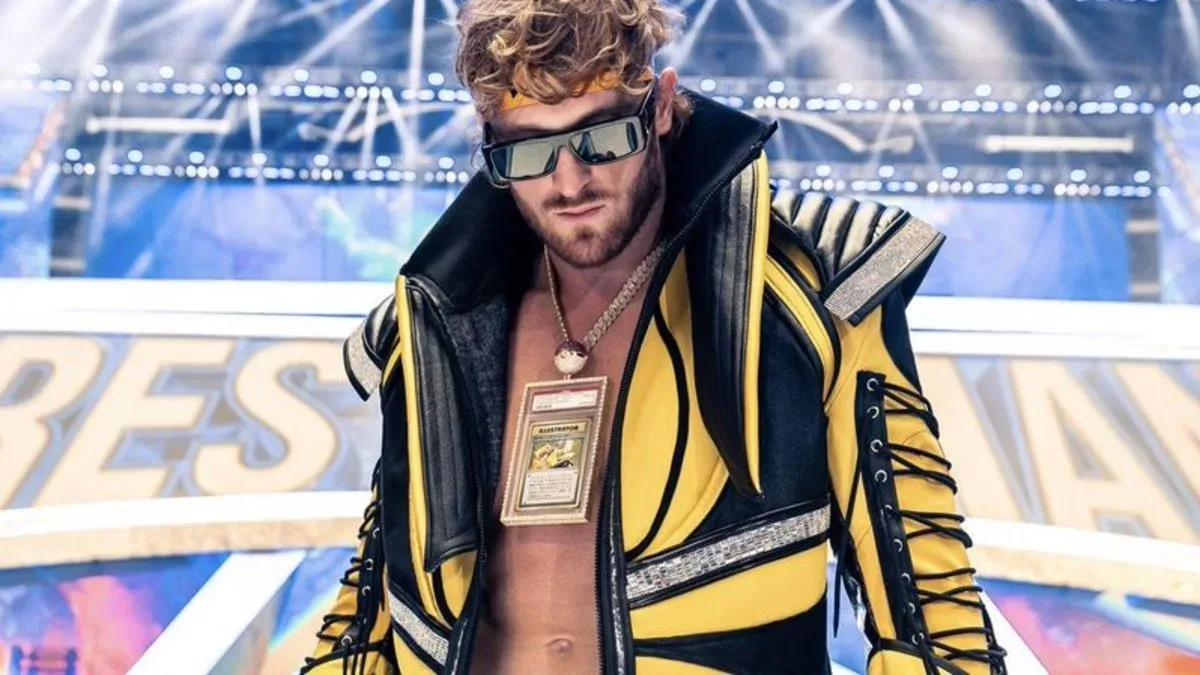
Omos is not surprised by the impact Logan Paul has made in WWE.
Paul’s transition from internet celebrity and boxer to a prominent WWE performer has remained one of the company’s most discussed crossover stories since his in-ring debut at WrestleMania 38. He has been featured regularly on WWE programming, worked high-profile matches, and established himself as a reliable antagonist in front of wrestling audiences that have often been eager to voice their disapproval.
For Omos, that reaction is hardly difficult to understand. The WWE giant said Paul had already spent years operating as a controversial, divisive figure before he ever stepped into a wrestling ring. In Omos’ view, Paul did not need to create an entirely new personality for WWE. Instead, he brought an existing public persona into an environment where that kind of response can be turned into effective character work.
“No. I mean, you know, he’s been a heel since he’s been on YouTube for years. This is like when YouTube just started. He’s been. So to see him come to WWE and carry the persona over and the reception he’s receiving, I’m not surprised.”
For more background on this topic, read Omos Calls The Undertaker AAA’s ‘Michelin Star Chef’ Amid Creative Role.
A Natural Fit for WWE’s Villain Role
In professional wrestling terms, a heel is a performer positioned against the audience: someone who invites boos, resentment, frustration, or hostility. The role requires more than simply being unpopular. A successful heel needs to understand how to direct the crowd’s emotions, present confidence without seeking approval, and make fans care enough to want to see the character lose.
Omos’ comments suggest that Paul entered WWE with an advantage that many newcomers do not have. His public profile was already built around strong reactions, and that gave WWE a foundation on which to build his on-screen identity. Rather than asking viewers to accept a personality that was completely unfamiliar, Paul could lean into the elements of his image that already generated attention and discussion.
That does not eliminate the demands of becoming a professional wrestler. Paul still had to perform in the ring, learn the structure and timing of WWE matches, and work within the expectations attached to major events. His WrestleMania 38 debut placed him in a setting where there was little room for a tentative introduction. Since then, he has remained a visible name on the WWE roster and television product.
But Omos’ assessment focuses on the character side of the equation. The boos and negative reactions Paul receives are not an obstacle to his WWE role. They are part of the role. Omos believes Paul knows how to handle that response and has been able to carry his established persona into wrestling without losing what made it effective in the first place.
“Not at all, not at all. He’s a bad guy, and he’s playing it well. I think he’s doing great. He’s doing a great job.”
That praise from Omos is significant because it speaks to the distinction between being a celebrity guest and becoming a functioning WWE character. A famous name can attract initial attention, but continued involvement requires an ability to connect with the live crowd, serve the stories being told, and give audiences a reason to remain invested. Omos sees Paul as someone who has done those things successfully.
Paul Remains Part of The Vision Storylines
Paul is currently out of action with an injury, though he has remained present in storylines involving The Vision during his absence. His continued place in the group’s on-screen direction underlines how important he remains to WWE’s creative plans, even while he is not actively competing.
That level of involvement also reflects the value of a character whose presence can influence a program beyond the match itself. WWE factions often depend on personalities who can add tension, create rivalries, and shape the direction of the group from week to week. Paul’s role in The Vision allows him to remain connected to the larger narrative while his in-ring status is uncertain.
The injury has temporarily removed the possibility of immediate matches, but it has not taken Paul out of the conversation. For a performer who generates a loud reaction simply by appearing on screen, keeping him involved in the storyline can preserve momentum until he is able to return to the ring.
Omos did not offer any prediction about Paul’s recovery timeline or identify a specific future opponent. His comments were centered on Paul’s broader ability to function as a WWE villain. Still, Omos did leave open the prospect that the two could cross paths at some point.
Omos Keeps the Door Open to a Future Match
Asked about the possibility of working with Paul, Omos did not make a firm prediction or suggest that a match is being planned. Instead, he gave an answer that recognized how quickly circumstances can shift in the wrestling business.
“Yeah, you never know. It’s business, man. You never know.”
A match between Omos and Paul would present an obvious contrast in styles and physical presentation. Omos is WWE’s resident giant, while Paul’s WWE identity has been shaped by his athleticism, confidence, and willingness to embrace the hostility directed at him. However, there is no confirmed program between them at this time, and Omos’ remarks should be taken as an acknowledgment that WWE pairings can change rather than a confirmation of future plans.
Both men have occupied distinct spaces within WWE. Omos has been presented through his imposing stature and power, with his size making every potential confrontation feel different from a standard matchup. Paul, meanwhile, has brought mainstream recognition and a character built around provoking the audience. Their paths do not need to intersect for either performer’s role to remain clear, but Omos is not ruling anything out.
Why Paul’s Reception Matters
There is often a difficult balance for celebrities entering wrestling. Audiences may be skeptical of someone perceived as an outsider, particularly if that person is handed a prominent position quickly. WWE can use that skepticism as part of the story, but the performer still has to meet the challenge of turning criticism into compelling television rather than simple rejection.
Omos believes Paul has cleared that hurdle. His point is not merely that Paul receives boos. It is that Paul understands the type of persona that produces those boos and has continued to play into it. In wrestling, that awareness is essential. A heel who resists the crowd’s reaction can weaken the intended story. A heel who recognizes the reaction and uses it to elevate the character can become a central part of the show.
Paul’s history before WWE gave him familiarity with public scrutiny and polarizing audience reactions. Omos sees that background as a major reason the move to WWE has made sense. The platform changed, and the performance demands changed, but the ability to hold attention through a confrontational public persona remained relevant.
That is why Omos was so direct in saying he was not surprised. From his perspective, Paul’s WWE run is not a sudden reinvention. It is an extension of traits that had been visible long before his WrestleMania 38 debut.
For now, Paul remains sidelined from competition while still connected to The Vision’s storylines. When he does return to the ring, the response from WWE crowds is unlikely to be subtle. Omos expects that, because he believes Paul has long understood how to be the bad guy—and, just as importantly, how to make that role work.
Darryl Polo
Darryl Polo is a passionate wrestling fan covering WWE, AEW, TNA and beyond. He loves great rivalries, breakout stars and the moments that keep fans talking long after the bell. How we work.