
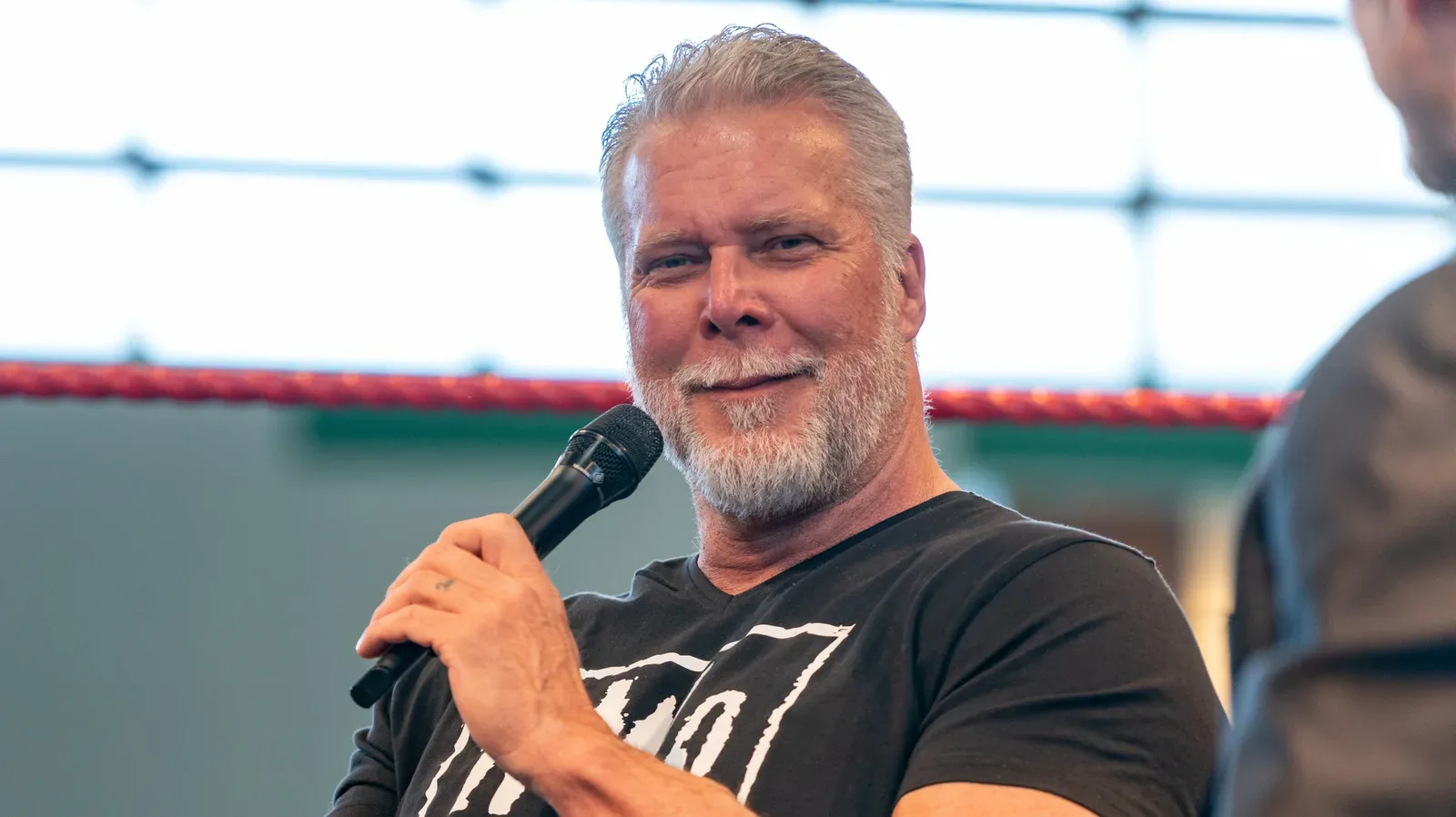
Kevin Nash has never been shy about discussing the realities of working in the ring, including the differences in style, timing and philosophy that can make an otherwise logical matchup difficult. Looking back at his early WWE run, Nash identified Bob Backlund as one of the opponents he most disliked wrestling, even while making it clear that his feelings were about their professional compatibility rather than any personal issue.
Nash joined WWE in 1993 after making his name in WCW as Oz and later Vinnie Vegas. Reintroduced as Diesel, he was positioned alongside Shawn Michaels before quickly becoming one of the company’s central stars. The move put Nash in the ring with wrestlers from multiple generations, including Backlund, whose reputation had been built decades earlier through a fundamentally different presentation and in-ring approach.
During a discussion on Kliq This, Nash was asked about his experience working with the two-time WWE World Champion. His answer was candid, as he described the contrast between himself and Backlund as more than a minor stylistic adjustment.
“I had a really hard time with [Bob] Backlund,” Nash said on Kliq This. “We were just so different — different eras, different styles, different everything. ... I didn’t hate working with him, but — you know what? I’m lying. I did [hate working with him]. I didn’t hate him, I hated working with him, though. I’d be lying to say I didn’t f***ing really not look forward to that.”
For more background on this topic, read Danhausen Says CM Punk Is the Reason He Became a Wrestler.
The distinction is important. Nash did not frame Backlund as someone he disliked outside the ring, nor did he question Backlund’s accomplishments. Instead, he described a situation familiar throughout wrestling history: two performers can be talented, successful and well-liked while still failing to establish the kind of natural rhythm needed for a satisfying match.
A clash of wrestling generations
Backlund’s career began in the early 1970s, and he became one of the defining world champions of the late 1970s and early 1980s. His original WWE title run established him as a clean-cut, intensely competitive standard-bearer during an era when long championship reigns and traditional wrestling credibility were major parts of the company’s identity. Backlund’s style was rooted in conditioning, amateur-inspired fundamentals and an ability to make lengthy contests feel like battles of endurance and technique.
By the time Nash arrived in WWE, the business had changed dramatically. Diesel was a towering power wrestler who fit the increasingly larger-than-life visual identity of the 1990s company. His character work, size and presence were central to the act. The pace, structure and expectations of main-event wrestling were also evolving, with audiences responding to a different mix of athleticism, power offense and character-driven storytelling.
Nash’s comments suggest that the issue was not one specific move, angle or match. Rather, it was the broader gap between what each man brought to the ring. Backlund represented an older school of wrestling, one shaped by a very different industry environment. Nash represented a newer generation of heavyweight star whose presentation depended greatly on imposing physicality and a more modern WWE style.
That kind of generational collision can create memorable wrestling when the performers find common ground. It can also create frustration when neither man’s natural instincts complement the other’s. Nash’s recollection is a blunt assessment of where he believes his matches with Backlund fell.
Nash and Backlund’s WWE history
Although they were not frequent opponents on major televised programming, Nash and Backlund did work together regularly at live events between 1993 and 1995. That period included one of the most notable title changes in WWE history, even if it took place away from a nationally televised broadcast.
On November 26, 1994, Diesel defeated Backlund for the WWE Championship at a Madison Square Garden house show. The match lasted only seconds, with Diesel winning the title immediately after attacking Backlund before the bell. The brief result ended Backlund’s second WWE Championship reign after just three days.
Backlund had regained the title from Bret Hart at Survivor Series 1994 in a submission match that involved Owen Hart’s interference. His reign was intentionally short, serving as a transition to Diesel’s rise as WWE’s new top champion. The Madison Square Garden setting gave the moment a historic backdrop, and the decisive nature of the switch made a statement about the company’s direction.
For Nash, the title victory was a landmark moment. Diesel had gone from Michaels’ bodyguard to Intercontinental Champion and then to WWE Champion in a relatively rapid ascent. The Backlund program was part of that transition, even if Nash’s later comments reveal he did not relish the process of working their matches.
Outside of live events, their shared appearances were limited. Nash and Backlund were both involved in the 1994 Royal Rumble match, before appearing in the 1996 Royal Rumble as well. Their paths crossed within WWE’s roster during an important transitional period, but they were not presented as long-term televised rivals.
Backlund’s lasting legacy
Regardless of Nash’s personal assessment of their in-ring fit, Backlund’s place in wrestling history is secure. He was a two-time WWE World Champion, with his first reign standing as one of the longest in company history. He also held WWE’s tag team championship and accumulated additional championship success in the NWA system during a career that extended from the 1970s into the 2000s.
Backlund’s later WWE return gave him a dramatically different persona from the earnest champion audiences had known years earlier. His eccentric, volatile character work in the 1990s made him a distinctive presence, particularly during his rivalry with Bret Hart. That reinvention allowed him to remain relevant in a company that had changed considerably since his first title reign.
His longevity also meant that Backlund worked with an unusually broad range of opponents. Few wrestlers have careers that stretch across such different periods of the business, from the territorial era through the national expansion of WWE and into the changing landscape of the late 1990s and beyond. Not every opponent was going to be an ideal fit, and Nash’s remarks offer one performer’s unfiltered view of that reality.
Nash names a missed dream opponent
The conversation also moved from difficult opponents to an opponent Nash wished he had faced. After taking some time to consider the question, Nash named “Rowdy” Roddy Piper as a wrestler he would have liked to work with while Piper was still in his prime.
Piper was one of the most influential talkers and antagonists in wrestling history, capable of generating intense reactions through interviews as effectively as he did through physical confrontations. His ability to play an unpredictable, confrontational villain helped make him a major attraction across multiple promotions, particularly during WWE’s national boom in the 1980s.
A Nash-Piper program in Piper’s prime would have paired two performers whose strengths extended far beyond move selection. Nash’s size and cool, imposing presence contrasted sharply with Piper’s combustible energy and gift for provocation. While the matchup never happened in the form Nash imagined, it is easy to understand why he views Piper as a missed opportunity. Piper was skilled at creating personal stakes and making an opponent feel like an essential part of the story.
Nash’s reflections on both Backlund and Piper underline the wide range of personalities and styles he encountered across his career. One represented a challenging professional pairing built on contrasting eras and approaches. The other represented a potentially compelling matchup that circumstances never allowed him to have at the right time.
For Nash, the Backlund matches may not have been enjoyable. But their connection remains tied to a pivotal chapter in his own WWE story: the moment Diesel became WWE Champion at Madison Square Garden and took his place at the top of the company. Even when two wrestlers do not enjoy working together, their shared history can still produce moments that remain significant decades later.
In pictures
Darryl Polo
Darryl Polo is a passionate wrestling fan covering WWE, AEW, TNA and beyond. He loves great rivalries, breakout stars and the moments that keep fans talking long after the bell. How we work.