
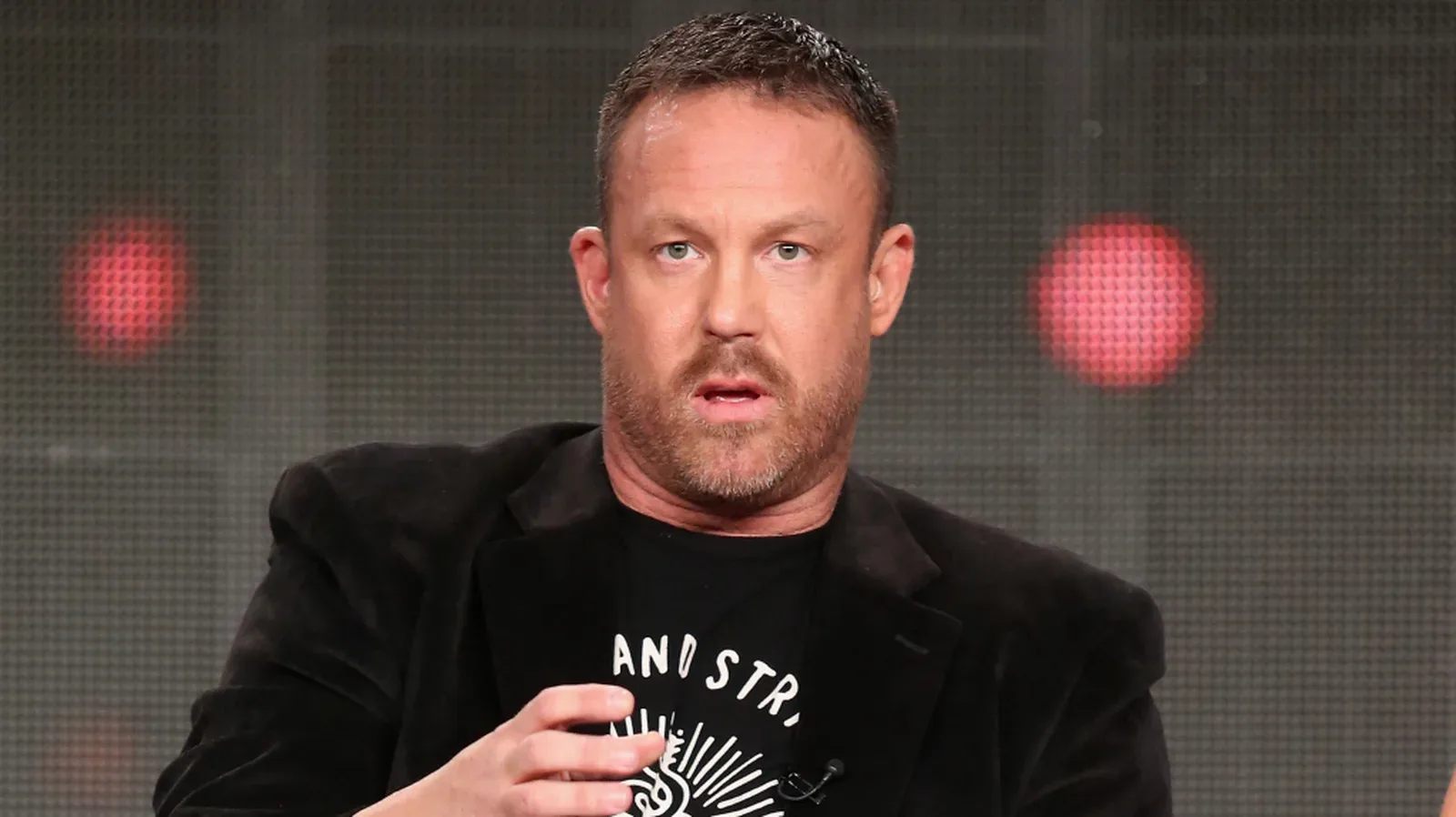
Ken Anderson built his WWE persona around an entrance that didn't need a ring announcer to introduce him. As Mr. Kennedy, he took care of that himself, using the microphone to make his arrival part of the performance. Now Anderson is taking on work that calls for a different sense of scale. Speaking at The Big Event Expo in New York, he said he was headed to Maryland after the convention to work on an independent film called Dose of the Dead.
The film came up in the same interview in which Anderson revealed that he had signed a WWE Legends deal. But when he talked about acting, he went back further than his run as Mr. Kennedy or his later stint with Aces & Eights in TNA. He wanted to act as a kid, and he sees his early experience onstage as part of what prepared him to wrestle. Wrestling, in turn, gave him lessons he could take back to acting, even if some of the habits that work in an arena need to be reined in for a close-up.
Anderson wanted to act before he became Mr. Kennedy
Anderson recalled being heavily involved in theater as a child. He performed in plays, but he also found less formal ways to get in front of an audience. At parties, he remembered getting up on a chair to tell jokes or impersonate his teachers. The settings were different, but both gave him a chance to hold people's attention and see how they reacted. By the time wrestling came along, performing for a room full of people was already something he enjoyed.
That was the first half of the connection Anderson drew between the two jobs: theater helped him get comfortable with the kind of performance wrestling asks for. Mr. Kennedy's entrance made good use of that comfort. A ring introduction ordinarily tells the crowd who is about to compete. Anderson made the introduction itself a reason to watch. Before the match started, fans had already heard the character speak for himself and had something specific to react to.
For more background on this topic, read Jacy Jayne Fires Back at Women’s United States Title Criticism: ‘I’m Done Proving Myself’.
Anderson didn't present film work as a sudden change of direction after his wrestling career. His account was more circular than that. An interest he'd had since childhood helped him develop into a wrestler, and years of wrestling gave him another way to think about acting. The challenge now is knowing which parts of a performance carry over and which belong in the arena.
What works in the back row can be too much in a close-up
One of the first lessons Anderson remembered learning in wrestling was to play to the back row. The fans farthest from the ring still have to understand what's happening. An expression that makes perfect sense to someone at ringside may be almost impossible to read from the far end of the building. A wrestler can make the moment clearer by giving the audience a bigger reaction or by holding it long enough for more of the room to catch it.
Film can reverse that calculation. Anderson pointed out how close the camera can be to an actor's face. At that distance, the viewer can see a small change in expression without the actor having to emphasize it. A reaction that reads clearly in an arena might look exaggerated in the same shot. The adjustment isn't to stop expressing anything; it's to trust that the camera can pick up what a spectator in the back row would miss.
WWE viewers are familiar with both perspectives. A wrestler can direct a moment toward thousands of people in a building while the television audience watches the same thing from a few feet away through a camera. Anderson's entrance illustrates what a performer can do when the priority is reaching the room: the voice, the timing and the repetition give the audience a recognizable cue. A quiet scene on film may call for almost none of that projection, even though the actor still has to be just as deliberate about what the audience sees.
That distinction gives some weight to Anderson's point about wrestling preparing him for acting. The value isn't that a wrestler can walk onto a set and deliver every line as if it were a promo. It's that wrestling gives performers practice judging whether a moment is getting across. Film asks them to make that judgment under different conditions. Sometimes the right choice is to do less and let the shot carry the rest.
Anderson's advice for standing out in wrestling or on screen
Asked what it takes to become a star in WWE or in film, Anderson didn't offer one path for everybody to follow. “You have to make a connection with the audience in some way, no matter what that is,” he said. “It's different for everybody.” That leaves room for a performer whose strength is speaking to a crowd and someone who can make viewers pay attention without saying much at all.
Mr. Kennedy's entrance was one answer to that question, not necessarily one another wrestler should copy. Announcing himself fit a character who wanted control of his own introduction. It gave the crowd a clear idea of who he was before a bell rang. The part of the idea that travels to film isn't the volume or the delivery. It's making a choice that tells viewers something about the person they're watching, then giving them time to take it in.
The Legends deal and Dose of the Dead were separate updates from the same conversation. Anderson said he had signed the WWE agreement and was going to Maryland to work on the independent movie. He didn't describe a role in the film or give a release date in his remarks about the project. What he did explain was why going from wrestling to a set made sense to him in the first place.
For fans who remember Anderson taking charge of his own entrance, the contrast is easy to picture. Mr. Kennedy needed an introduction that could reach the whole building. On film, Anderson may only need to reach a lens a few feet away. His lesson from wrestling isn't that every performance needs to be big. It's that the performer needs to know who is watching and what it will take for the moment to register.
In pictures

Darryl Polo
Darryl Polo is a passionate wrestling fan covering WWE, AEW, TNA and beyond. He loves great rivalries, breakout stars and the moments that keep fans talking long after the bell. How we work.