
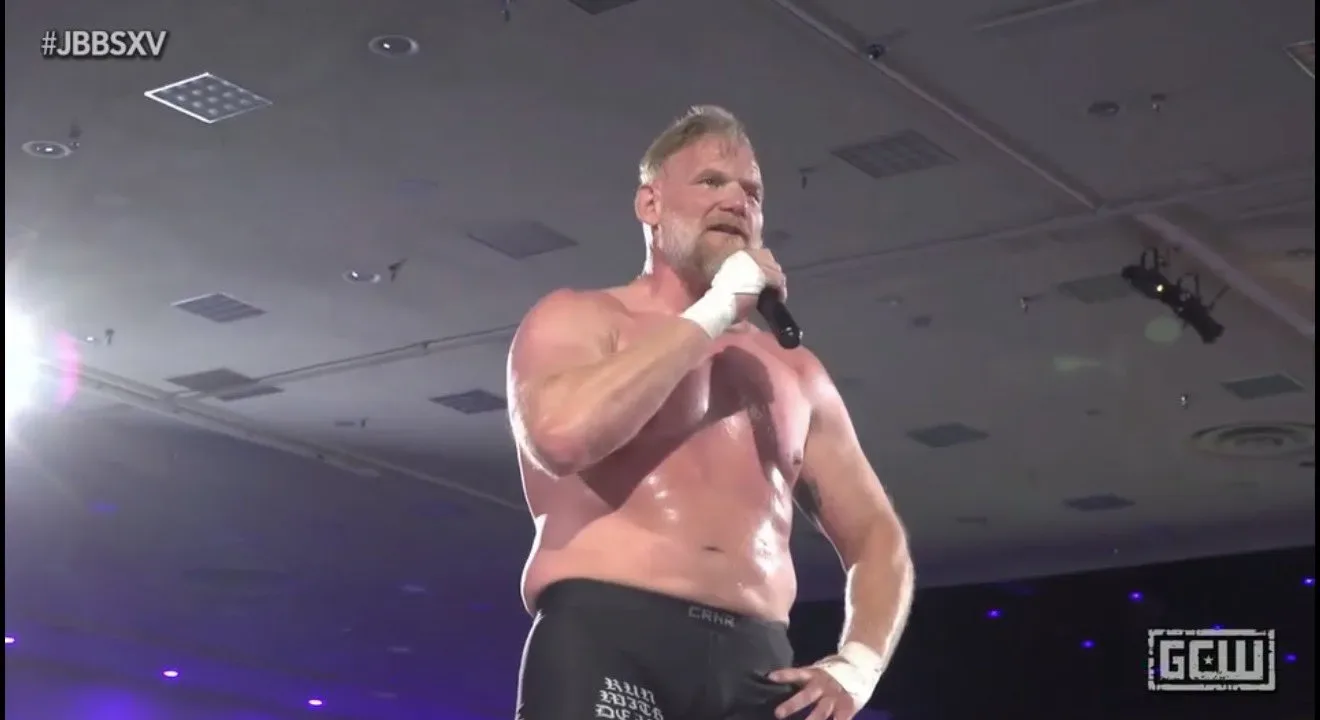
Josh Barnett says Bloodsport is still on his mind despite the event series currently being on hiatus, and he believes there is a realistic path toward its return if the right investment partner comes aboard.
At the conclusion of Bloodsport XV in April, Barnett announced that the brand would be stepping away for the foreseeable future. His explanation at the time was straightforward: Bloodsport needed additional capital in order to continue operating at the level he believed the concept required. The status of the series has not changed in the sense that it is not presently running, but Barnett’s latest comments offer a more optimistic picture regarding its potential future.
Speaking with Ariel Helwani, Barnett confirmed that he has been actively presenting the Bloodsport concept to prospective investors. He said there has already been meaningful interest from parties capable of helping take the promotion forward.
“We have been shopping it around a bit, trying to find some investing. We’ve had some good bites from people with a lot of interest in it. We’ll see what we can put together.”
For more background on this topic, read MLW Fusion Spoilers: Matt Riddle Wins National Openweight Title, Kross Teams With Mistico and Yota Tsuji.
Bloodsport has occupied a distinct place in the modern wrestling landscape. Built around a presentation that merges professional wrestling with the atmosphere and rule structure associated with combat sports, the shows have emphasized submissions, knockouts and a stripped-down fight environment. That identity is central to why Barnett does not appear interested in simply bringing it back in any form possible. For him, a return needs to preserve the elements that made Bloodsport stand out in the first place.
Barnett explained that the project is not prohibitively expensive when measured against the broader costs of producing content intended for streaming or media distribution. Still, he made clear that the necessary production, planning and infrastructure require financial backing. The goal is not merely to stage an isolated event, but to put the key systems in place for a sustainable production operation.
“The thing is, it’s not an insanely expensive project to put together when you look at putting together produced content for streaming or media. But still, you need somebody to give you that money. If we can find that investor or that group that wants to get with us, we’ll get going full speed and we’ll get to work on putting all the essentials in place for how we’ll produce it.”
That distinction matters. Barnett is not suggesting that Bloodsport’s return is guaranteed, nor did he identify an investor, a timetable or a location for a future event. His comments instead indicate that discussions are ongoing and that there are interested parties. Until an agreement is reached, Bloodsport remains inactive.
The former MMA heavyweight champion stressed that he does not want Bloodsport to be permanently finished. However, he is equally firm that he would prefer the brand to remain dormant rather than return in a diluted state. Barnett views the hiatus as preferable to a version of the show that no longer lives up to its intended standard.
“Well, it’s not running at the moment. No I don’t [want it to be dead], if I can help it. But, I would rather it sit buried than do anything less than what I’m trying to do. Otherwise, it’s not going to work, it’s not going to be the product that it should be.”
Barnett’s stance reflects the specific challenge facing niche wrestling concepts. A recognizable name and a loyal audience can establish demand, but maintaining the presentation that earned that audience can require a more focused approach than a conventional independent wrestling card. Bloodsport’s identity is tied to its rules, its visual style and its fight-centered matchmaking. Any potential expansion would need to support those foundations instead of reshaping the product into something more familiar but less distinctive.
He elaborated that he has no interest in allowing people who do not share his level of investment in the concept to undermine it. Barnett did not identify a particular person or company as a concern. Rather, he framed the issue as a personal standard for a project he has spent considerable time developing.
“I’m not gonna let it be cannibalized or ruined by those that are not capable or as invested in it as I am. Not to say that that’s an issue, I’m just saying for me, if I can’t make it the way it needs to be, then I don’t want it to diminish. I don’t want it to go out on a bad note. In fact, I want it to rise to where it can be and should be.”
The comments also reveal the scale of Barnett’s ambitions for Bloodsport before the hiatus. He said he had been considering major possibilities for future events, including a potential match involving himself and Bill Goldberg in Japan. Barnett also named Mike O’Hearn as someone he envisioned bringing into a tournament.
“Of course. I didn’t put all this energy and effort into this thing to see it run for a series and be done with it. I had big plans. I potentially had me versus Bill Goldberg in Japan and Mike O’Hearn in a tournament.”
Neither the proposed Barnett vs. Goldberg bout nor the idea involving O’Hearn was announced as an official Bloodsport match. Barnett presented them as examples of plans he had considered and connections he believed he could use to make unusual attractions possible. As a result, fans should not take either concept as confirmation that those appearances are currently in development.
Still, the ideas underscore what Barnett sees as Bloodsport’s upside. A Japan event built around Barnett and Goldberg would have been a notable combat-sports-flavored attraction, while the possibility of O’Hearn entering a tournament speaks to the unconventional casting Barnett has contemplated for the series. Those concepts fit with an event brand designed to offer matchups and settings outside the standard wrestling formula.
Barnett expressed confidence in his ability to assemble that kind of presentation, pointing to his professional relationships, experience and creative direction. He also argued that attempts by others to imitate Bloodsport’s approach have not replicated its success. In Barnett’s view, the format requires more than simply putting wrestling talent into an MMA-inspired setting.
“I have a lot of great connections and good ideas. I understand what it takes to make a show like that. As many people that have tried to emulate our process, nobody has succeeded. Many have made some of the worst professional wrestling products you will ever see. This is not something that can just be laid in the hands of anybody.”
Whether Bloodsport returns will now depend on turning the interest Barnett described into a workable investment arrangement. His comments suggest he has not abandoned the concept or lowered his expectations for it. Instead, he is looking for backing that allows the project to resume with the appropriate production resources and with his creative vision intact.
For now, the key facts remain clear: Bloodsport is not currently operating, Barnett is seeking investment, and he says several interested parties have emerged. There is no announced return date, no confirmed venue and no finalized card. There is also no indication that the proposed Japan match with Goldberg or a tournament featuring O’Hearn has progressed beyond Barnett’s earlier ambitions.
What has changed since April is the degree of possibility surrounding the brand. Barnett’s update does not end the hiatus, but it establishes that Bloodsport is being actively explored as a project with future value. If the right financial partner is found, Barnett says he is prepared to move quickly, build the required structure and pursue the larger version of Bloodsport he believes the concept can become.

Darryl Polo
Darryl Polo is a passionate wrestling fan covering WWE, AEW, TNA and beyond. He loves great rivalries, breakout stars and the moments that keep fans talking long after the bell. How we work.