
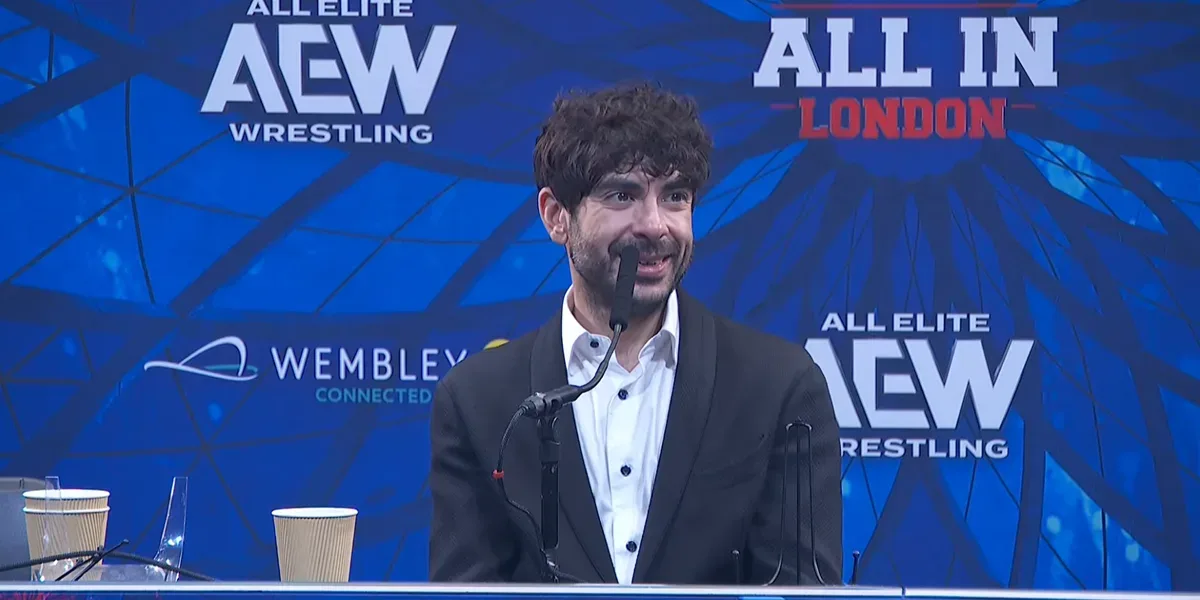
John Morrison has offered a revealing comparison between two of the most recognizable figures in modern professional wrestling: AEW President Tony Khan and former WWE chairman Vince McMahon.
Having worked in WWE under McMahon and later appeared in All Elite Wrestling under Khan, Morrison has seen two very different eras and structures of the wrestling business from inside the locker room. In a recent interview, he discussed Khan’s unusual position as a wealthy executive who could have pursued virtually any path, but instead chose to immerse himself in professional wrestling and put significant time into the day-to-day demands of the company.
Morrison said that commitment is one reason he sees similarities between Khan and McMahon, even while drawing a sharp distinction in how he views them personally.
“As far as Tony Khan goes, you know I would compare Tony to Vince a lot, like Tony Khan probably could have done anything he wanted, anything, you know? That’s the freedom you get with that amount of money, but he’s a wrestling fan and decided he wanted to work in the business of professional wrestling and he also decided he wanted to work really hard because he does work really hard. He’s at all the tapings, and I sometimes think he’s a lot like Vince except with a good heart, if you know what I mean.”
For more background on this topic, read Thunder Rosa Reflects on Viral Mia Khalifa Training Video Ahead of AEW Dynamite.
Morrison points to Khan’s investment in the work
The central point in Morrison’s comments was not simply that Khan has financial resources. It was that Khan has chosen to devote himself to wrestling despite having other options available to him. Khan is AEW’s president and a highly visible presence around the promotion’s television events, media activity, pay-per-views, and wider operations.
For Morrison, Khan’s presence at tapings matters because it reflects a hands-on commitment rather than an ownership role kept at a distance. Wrestling promotions are built around relentless schedules, constantly changing creative needs, live-event logistics, production demands, and the management of a large group of performers. Morrison’s remarks frame Khan as someone who has elected to take on that workload because of a genuine interest in the medium.
That distinction is especially notable in a business where fans often debate whether major decision-makers are motivated by creative passion, corporate strategy, or a combination of both. Morrison described Khan first and foremost as “a wrestling fan” who decided to enter the industry and work hard within it.
AEW has been defined since its launch by Khan’s role as the promotion’s leading executive. He has regularly been associated with the company’s public direction and has become one of the industry’s most discussed figures, particularly because AEW operates in the same national wrestling landscape long dominated by WWE.
The Vince McMahon comparison carries major weight
Any comparison to McMahon is significant. McMahon’s influence on professional wrestling is immense, and he was synonymous with WWE’s rise into a global entertainment powerhouse. For generations of wrestlers, writers, producers, employees, and fans, McMahon represented an executive whose creative authority and work habits shaped nearly every aspect of the WWE system.
Morrison knows that environment firsthand. His career includes extensive time in WWE, where McMahon’s influence was central to the company’s creative and business operations. Morrison later worked in AEW, giving him a personal basis for discussing the differences and similarities he observed between the two leaders.
Still, Morrison did not present Khan as a direct replica of McMahon. His wording acknowledged a resemblance in ambition, commitment, and visibility around the product, while his final observation made clear that he sees an important difference in character. Morrison said he sometimes views Khan as being like McMahon “except with a good heart,” a line that will naturally draw attention because of McMahon’s long and controversial history in wrestling.
The remark was delivered as Morrison’s own perspective, not as a claim to define either man’s entire legacy. But it underscores the contrast he sees between Khan’s intense involvement in wrestling and the personal qualities Morrison associates with the AEW president.
A shared obsession with professional wrestling
There is a broader parallel in Morrison’s assessment: both Khan and McMahon are figures whose identities have been closely tied to professional wrestling. McMahon became one of the defining promoters and executives in the history of the industry. Khan entered an already-established wrestling world as the leader of a new major national company, and he did so with a publicly known enthusiasm for the sport and its history.
Morrison’s comments suggest that passion alone is not what prompted the comparison. Plenty of people love wrestling. The common ground, in Morrison’s view, is the willingness to turn that passion into sustained work. He specifically emphasized that Khan is at the tapings and “does work really hard.”
That is the kind of behind-the-scenes visibility performers recognize. Wrestlers may encounter an executive not only through major creative decisions, but also through conversations at television, production meetings, last-minute changes, and the ongoing pressure of presenting live wrestling programming. Morrison’s statement paints Khan as a leader who is consistently present in that environment.
For AEW, Khan’s level of involvement has remained a regular topic among audiences. His supporters often point to his extensive wrestling knowledge and enthusiasm, while critics have questioned elements of the promotion’s creative direction and management. Morrison’s remarks do not attempt to settle those broader debates. Instead, they provide the view of a wrestler who has worked under both Khan and McMahon and recognizes a similar work-driven mentality in each.
Morrison also addresses WWE’s leadership structure
Elsewhere in the same conversation, Morrison discussed WWE’s current leadership landscape and said that Triple H does not possess the same level of power in WWE that McMahon once held.
That observation adds useful context to Morrison’s comparison of Khan and McMahon. McMahon’s power in WWE was historically viewed as exceptionally concentrated, with his influence extending across the company’s wrestling presentation and business identity. Morrison’s comment about Triple H indicates that he sees the current WWE structure as different from the one that existed under McMahon’s leadership.
In that sense, Morrison’s comments touch on two major realities of the current wrestling industry. WWE continues to evolve following a leadership transition away from the era when McMahon’s authority defined the company. At the same time, AEW remains closely associated with Khan as its founder, president, and most visible executive decision-maker.
The comparison is not necessarily about identical corporate structures. Rather, it is about the presence of a central figure with deep personal investment in wrestling and a strong influence over a promotion’s identity. Morrison sees Khan occupying that kind of committed leadership role within AEW, while also believing Khan approaches it with a different heart.
A perspective shaped by experience on both sides
Morrison’s comments stand out because they come from someone who has been part of both WWE and AEW. Wrestlers who work across major promotions can offer a perspective that goes beyond public perception, as they have firsthand experience with the people, pace, and culture surrounding each company.
His comments were not framed as an attack on either promotion. Morrison instead focused on what he observed in Khan: a wealthy man who did not merely become a distant investor, but chose to become deeply involved in the professional wrestling business because he loved it.
For Khan, being compared to McMahon in terms of dedication and constant work is a substantial observation, given McMahon’s place in wrestling history. Morrison’s added qualifier is what makes the quote especially memorable. He sees similarities in drive, but he also sees a meaningful difference in humanity.
As AEW continues to operate in a highly competitive wrestling market, the role Khan plays behind the scenes will remain central to conversations about the company. Morrison’s perspective offers a concise explanation of why: Khan is not simply attached to the promotion as its owner. In Morrison’s view, he is a wrestling fan who chose the business, shows up for the work, and approaches the role with a heart that distinguishes him from the executive to whom he is being compared.

Darryl Polo
Darryl Polo is a passionate wrestling fan covering WWE, AEW, TNA and beyond. He loves great rivalries, breakout stars and the moments that keep fans talking long after the bell. How we work.