
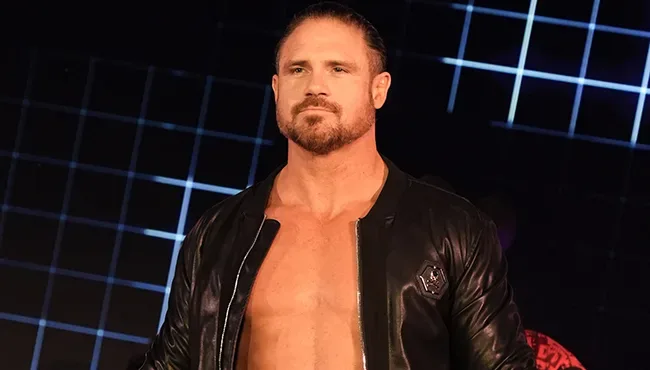
John Morrison has offered a blunt perspective on the difference between WWE under Vince McMahon and WWE under Triple H, framing the change less as a question of creative personality and more as a fundamental shift in how power can be exercised.
Morrison, also known as Johnny TV, spent significant stretches of his career in WWE before joining AEW in 2022. That means he did not work for WWE during the current TKO era, but his years around McMahon’s operation gave him a firsthand understanding of the kind of immediate, personal authority McMahon held when he was running the company’s biggest decisions.
In Morrison’s view, Triple H is operating with a different set of limits now that WWE exists beneath the TKO corporate structure. Even if Triple H remains the central creative executive guiding WWE’s on-screen direction, Morrison believes the freedom to make expensive, spur-of-the-moment decisions is no longer comparable to what McMahon once had.
“Vince had no checks and balances. If he wanted, I don’t know, an 18-wheeler full of milk with a pump that you’d use to spray, he could get it like that. Triple H right now doesn’t have that since he’s under the TKO umbrella. He can’t just decide, ‘I want to spend a hundred thousand dollars on a truck right now.’”
For more background on this topic, read Lash Legend Outlasts Charlotte Flair and Giulia to Qualify for Women’s Money in the Bank.
A Change in Structure, Not Just Creative Leadership
Morrison’s truck-and-milk example is deliberately exaggerated, but the point behind it is clear. McMahon was not simply WWE’s creative figurehead during Morrison’s time with the company. He was the defining power within the organization, with the ability to make unusual production and creative calls quickly if he believed they served the show, a storyline, or his own vision of entertainment.
That sort of centralized authority could lead to ideas that were unpredictable, extravagant, and sometimes difficult to anticipate even for the people appearing on television. WWE’s history under McMahon included elaborate entrances, major stunts, unusual props, costly set pieces, and concepts that could change quickly as the person at the top changed his mind or pursued a new direction.
Triple H’s WWE is not necessarily without large-scale presentation or ambitious creative plans. The company still produces major stadium events, premium live events, weekly television, and extensive promotional campaigns. Morrison’s observation is instead about the environment surrounding those choices. A creative executive working within a publicly connected corporate system has different financial controls and accountability than an owner who can personally authorize virtually any expenditure.
TKO’s formation placed WWE within a broader corporate framework alongside UFC. That reality naturally changes the perception of executive decision-making, particularly when it comes to costs, planning, and the chain of approval behind major initiatives. Morrison’s comments suggest that, from the outside, there is now more structure around WWE’s operations than there was under McMahon’s singular control.
For wrestlers and other employees, that can carry both practical and creative implications. A more organized process may offer greater consistency, clearer operational standards, and fewer whims from one person determining the direction of a project. At the same time, it can reduce the possibility of an idea becoming reality solely because one powerful decision-maker wants it on the show immediately.
The Appeal of an ‘Anything Can Happen’ Atmosphere
Morrison did not argue that unchecked spending or impulsive leadership is automatically preferable. His point recognizes that there was an energy attached to McMahon’s control because the range of possible decisions could be so wide. If a promoter has the money, the authority, and the inclination to make an unusual concept happen without substantial resistance, television can feel more volatile.
That volatility has long been part of the mythology around WWE’s past creative process. Performers have often described last-minute rewrites, sudden changes to plans, and a need to adapt to an environment where the final call was concentrated in one office. It could be frustrating, but it also meant that conventional limits did not always apply in the same way they would in a more corporate setting.
Morrison’s remarks leave room for the possibility that reduced impulsiveness is healthier for talent. A system with financial oversight and more defined responsibilities can protect against decisions being made purely on instinct. Yet he also acknowledged the tradeoff: when the leader can no longer instantly pursue any extravagant notion, some of the sensation that wrestling is capable of anything may be diminished.
That distinction is especially relevant in an industry built on spectacle. Wrestling promotions compete not only with one another but with every other form of live entertainment. Big surprises, visual moments, and outsized concepts can be valuable because they create conversation. The challenge is balancing that need for spectacle with responsible planning and sustainable business practices.
Triple H’s role requires managing that balance in a setting very different from the one Morrison knew. The former WWE Champion is widely viewed as the executive most closely associated with creative direction, but Morrison’s comments emphasize that creative leadership and unrestricted ownership authority are not the same thing. One person may make the biggest storytelling calls while still answering to a larger corporate process on certain business matters.
Morrison Draws a Comparison to Tony Khan
Morrison also addressed the level of freedom available to AEW President Tony Khan, who has been the driving executive presence behind AEW since the promotion’s launch. Morrison joined AEW in 2022, providing a direct comparison point between his experience of the wrestling businesses associated with McMahon and Khan.
“Tony Khan probably could have done anything he wanted, anything, you know? That’s the freedom you get with that amount of money,” said Morrison. “But he’s a wrestling fan and decided he wanted to work in the business of professional wrestling and he also decided he wanted to work really hard because he does work really hard.”
The comparison is notable because Morrison separates financial ability from motive. He presents Khan as someone with considerable resources and the latitude to act, but also as a committed wrestling fan who made a conscious decision to enter the industry and put extensive effort into it.
For Morrison, money alone is not the defining issue. The important question is what a powerful owner or executive chooses to do with that freedom. A leader can use resources to chase spectacle, make bold decisions, or indulge personal preferences. They can also devote those resources toward building an organization around a genuine enthusiasm for professional wrestling.
AEW’s identity has often been linked to that fan-first approach, with an emphasis on in-ring wrestling, major matchups, and a deep roster drawn from across the industry. Morrison did not offer a detailed judgment on every aspect of AEW’s creative operation, but he clearly credited Khan’s work ethic and passion for the business.
His final comparison was the sharpest and most memorable part of his assessment.
“He’s a lot like Vince except with a good heart.”
It is a concise line, but it carries several layers. Morrison appears to be comparing Khan and McMahon in terms of resources, personal influence, and the ability to affect a wrestling promotion’s direction. At the same time, he draws a clear distinction in temperament and intent by praising Khan’s character.
Why Morrison’s Perspective Stands Out
Morrison has occupied a rare position in modern wrestling. He is closely associated with WWE through multiple runs and major accomplishments, while his more recent years have included AEW as Johnny TV. He has seen a McMahon-led WWE from inside the company and has worked in Khan’s AEW, even though he did not experience Triple H’s current WWE structure as a performer.
That makes his comments more useful as an assessment of power dynamics than as a direct report on day-to-day conditions in today’s WWE. Morrison is not claiming to know every approval process inside TKO. Rather, he is identifying the obvious difference between a company once shaped by an owner with extraordinary individual control and a company now functioning inside a broader corporate framework.
The wrestling landscape is full of powerful personalities, but the business structures around those personalities matter. McMahon’s WWE was synonymous with one executive’s enormous reach. Khan’s AEW is led by an owner whose financial capacity and personal passion remain central to the promotion. Triple H, meanwhile, is guiding WWE creatively in an era where the company’s ownership and corporate environment look markedly different.
Morrison’s comments do not settle whether one model is universally better than another. They do, however, highlight what can be gained and lost when a wrestling company moves from a single owner’s near-total control to a system shaped by oversight, budgets, and corporate accountability. For an industry that thrives on unpredictability, that is a meaningful distinction.

Darryl Polo
Darryl Polo is a passionate wrestling fan covering WWE, AEW, TNA and beyond. He loves great rivalries, breakout stars and the moments that keep fans talking long after the bell. How we work.