
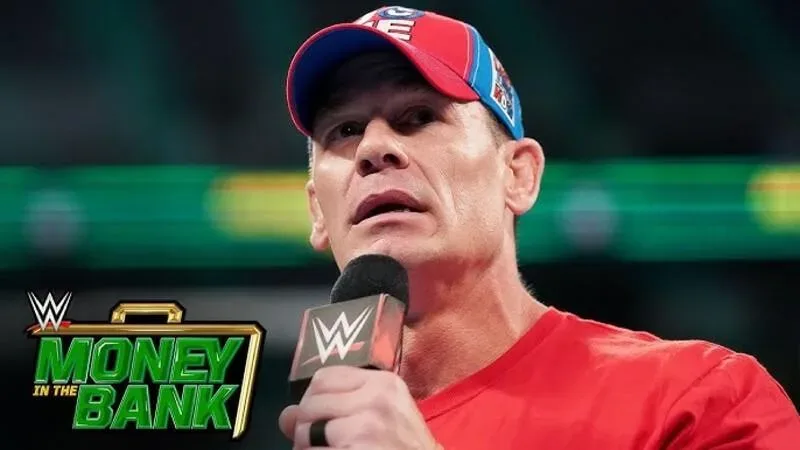
John Cena’s relationship with WWE has long been defined by major moments, championship accomplishments and an ability to command attention on the largest stages. As he continues to consider what he can offer the company beyond his own in-ring appearances, Cena is focused on directing that attention toward the wrestlers trying to establish themselves.
That philosophy is at the center of the inaugural John Cena Classic, which is scheduled for December. Cena discussed the event as an opportunity to use the visibility attached to his name to elevate performers who are still working to earn a more prominent place in WWE.
Rather than treating the tournament as a vehicle solely for another Cena-centered attraction, the WWE veteran has made clear that he sees its greater value in who can benefit from the platform. In Cena’s view, the performers who are pushing for an opportunity deserve to be placed in environments where they can be seen, tested and potentially make a lasting impression before a major crowd.
“If I have any energy left in my intellectual property whatsoever, I want to give it away to the folks who just are clamoring to try to get a spot,” Cena said. “I want to get those folks who have earned a chance to get out there in front of the audience, I want to get them out there in front of a sold-out crowd against our best and brightest.”
For more background on this topic, read John Cena Envisions John Cena Classic as an Annual WWE-NXT Showcase.
Cena’s Platform Is the Point of the John Cena Classic
The statement offers a clear explanation of what Cena wants the John Cena Classic to represent. A tournament connected to one of WWE’s most recognizable names naturally carries additional attention, but Cena does not appear interested in holding that attention for himself. His comments frame the event as a means of transferring visibility to talent that may be one performance away from a breakthrough.
For wrestlers lower on the card, newer to a national television audience, or simply waiting for the right opening, being placed in a high-profile event can be pivotal. Wrestling audiences often remember a single standout match, a surprising victory or a performance that demonstrates a wrestler belongs opposite more established competition. Cena’s aim is to offer those moments to people who have earned an opportunity but may not always receive a spotlight of that scale.
The emphasis on a sold-out crowd is particularly important. Cena did not describe the Classic merely as a collection of matches or an exhibition attached to his brand. He specifically spoke about giving deserving performers the chance to compete in front of a full arena and against WWE’s “best and brightest.” That places the focus on meaningful stakes, difficult competition and an audience large enough to respond to a wrestler’s performance in real time.
It is also a continuation of a priority Cena highlighted while reflecting on his final event in December 2025. Even with significant attention surrounding what he was going to do in his final match, he took particular satisfaction in seeing fans leave talking about other names on the show.
Je’Von Evans, Sol Ruca and Oba Femi Were Examples of the Goal
Cena pointed to Je’Von Evans, Sol Ruca and Oba Femi as examples of the kind of outcome he wants to encourage. The three performers were among the names fans discussed after the event, despite the enormous interest surrounding Cena’s own final match. For Cena, that shift in attention was not incidental. It was precisely what he hoped would happen.
“Being able to just see those [up-and-coming WWE stars] get out there and get noticed, and then after the event, where everybody comes to see what I was going to do for my final match, to have so many folks talking about Je’Von [Evans], Sol [Ruca], and Oba [Femi], that’s the point. That’s the absolute point.”
The sentiment reflects a broader understanding of what a major wrestling event can accomplish. Fans may arrive with one attraction in mind, but a successful show can leave them invested in performers they were not originally there to see. In Cena’s example, the anticipation around his final match created a major backdrop, while Evans, Ruca and Femi helped ensure that the conversation after the event extended well beyond Cena himself.
That is an especially valuable result for WWE’s developing talent. A performer can gain experience in front of large crowds over time, but organic fan conversation is more difficult to manufacture. When viewers begin asking for more of a wrestler after seeing them in a prominent setting, that response can help establish momentum. Cena’s comments suggest that putting wrestlers in position to generate that response is one of the defining purposes behind the Classic.
Evans, Ruca and Femi were not mentioned as a confirmed list of participants for the John Cena Classic. Instead, Cena used them to illustrate his larger point: an established name’s final chapter or special attraction can create room for younger wrestlers to be noticed if the show is structured to let them shine.
A Tournament Format Can Put the Focus on Performance
While Cena did not detail the full field, match structure or stakes of the inaugural John Cena Classic in these comments, the tournament concept suits the mission he outlined. Tournaments inherently place an emphasis on competitors and performances. They can give audiences a reason to follow a range of talent across multiple matches while also making victories and eliminations feel consequential.
That does not mean every wrestler in such an event will instantly become a top star. Cena’s remarks are more grounded than that. He spoke about providing a chance to people who are “clamoring to try to get a spot” and who have earned the right to perform in front of the audience. The opportunity itself is central: a chance to be placed in a serious setting, against strong opposition, where fans can decide how they respond.
In a company with a deep roster, that kind of exposure can matter enormously. WWE has talent across different levels of experience and visibility, and not everyone receives the same number of high-profile openings. A branded tournament can serve as a showcase for performers whose work has positioned them for more, whether they are already gaining momentum or are looking for the performance that makes a wider audience take notice.
Cena’s reference to competing against the company’s best also suggests that the event is meant to be more than a ceremonial showcase. The wrestlers given a platform will be expected to make the most of it against formidable opponents. That combination of opportunity and pressure is familiar territory in professional wrestling, where advancement is often shaped not only by receiving a match but by what a wrestler does when the stakes rise.
Cena Compared the Event’s Spirit to ‘Enter the Dragon’
Elsewhere in discussing the John Cena Classic, Cena compared the tournament to Enter the Dragon. The comparison reinforces the idea of an event built around bringing competitors into a distinctive setting and allowing them to distinguish themselves. It also signals that Cena is thinking about the Classic as something with its own identity, rather than simply a standard set of matches carrying his name.
The reference is consistent with his comments about showcasing wrestlers in meaningful competition. At its best, a tournament gives each competitor a clear reason to fight, a recognizable path through the field and an opportunity to stand out in a format that rewards compelling performances. Cena’s desired outcome is not just that fans know the John Cena Classic happened; it is that they emerge from it talking about the wrestlers who seized the moment.
That perspective carries added significance because Cena has already experienced the transition from being a rising performer to being one of the central figures in WWE. He understands the value of audience connection and the difference between simply appearing on a card and becoming a name people remember afterward. His comments indicate that he wants the recognition attached to his own career to help create a bridge for others.
The Legacy Cena Wants to Leave Behind
Cena’s words place the John Cena Classic within a larger legacy conversation. His name may bring initial curiosity and attention to the event, but he wants the performers involved to become the lasting story. That approach does not diminish Cena’s place in the presentation. Instead, it uses his stature in a way designed to expand the audience’s awareness of WWE’s future.
For the wrestlers selected to compete, the value will be in meeting that opportunity with performances that demand attention. Cena can help provide the stage, but the competitors will ultimately be responsible for making the crowd care. His examples of Evans, Ruca and Femi underline that fans are willing to respond when up-and-coming talent is given a genuine chance to perform at a high level.
As December approaches, the central question surrounding the inaugural John Cena Classic will be which WWE performers receive that chance and which of them emerge with new momentum. Cena has already established what he hopes the answer will be: a tournament remembered not only for the name attached to it, but for the hungry wrestlers who used it to prove they belong in the spotlight.

Darryl Polo
Darryl Polo is a passionate wrestling fan covering WWE, AEW, TNA and beyond. He loves great rivalries, breakout stars and the moments that keep fans talking long after the bell. How we work.