
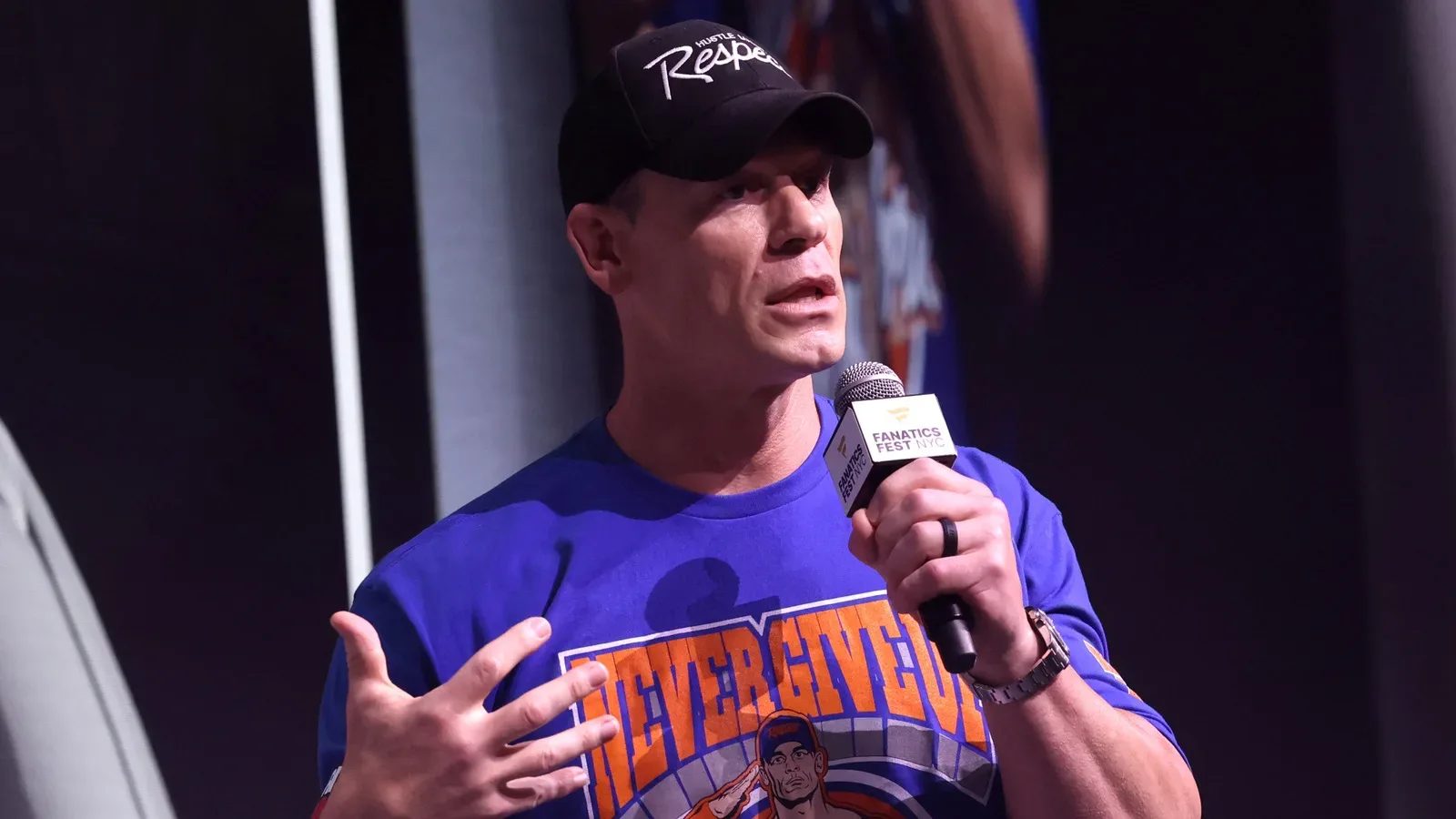
John Cena has made clear that retirement has not diminished his affection for WWE or the feeling of performing in front of a live crowd. The 17-time world champion says he misses the experience every day, while also maintaining that the emotional pull of wrestling is separate from the practical decision to step away.
Cena spent the majority of his life building a career in professional wrestling, developing from an early WWE prospect into one of the defining stars of his generation. His run included world championship success, marquee rivalries, major WrestleMania matches and a connection with audiences that extended well beyond the ring. Even after acting commitments increasingly limited his WWE availability, Cena regularly spoke about how much performing for wrestling fans meant to him.
Now retired from the ring, Cena has acknowledged that those feelings remain. Speaking to People, he described the daily sense of loss that comes with no longer being an active performer, while explaining why nostalgia alone cannot dictate a return.
“I miss all of it every day. I miss performing every single day. And that said, just because I miss it here [in my heart] doesn't make it the right decision here [in my head],” Cena said.
For more background on this topic, read Suspended Wren Sinclair Unmasks After Winning NXT Women’s Title Battle Royal.
It is a measured reflection from a wrestler whose career has always been closely tied to the reaction of a crowd. Cena’s WWE presence was built not only on championships and match results, but on his ability to occupy a major-event stage. Whether he was celebrated, loudly rejected, or faced the kind of split response that became a signature of parts of his career, Cena performed with the confidence of someone who understood the scale of the moment.
That relationship with the audience is part of what he says he misses most. Wrestling is a uniquely immediate form of performance: the response is live, unpredictable and inseparable from the match itself. A performer can prepare physically and creatively, but the energy inside an arena helps determine how a segment or contest ultimately feels. Cena spent decades in that environment, and his comments show that distance from it has not made the experience any less meaningful.
Cena separates nostalgia from the decision to retire
The important qualifier in Cena’s comments is that he is not presenting longing for WWE as a reason to reverse course. Instead, he drew a line between what he feels emotionally and what he believes is the responsible decision.
That distinction has become central to discussions about retired wrestlers. Major names often remain connected to the industry long after their final match, and the desire to hear the crowd, revisit a familiar role or recapture a defining period of life can be powerful. But Cena’s comments suggest he views retirement through a broader lens than simply whether he still loves wrestling. He does, plainly. The question is whether he can still do it at the level required of him.
Earlier this year, Cena was frank about both his preference for WWE and professional wrestling over acting and the physical reality behind his retirement. He said that he had to stop wrestling because he could no longer do it. That does not erase his passion for the business. If anything, it helps explain why his present perspective carries weight: Cena is not speaking as someone who became indifferent to wrestling, but as someone who recognizes that wanting something is not always the same as being able to continue doing it.
Throughout the later stages of his active WWE career, Cena had already experienced periods away from the company due to his work in film and television. Those absences never appeared to sever his bond with the ring. He frequently voiced a desire to wrestle again, and each WWE appearance carried the added attention that comes with a star whose schedule had become increasingly selective.
Retirement creates a different kind of separation. A temporary absence leaves the possibility of the next match, the next entrance and the next city. A retirement forces a performer to confront the fact that the chapter has changed. Cena’s comments acknowledge that change without minimizing the emotional impact of it.
Early wrestling memories remain part of Cena’s daily life
Cena also discussed the role nostalgia plays in his life, explaining that he often finds himself looking back at earlier periods when dealing with stress, uncertainty or difficult questions. His memories are not limited to WWE. He pointed to his early wrestling days, college, dormitory school and childhood as points of reflection.
“I have moments of nostalgic reflection on the daily. A lot of times, that's when you're overwhelmed by stress or confused or maybe you don't know the answers that you're trying to seek. Nostalgia is in itself looking back to a simpler time in the unknown or during crisis,” Cena said.
He continued by emphasizing how frequently those memories surface.
“I got daily moments of that, man. Daily. I'll look back on my early wrestling days, or I'll look back on college days, or I'll look back on my life in dormitory school, or even as a kid. That happens on the daily, man.”
For Cena, wrestling is therefore part of a wider personal history rather than an isolated professional accomplishment. His earliest days in the business represent more than a route to fame or championship success. They belong to a formative period of his life, one he can revisit mentally when the present feels demanding or uncertain.
That perspective also helps place his retirement comments in context. Cena is not merely missing a job. He is missing a world that shaped his identity: the training, the travel, the pressure of live television, the competition, the locker-room environment and the connection to fans. All of those elements can carry powerful memories, particularly for somebody who devoted so much of his life to reaching the top of WWE.
A lasting bond with WWE and its audience
Cena remains one of WWE’s most recognizable figures, and his career is inseparable from an era in which he became a central face of the company. His championship résumé and longevity established his place among the promotion’s most accomplished stars, but his cultural footprint extended beyond title reigns. His catchphrases, ring presence and ability to connect with different generations of fans made him a constant point of reference even during years when he was not a full-time member of the roster.
His move into acting introduced another major dimension to his career, including his work as the star of Peacemaker. Still, Cena has consistently been open about the place wrestling holds in his life. Earlier this year, he said he preferred WWE and professional wrestling to acting. The statement was not framed as a rejection of his current work, but as an honest recognition of where his deepest professional attachment lies.
That honesty continues in his latest comments. Cena does not pretend retirement is easy simply because it was necessary. He misses performing. He misses the entire experience. Yet he is also able to appreciate the business from a different position, as a fan of the form of entertainment he grew up loving.
For WWE fans, the remarks offer a clear picture of the emotional complexity that can follow a career-ending decision. Cena’s love for the ring is still there. His memories remain vivid, and the urge to perform has not disappeared. But he has also stated that the decision must be guided by reason rather than sentiment.
That balance may be the most revealing part of Cena’s reflection. The desire to step back into an arena can endure long after a final match, especially for a performer whose career was defined by live audiences and high-pressure moments. Cena’s comments show that he feels that pull every day. At the same time, he is choosing to honor the reality that led him to retire, while keeping the appreciation for WWE, wrestling and its fans firmly intact.
In pictures

Darryl Polo
Darryl Polo is a passionate wrestling fan covering WWE, AEW, TNA and beyond. He loves great rivalries, breakout stars and the moments that keep fans talking long after the bell. How we work.