
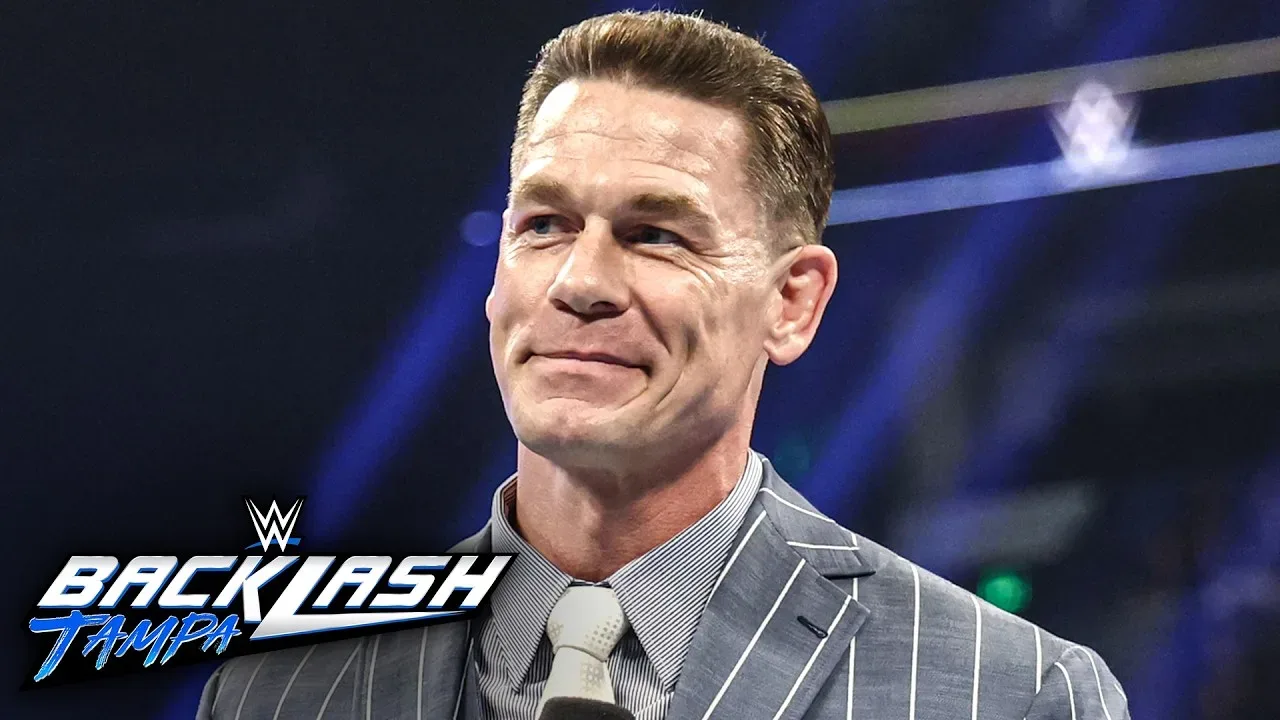
John Cena’s post-retirement WWE presence continues to create opportunities for fans to revisit every era of his remarkable career. While making media appearances for Matchbox: The Movie, the 17-time WWE World Champion turned back the clock with a performance of “My Time Is Now,” the entrance anthem that became inseparable from his rise into one of wrestling’s defining modern stars.
Cena performed the song during a visit with Capital, bringing the energy of his long-running WWE presentation into a setting far removed from the arena. For generations of wrestling fans, the opening notes of the track immediately signal Cena’s arrival: the “You can’t see me” gesture, the familiar entrance routine, and the confidence of a performer who spent more than two decades at the center of WWE programming.
The appearance arrives during a busy period for Cena away from the ring. He is promoting Matchbox: The Movie, continuing a Hollywood career that has made him one of WWE’s most recognizable crossover figures. At the same time, Cena remains closely connected to the company that made him a global name. After concluding his in-ring career in December 2025, he now serves as a WWE ambassador.
View the referenced post on Instagram
That role gives Cena a different relationship with the WWE audience than the one he held for most of his career. He is no longer preparing for another championship match, a rivalry, or a WrestleMania main event. Yet moments like the Capital performance demonstrate how powerfully his music, mannerisms, and personality remain tied to WWE’s identity. Even without a match on the horizon, Cena can still summon an immediate reaction through a song that has followed him through the largest moments of his career.
For more background on this topic, read Nick Khan Says WWE Evaluates Wrestler Film and TV Opportunities Case by Case.
A Theme Song That Became a Wrestling Institution
“My Time Is Now” was not simply an entrance theme. It became a mission statement for Cena’s WWE character during the period when he emerged as the company’s leading star. Its lyrics, cadence, and defiant attitude matched the persona Cena developed after transforming from the “Doctor of Thuganomics” into a championship-level headliner.
The song’s importance grew alongside Cena’s ascent. It was heard at major premium live events, championship celebrations, title defenses, and countless episodes of WWE television. For fans who watched Cena’s peak years, the record is connected to the image of the star running toward the ring in colorful merchandise, saluting the crowd, and declaring that his time had arrived.
That message endured for much longer than a typical wrestling catchphrase. Cena’s run at the top was marked by extraordinary longevity, and his entrance music became a constant through changing WWE eras. Opponents, championship designs, venues, rosters, and audience reactions evolved, but the familiar musical introduction remained. It was a reliable part of a Cena appearance whether he was being greeted as the company’s hero or challenged by an audience that had grown more divided over his position at the top.
The performance during his movie press tour leaned into that shared history. Cena has established himself in movies and television, but the song remains an unmistakable connection to the audience that first watched him develop into a mainstream celebrity. His willingness to perform it on a media stop reflects how central WWE remains to his public identity.
The Legacy of You Can’t See Me
“My Time Is Now” came from Cena’s 2005 album, You Can’t See Me. The project was released at a crucial moment in his WWE rise, when he had moved beyond the early rap battles and freestyle segments that introduced the “Doctor of Thuganomics” character to a wider audience. By then, Cena had become one of WWE’s most prominent acts and was establishing the foundation of a career that would ultimately include 17 world championship reigns.
The album was a notable commercial success for a WWE performer. Roughly 140,000 copies were sold in its first week, an indication of the level of recognition Cena had already achieved. It was more than a novelty release tied to a wrestling gimmick. The album arrived at a time when Cena’s rap persona was deeply embedded in his on-screen presentation, allowing his music to function as an extension of the character fans saw every week.
You Can’t See Me contained 17 tracks. Along with “My Time Is Now,” the track list included “Right Now,” “Just Another Day,” and “If It All Ended Tomorrow.” The project helped preserve a specific stage of Cena’s evolution: a performer who had used rap as an avenue to stand out in WWE, then carried elements of that identity into his work as a top champion.
For Cena, music was never detached from wrestling. His early rhymes shaped his character at a time when he was looking for a distinctive voice on WWE programming. The approach gave him a direct way to engage opponents and crowds, and it became one of the defining traits that separated him from other emerging stars of that era. By the time “My Time Is Now” became his signature theme, the song represented both the musical aspect of the character and the confidence of a wrestler prepared to lead the company.
That is why a short performance years later can carry so much nostalgia. It is not merely a familiar song from a past album. It recalls the era in which Cena became Cena: a performer with a clear voice, a memorable presentation, and the ability to connect with a young audience that would remain loyal throughout his career.
Cena’s WWE Role After Retirement
Cena retired from in-ring competition in December 2025, closing a chapter that spans some of WWE’s most consequential years. His career included an unmatched collection of signature rivalries, major event appearances, title pursuits, and high-profile matches across different generations of talent. As a 17-time WWE World Champion, he stands among the most decorated figures in company history.
Retirement from active competition has not meant a complete departure from WWE. Cena’s ambassador role ensures that he remains involved with the promotion in a public-facing capacity. The arrangement is fitting for a star whose reach extends well beyond wrestling while whose legacy is rooted so firmly within it. Cena can represent WWE to audiences who know him from film, while also appearing in ways that celebrate his wrestling history for longtime fans.
The Capital performance is an example of that overlap. The setting was part of a film promotional campaign, but the moment fans are likely to remember is Cena returning to a song from his WWE past. It illustrates the unusual breadth of his career: he can promote a major movie project while still drawing interest from a brief callback to the entrance music that once opened some of WWE’s biggest shows.
Cena’s retirement also gives such appearances a different emotional weight. For years, hearing “My Time Is Now” meant that a Cena match was about to begin. It could signal a challenge for a championship, a confrontation with a rival, or another major chapter in a career defined by durability. Now, the music serves as a reminder of what that run represented rather than a preview of the next bout.
The John Cena Classic Is Ahead
Cena’s continuing connection with WWE will take another significant form in December 2026, when Cena and WWE present the John Cena Classic. The event will place his name on a major WWE presentation less than a year after he stepped away from in-ring competition.
The John Cena Classic is a natural recognition of a performer whose influence reached far beyond wins and championships. Cena became synonymous with WWE’s ability to create a larger-than-life central figure who could thrive in the ring, in promotional work, and in mainstream entertainment. He represented the company through changing business landscapes and became a key bridge between WWE’s dedicated audience and the wider popular culture.
Details of what the John Cena Classic will include have not been outlined here, but its existence alone underlines the scale of Cena’s standing. WWE has long presented special events and commemorations around its defining names. In Cena’s case, a branded December event reflects a legacy built over years of carrying the company’s biggest responsibilities.
As that event approaches, moments such as his performance of “My Time Is Now” are likely to resonate even more strongly. They offer fans a reminder of the music, charisma, and persona that accompanied Cena’s ascent. They also show that while his days as an active in-ring competitor ended in December 2025, the connection between Cena and WWE remains very much alive.
For an entire generation, “My Time Is Now” was the sound of John Cena heading into another defining moment. During a press stop for Matchbox: The Movie, Cena gave that generation another chance to hear it from the man who made it iconic. The ring may no longer be his workplace, but the legacy attached to the song—and to the performer behind it—continues to command attention.

Darryl Polo
Darryl Polo is a passionate wrestling fan covering WWE, AEW, TNA and beyond. He loves great rivalries, breakout stars and the moments that keep fans talking long after the bell. How we work.