
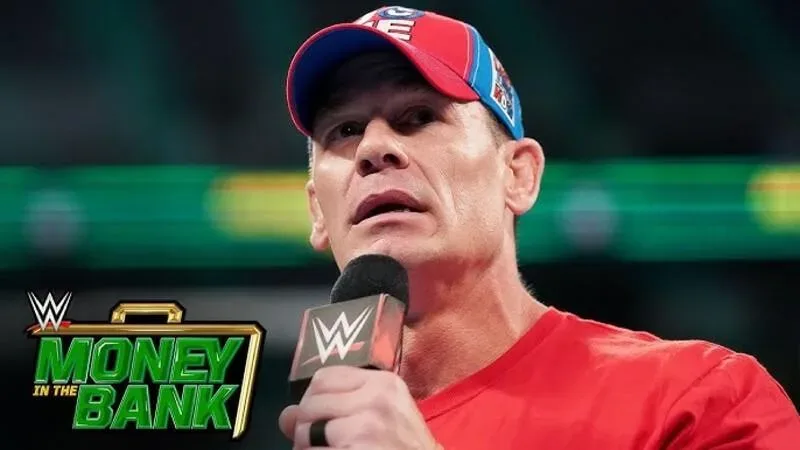
John Cena has spent decades performing in front of wrestling audiences around the world, but he believes another live-performance craft has far more in common with WWE than people may initially expect: stand-up comedy.
During a conversation with Trevor Noah on the What Now podcast, Cena discussed the overlap he sees between the two fields. The comparison was not limited to telling jokes or cutting promos. Instead, Cena pointed to the practical realities of life on the road, the individual responsibility placed on performers, and, above all, the ability to react to an audience in real time.
For Cena, both professions require a performer to prepare extensively while accepting that preparation can be rendered useless the moment they step in front of a live crowd.
“It’s so odd how stand-up runs so parallel to pro wrestling,” Cena said. “There’s so many parallels.”
For more background on this topic, read John Cena Recalls Eating Hornswoggle’s ‘Puke Burger’ During WWE’s Ireland Volcano Delay.
That observation carries particular weight coming from Cena. Few WWE stars have worked at his level for as long as he has. From his rise as the outspoken “Doctor of Thuganomics” to his years as the company’s defining franchise player, Cena became known for communicating directly with a crowd. His reactions, promos and matches were often built around a sharp understanding of whether fans were with him, against him or divided somewhere in between.
Cena explained that a wrestler and a comedian can both be part of much larger entertainment organizations, but the performer still bears considerable personal responsibility. He noted that, even at the highest levels, performers commonly arrange their own travel, manage their own lives on the road and remain responsible for the equipment and material that make up their act.
In wrestling, that can mean gear, boots, ring attire, travel schedules and the physical maintenance needed to perform night after night. In comedy, the individual’s voice, routine and ability to connect are equally central. The company, promotion or venue can provide a platform, but the performer still has to make the moment work.
Cena described that reality as an important shared trait. The act belongs to the person delivering it, even when that person is operating as part of a larger machine. A WWE performer may be on a televised card with a full production crew, a creative structure and a roster filled with other talent, but once the entrance is over and the bell rings, the crowd response cannot be faked or postponed.
That is where Cena believes the connection to stand-up becomes especially clear. A comedian may walk out with a carefully arranged set, while wrestlers may have a planned match structure, key sequences and intended story beats. Yet neither can afford to rigidly follow the plan if the crowd is telling them something different.
Cena said performers must be able to pivot when a planned opening receives silence, or when a crowd unexpectedly becomes louder and more invested than anticipated. In both environments, the person in front of the audience has to recognize what is happening immediately and adjust before the atmosphere slips away.
“You have to be quick, you have to pivot,” Cena said. “You have to know your audience, you have to know timing.”
That concept is familiar to wrestling fans, particularly those who have watched Cena’s career closely. WWE matches are choreographed in the broadest sense, but the strongest performers are not simply executing athletic movements in a predetermined order. They are reading reactions, spacing out dramatic moments, changing the rhythm of a contest and knowing when to deliver a comeback, a taunt, a near fall or a finishing sequence.
A crowd can influence the feel of a match within seconds. If fans are loudly cheering a babyface, a wrestler may give them more opportunities to build momentum. If the audience is impatient, veterans can speed up the pacing or move more quickly toward a major turning point. If a reaction is unexpectedly strong, performers may allow it to breathe rather than racing to the next planned moment.
Cena stressed that professional wrestling is fundamentally built on timing. He argued that success is not just about what a wrestler is capable of doing physically. It is about doing the right thing at the right point in the match.
That perspective also offered an explanation for how Cena views his own longevity. He openly acknowledged that he did not consider himself the most athletically gifted person in every ring he entered. WWE has featured extraordinary in-ring athletes throughout Cena’s career, from his earliest days on the roster through the current generation of performers. Cena’s argument was that athletic ability, while essential, is only one part of the equation.
He credited his presence and sensitivity to crowd energy as qualities that helped sustain his run at the top of the industry. Cena’s ability to communicate was not only evident in televised promos. He recalled that he talks loudly enough in the ring that people close to the action can sometimes hear the match being guided as it unfolds.
That is an illustration of the constant communication involved in wrestling. While an audience sees a physical contest, the wrestlers are also maintaining awareness of positioning, safety, camera placement, crowd noise, the referee and the next moment in the story. The best performers can make that coordination feel natural rather than mechanical.
Cena compared that same instinct to the way a comic recognizes whether a joke has landed. Comedy can emerge unexpectedly, he said, and a performer might hear something from the crowd and instantly recognize an opportunity for a response. A wrestler faces a related challenge: identify the mood, understand what the audience wants and deliver a response before the opportunity passes.
There is also a shared vulnerability in both crafts. A performer can spend significant time preparing material, but live audiences have the final say. Silence can expose a comedian immediately. Wrestling crowds can be just as unforgiving when they reject a promo, a character direction or a match that is not connecting. In either case, there is no practical way to pause the performance and start over from the beginning.
That pressure helps explain why Cena views wrestling as much more than a sequence of planned moves. The performer has to understand the audience’s attention span and emotional investment. They need to know whether viewers are leaning in with interest, whether they are ready to react or whether something has failed and needs to be abandoned.
His point also speaks to the difference between simply having a plan and having command of a live room. A match may be carefully mapped out in the locker room, just as a comedy set may be rehearsed before a show. But the live version becomes a conversation. Wrestlers do not literally take verbal requests from the crowd, yet reactions can shape the pace and emphasis of everything that happens in the ring.
Cena’s career provides plenty of examples of that dynamic. His popularity with younger viewers and resistance from portions of older WWE crowds became a defining feature of many major events. Rather than treating that mixed reaction as an obstacle that could not be addressed, Cena performed in an environment where audience noise itself became part of the story. The cheers and boos added tension to matches, promos and championship programs, and Cena had to remain aware of those reactions at every stage.
The road component of Cena’s comparison is equally notable. He described both wrestling and comedy as touring lifestyles in which performers begin in far less glamorous environments than the arenas and major venues associated with established stars. Cena referenced comedians developing their craft in rough underground clubs, while comparing wrestling’s early proving grounds to flea markets.
That description reflects a familiar path in the wrestling world. Before reaching WWE, many performers work small independent events, drive long distances, wrestle in modest buildings and take every opportunity available to develop experience. Those settings may lack the production scale of television, but they can teach wrestlers how to work different audiences and how to adjust when a crowd is quiet, distracted, hostile or unexpectedly enthusiastic.
Comedy works through a similar process of repetition and refinement. A routine evolves through performance, failure, adjustment and confidence-building. Cena’s comparison suggests that a wrestling match, promo or character can develop the same way. Early versions may not work perfectly, but the performer who listens and adapts has a better chance of finding the rhythm that connects.
Elsewhere in the discussion, Cena also recalled a memorable and distinctly unusual story involving Hornswoggle and a burger that the former WWE star had vomited on. The anecdote is another reminder that Cena’s WWE experiences range from major championship moments and stadium-level performances to the strange, unpredictable situations that can emerge from years on the road.
Still, Cena’s comments about stand-up comedy go beyond a humorous comparison. They underline the skills that have long separated experienced live performers from those who only rely on preparation. Whether the setting is a wrestling ring or a comedy stage, the ability to sense a crowd, change direction and make the next moment feel right can be the difference between a routine performance and one that audiences remember.
For Cena, timing is not a secondary skill. It is the core of the work.

Darryl Polo
Darryl Polo is a passionate wrestling fan covering WWE, AEW, TNA and beyond. He loves great rivalries, breakout stars and the moments that keep fans talking long after the bell. How we work.