
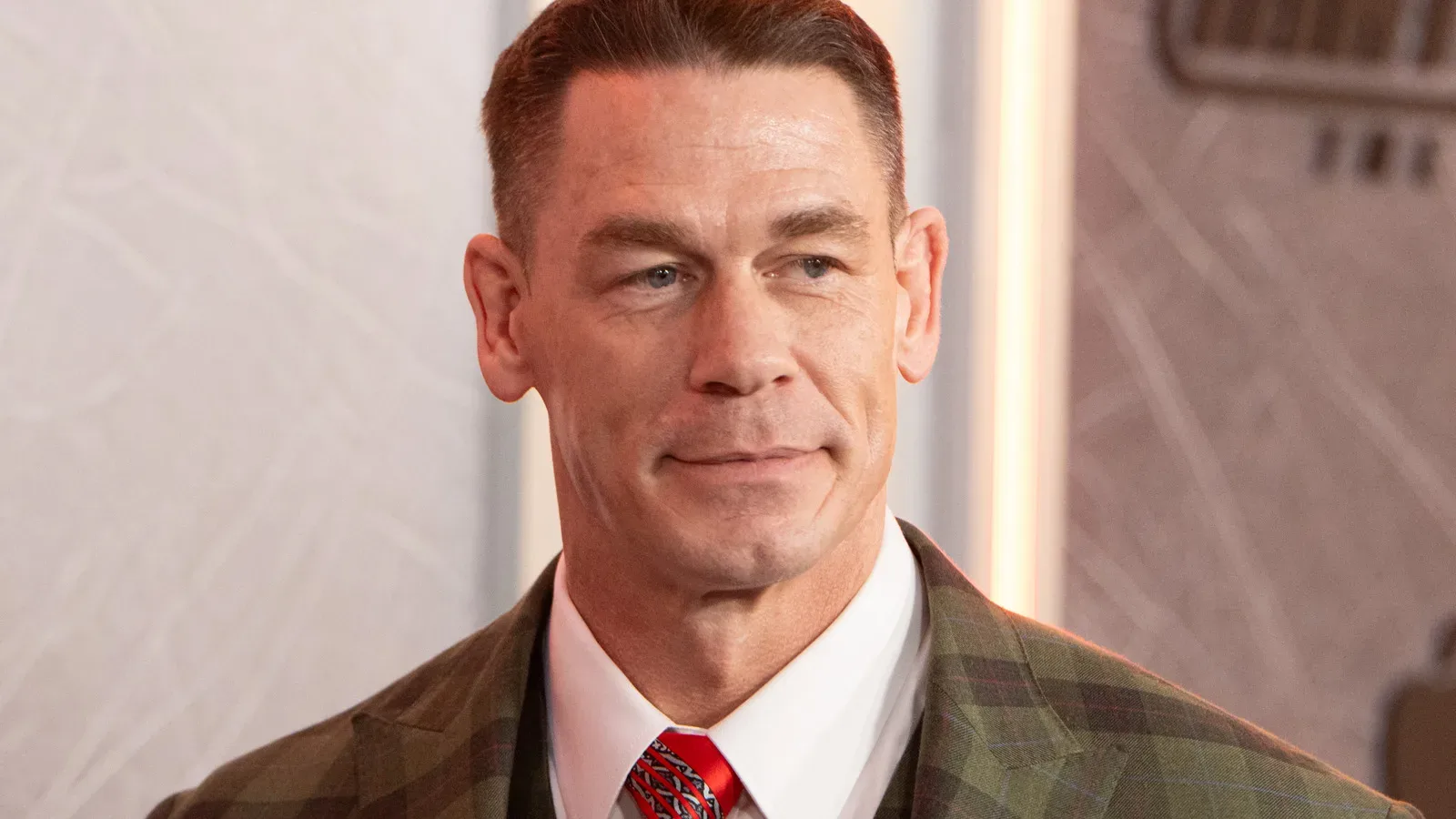
John Cena’s final WWE match was designed to be a moment of enormous emotion, but the 17-time world champion says he experienced the night differently from many of the fans who watched it unfold.
December 13, 2025 marked the end of Cena’s in-ring career, closing a WWE run that spanned more than two decades and made him one of the defining stars of his generation. The farewell brought together the familiar elements that have long surrounded Cena: a passionate crowd, a high-stakes opponent, signature offense, and a feeling that an era was coming to a close. Yet while the audience was visibly moved by the occasion, Cena remained composed.
Speaking on Busted Open Radio, Cena explained that his final night was not about seeking an emotional release for himself. Instead, he viewed the reaction from the WWE audience as the most meaningful measure of the moment.
“What I do and how I perform is not for my personal satisfaction,” Cena said. “It is for the reaction of the audience. And if they felt emotional the day that I stopped performing in the ring, that’s the feels that they have.”
For more background on this topic, read Drake Maverick Calls WWE’s 24/7 Championship Run ‘The Good Old Days’.
Cena’s words offer a clear explanation for why he did not outwardly share the same level of emotion seen throughout the arena and across the WWE fan base. For him, the closure had apparently arrived before the bell rang for his final match. He had already processed what the night represented, allowing him to approach it with calm rather than becoming overwhelmed by the scale of the farewell.
That perspective did not lessen the importance of the occasion. If anything, it underlined how deliberate Cena was about bringing his in-ring career to a close. A performer whose connection with the audience has been central to every major stage of his WWE career, Cena saw the crowd’s emotions as valid and powerful even if they did not mirror his own response.
“A lot of people who were super emotional on my last day, I didn’t share those emotions,” Cena continued. “I’m completely sympathetic, but I had already compartmentalized my journey.”
A Farewell Against GUNTHER
Cena’s final match took place at WWE Saturday Night’s Main Event, where he faced GUNTHER. “The Ring General” had earned the opportunity by winning the “The Last Time Is Now” tournament, placing him opposite Cena in the final chapter of a legendary WWE career.
The matchup created a compelling contrast. Cena entered as one of WWE’s most decorated and recognizable figures, a 17-time world champion whose career included countless comeback victories and memorable main-event performances. GUNTHER entered as a punishing, intensely disciplined competitor who had built his reputation on physical dominance and an unforgiving in-ring style.
Even in defeat, Cena gave viewers moments that evoked the familiar drama of his greatest matches. He delivered his signature “Five Moves of Doom” to GUNTHER, creating a burst of hope among fans in attendance and those watching from home. For a brief stretch, the possibility of one more Cena triumph felt real.
GUNTHER ultimately weathered the surge, though, and took control of the match’s final sequence. He applied a sleeper hold that forced Cena to submit, bringing the bout—and Cena’s wrestling career—to an end.
The visual of Cena tapping out was striking. For many fans, it was an unexpected conclusion for a wrestler so closely associated with resilience, perseverance, and the ability to rise after setbacks. The reaction was not simply sadness over Cena leaving the ring. There was also shock and, for some, frustration at seeing the iconic “Never Give Up” star submit in his final WWE appearance.
Cena, however, did not view that result as a cruel ending. He regarded it as a peaceful conclusion to the chapter he had spent so long building.
“Nothing More I Could Give”
The key to Cena’s calm was the sense that his work was complete. He said he had approached his journey with a process of reflection and personal preparation, rather than waiting for the final bell to confront what the farewell would mean.
“I know it’s a chapter in my life,” Cena said. “I work every day on self-worth, stuff like that. Man, I finished my last match. I have left nothing on the table. There is nothing more I could give.”
That final thought is especially significant considering the demands Cena placed on himself throughout his WWE career. His status as a top star came with an enormous workload, constant visibility, championship expectations, and an unusual level of responsibility as a public face of the company. In the ring, he was frequently positioned in matches where fans expected him to overcome difficult odds. Outside the ring, his relationship with the audience became a defining feature of his legacy.
For Cena, then, the last match was not presented as a chance to reclaim a former version of himself or prove that he could continue indefinitely. It was a final performance by someone who believed he had fulfilled his responsibilities. The loss to GUNTHER did not erase the achievement. Rather, it gave the next chapter of WWE a decisive closing image while allowing Cena to exit with the belief that he had done all he could do.
There is a notable difference between saying goodbye to wrestling and dismissing the value of what came before it. Cena’s comments did not suggest detachment from the fans’ feelings. He explicitly said he was sympathetic to the people who were emotional. His point was that their tears and memories belonged to them, just as his own sense of peace belonged to him.
That distinction speaks to the unusual bond between wrestlers and their audience. A retirement match can be both a deeply personal event for the performer and a shared moment for generations of fans. Those watching Cena’s final bout were not only reacting to the result against GUNTHER. They were responding to what Cena had represented across years of WWE programming, live events, title reigns, rivalries, and memorable entrances.
The Meaning of Cena’s Final Reaction
Cena’s controlled demeanor may have surprised fans because professional wrestling often places emotion at the center of its biggest farewell moments. A final match is expected to deliver celebration, sadness, reflection, and spectacle all at once. Cena’s response did include reflection, but it was rooted in acceptance rather than visible heartbreak.
His explanation also reframes the ending at Saturday Night’s Main Event. The submission finish was not merely a shocking final image. From Cena’s perspective, it was the completion of a journey he had already made peace with. He had competed, he had offered the audience the familiar rallies that made them believe in one more victory, and he had reached the point where he felt there was nothing left to hold back.
GUNTHER’s win therefore stands as both a major career result for “The Ring General” and the final official in-ring outcome for Cena. The tournament winner overcame one of WWE’s all-time greats, while Cena departed without trying to turn the moment into an extension of his own accomplishments.
Fans may continue debating the decision to have Cena submit in his final match, particularly given the legacy attached to the “Never Give Up” message. But Cena’s own comments make clear that he did not leave the ring feeling incomplete. He did not believe he needed another match, another victory, or another opportunity to prove his value.
For the audience, the emotion of December 13, 2025 will remain tied to a major WWE goodbye. For Cena, it was the end of a chapter that had already been thoughtfully placed in perspective. His final performance brought an end to his active wrestling career, but it also delivered the resolution he was seeking: a last match, a final bell, and the certainty that he had left nothing on the table.
In pictures

Darryl Polo
Darryl Polo is a passionate wrestling fan covering WWE, AEW, TNA and beyond. He loves great rivalries, breakout stars and the moments that keep fans talking long after the bell. How we work.