
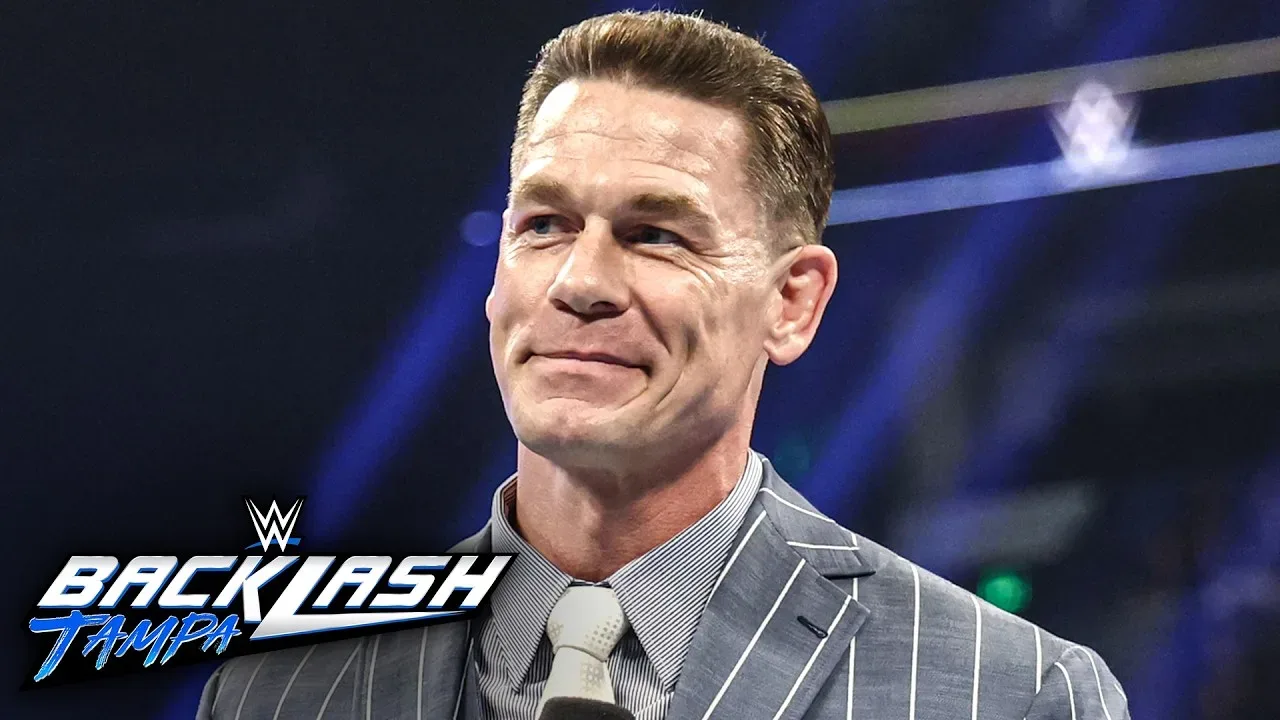
John Cena has made it clear that the change in his WWE wardrobe is not meant to signal another return to the ring.
After years in which his jorts, wristbands, knee pads, towel, colorful T-shirts and ball cap formed one of the most recognizable looks in modern professional wrestling, Cena has appeared on WWE programming in a noticeably different version of that familiar style. He is still wearing a T-shirt and hat, but the denim shorts are gone. So are the wristbands, knee pads and towel that helped define his full-time wrestling presentation.
Instead, Cena has been wearing cargo shorts and sneakers during recent appearances, including stops in Brooklyn and on NXT. The adjustment follows an earlier attempt to establish a clear post-wrestling visual identity. Cena wore a suit at WrestleMania 42 in April, but he acknowledged that the formal attire did not communicate the message he hoped it would.
His latest comments leave little room for interpretation: the jorts are not coming back.
For more background on this topic, read Charlotte Flair Says Eight Mental Health Podcast Episodes Are Already Filmed.
“Those weren’t jorts in Brooklyn, and they weren’t jorts on NXT. I’m wearing cargo shorts. I’m not wearing any wristbands, I don’t have a towel and I don’t have any knee pads. So, when I said the jorts are retired, the f—-ing jorts are retired.”
Cena Wants His Presentation to Match His Status
The wardrobe discussion is ultimately about more than fashion. Cena said he does not want viewers to mistake an appearance on WWE television for a hint that he is preparing for another match. The 16-time world champion has spent much of his career making every element of his presentation instantly identifiable, from his entrance music and catchphrases to the ring gear that evolved with each era of his run.
That history makes even a subtle clothing choice meaningful. For fans, Cena in jorts is not simply Cena wearing shorts. It is the image tied to his greatest championship runs, his battles with WWE’s biggest names and the long period in which he was the company’s central star. Seeing him in that gear can understandably create the expectation that he is ready to compete.
Cena’s current look appears designed to draw a firm line between appearing on television and returning to in-ring action. He explained that the suit worn at WrestleMania 42 was intended to serve the same purpose, but it did not fully achieve that goal.
“I don’t wanna confuse the consumer. If I show up in dress shoes in a suit with a pocket watch, hopefully the consumer isn’t gonna think one more match. John’s not really done. That didn’t work. They still chanted one more match and I love wearing suits. Also, Cody Rhodes gets beat up in suits. So, the one thing I was trying to accomplish was really murky.”
Cena’s point reflects a challenge faced by major wrestling figures who remain connected to WWE after leaving full-time competition. A surprise appearance can generate enormous excitement, but it can also bring assumptions that a match announcement is imminent. In Cena’s case, those expectations are amplified by the significance of his career and by the fact that fans have repeatedly continued to chant for “one more match.”
The suit, dress shoes and pocket watch presented one potential direction for a non-wrestling Cena. Yet it also created an image that could be read in several ways. Formal clothing can suggest a special occasion, a major announcement, an executive-style role or simply a personal preference. It did not necessarily tell audiences that Cena was definitively finished with the ring.
Why Cargo Shorts Are Different From Jorts
While cargo shorts may sound like a minor substitution, Cena has framed the distinction as deliberate. His longtime jorts were part of a complete wrestling uniform. They were associated with the wristbands, knee pads and towel, all items that made the presentation unmistakably athletic and fight-ready.
The cargo shorts remove one of the most iconic components of that package while allowing Cena to remain visually comfortable and recognizable. The T-shirt and cap preserve a connection to the audience’s image of Cena, but the absence of the rest of the gear establishes that this is not the same outfit he wore when stepping into the ring.
There is also a practical personal element to the choice. Cena said the cargo shorts, sneakers, T-shirt and ball cap reflect what he would naturally choose to wear if he attended an event as a fan. That makes the updated presentation less like a costume and more like an extension of his everyday identity.
“I’m gonna bear the burden if people have the opinion [that I] went back on [my] word… but I changed my mind. I think the cargoes, the sneaks, the T-shirt, and the ball cap- that’s what I would wear to the event anyway, as a fan. So why don’t I wear that?”
That explanation is notable because Cena is not claiming the new look will erase fans’ hopes for a match. He knows his WWE appearances will always produce speculation, particularly when crowds are still loudly asking for him to compete again. Rather than argue against that emotional reaction, he said he is willing to accept that some people may view the familiar T-shirt-and-cap combination as a reversal of his stated position.
His response is to emphasize the details. The shirt and cap remain, but the jorts are gone. The wristbands are gone. The knee pads are gone. The towel is gone. The pieces that collectively announced that John Cena was ready for action have been separated from the version of Cena now seen on WWE television.
An Evolving Look for an Enduring WWE Star
Cena’s clothing has long helped mark the chapters of his WWE career. His presentation has changed over time, but it consistently reflected the role he played on screen. The current shift carries a different kind of meaning because it is meant to distinguish the enduring celebrity and WWE personality from the active in-ring performer.
That distinction is difficult to make with someone as closely associated with competition as Cena. Even when he is not scheduled to wrestle, his presence alone changes the energy around a WWE show. Fans recognize the possibility of a major moment whenever he appears, and the response described by Cena shows that the desire to see him wrestle remains strong.
Still, Cena’s comments establish his intention as clearly as possible. He does not see cargo shorts as an updated version of his jorts. He sees them as a different choice altogether. The wardrobe is meant to let him attend WWE events, appear on programming and remain connected to the audience without visually promising something he says he is done doing.
For WWE viewers, that may mean learning to read Cena’s appearances differently. A T-shirt and cap no longer automatically come with wrist tape, denim and knee pads. The familiar silhouette has been adjusted specifically to reflect a new stage of his relationship with the business.
Whether the audience accepts that distinction is another question. Cena himself has acknowledged that the chants and hopes will likely continue, especially whenever he appears in front of a passionate WWE crowd. But his position on the defining item of his old gear is unmistakable: the jorts have been retired.
Attention Turns to the John Cena Classic
Cena remains a major point of focus within WWE’s landscape as the John Cena Classic approaches. The tournament is scheduled to air on Monday, December 14, placing Cena’s name at the center of another significant WWE event even as he continues to underline the difference between being present and being an active competitor.
For now, his current WWE appearance formula is straightforward: cargo shorts, sneakers, a T-shirt and a ball cap. It is a fan-inspired look, a personal comfort choice and, most importantly for Cena, a visual statement that his former ring gear is not returning.
In an industry where a single wardrobe detail can launch widespread speculation, Cena is attempting to make the message plain. The cargoes are not jorts, and he does not want them treated as a sign that another match is on the horizon.

Darryl Polo
Darryl Polo is a passionate wrestling fan covering WWE, AEW, TNA and beyond. He loves great rivalries, breakout stars and the moments that keep fans talking long after the bell. How we work.