
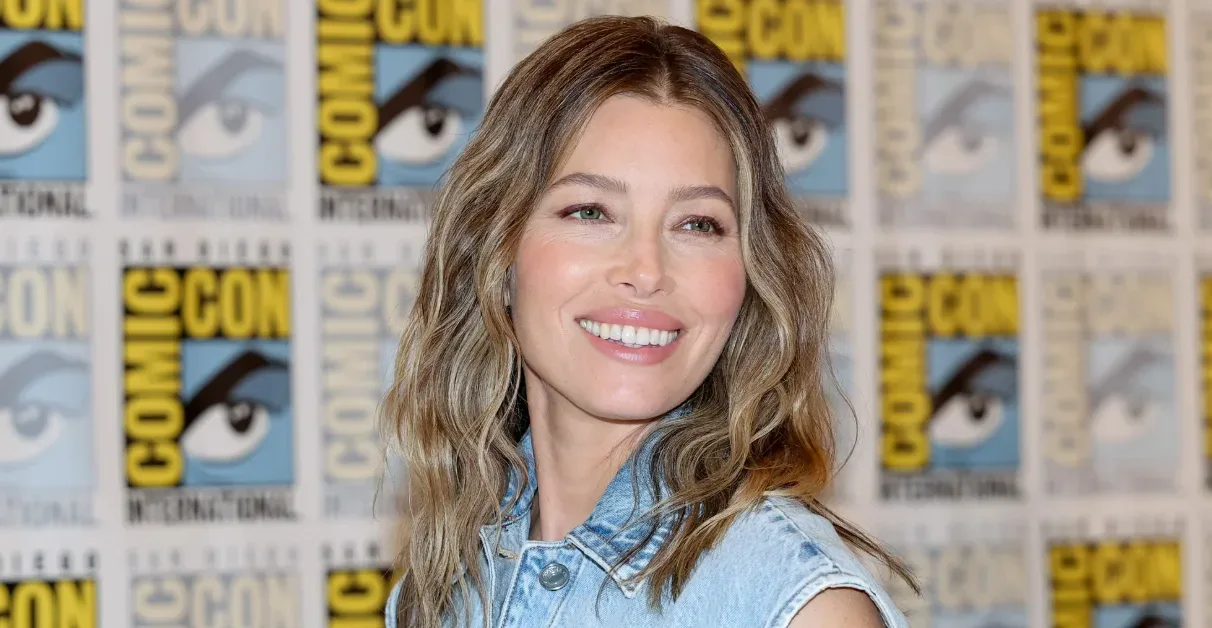
Jessica Biel believes she has the tools to make an impact in professional wrestling—at least if she ever decides to trade a film set for the squared circle.
During a conversation with John Cena, Biel was asked about the prospect of trying wrestling. The actress answered with immediate confidence, saying, “I think I would be an amazing wrestler.”
Cena, a 16-time WWE World Champion whose career has expanded into major acting roles, did not hesitate to back that assessment. “You would. You would be incredible,” Cena told Biel.
There is one notable obstacle to Biel’s hypothetical wrestling future: she admitted she has not actually followed the product. “I just have never watched it, ever,” Biel said. Cena nevertheless suggested there could be a place for her in the industry if she ever wanted a new professional direction, telling her, “Tell you what, you’ve got a future in the business if this acting thing doesn’t work out for you.”
For more background on this topic, read Penta Says He Will Take His Time Before Money in the Bank Cash-In, Eyes Roman Reigns Rematch.
Biel then explained precisely what appeals to her about the world of wrestling. While she did not claim familiarity with its history, stars or in-ring style, the creative presentation of WWE and the wider wrestling business clearly caught her imagination.
“I know. I’m into the costumes and the whole persona of everyone getting to play big, crazy characters. That sounds fun to me, and slamming some people around.”
Biel Sees the Creative Appeal of Wrestling
Biel’s comments touch on one of professional wrestling’s most enduring strengths: it is a form of entertainment where athletic performance and character work are inseparable. A wrestler’s presentation can involve ring gear, entrances, music, mannerisms, catchphrases and a distinct on-screen personality, all while the performer is expected to execute demanding physical action in front of a live audience.
For an actor, that mixture can hold an understandable appeal. Wrestling offers performers the opportunity to play bold characters in an unusually immediate setting. Unlike a conventional production, wrestlers often develop their personas across weekly television, premium live events, live crowds and social media, with fans reacting in real time as stories evolve.
Biel specifically pointed to the costumes and the “whole persona” of wrestling as elements that interest her. That focus reflects a major part of the industry’s identity. WWE has long featured competitors whose visual styles and characters are fundamental to their connection with fans, whether they are presented as heroic figures, villains, celebrities, underdogs or characters that shift over time.
Her reference to “slamming some people around” also acknowledged the physical side of the business. Professional wrestling is carefully trained performance, but it remains intensely athletic and carries inherent risks. Wrestlers spend years learning how to execute moves, protect themselves and their opponents, and work safely within the pace and structure of a match. Biel’s comments were presented as an enthusiastic hypothetical rather than an announcement of any plans to train or appear for WWE.
Cena’s Perspective Carries Particular Weight
Cena’s encouragement is notable because he understands both sides of the entertainment crossover. He established himself as one of WWE’s defining stars before building a substantial acting career, appearing in projects across action, comedy and franchise filmmaking. His path has made him one of the clearest modern examples of a wrestler successfully moving into Hollywood.
That background also gives Cena firsthand insight into why an established actor might be intrigued by wrestling. The two fields require different disciplines, but they share several important qualities: performance under pressure, audience connection, physical commitment and the ability to communicate character. In wrestling, those demands are magnified by the live environment and the need to perform while maintaining awareness of an opponent’s safety.
Cena did not suggest that Biel was preparing for a WWE match, nor did he reveal any discussions about a potential appearance. His remarks were simply a warm endorsement of her potential. Still, the exchange showed that Biel’s instincts about wrestling’s theatrical side align with the aspects that have helped attract entertainers from outside the industry for decades.
A Long Tradition of Celebrity Wrestling Involvement
Celebrity participation is far from unusual in professional wrestling, especially in WWE. The results can vary widely depending on the role, the level of preparation and whether the guest is expected to compete physically or simply appear as part of a storyline. But outside personalities have repeatedly brought additional attention to major wrestling events.
Mr. T was among the best-known early examples of an entertainment celebrity crossing into the ring environment. His involvement in the first WrestleMania helped establish the event’s mainstream pop-culture ambitions and remains an important piece of WWE history.
More recently, Stephen Amell made a name for himself among fans by pursuing wrestling opportunities beyond a simple cameo. The actor competed in high-profile matches and demonstrated a willingness to take the physical side of the craft seriously. Johnny Knoxville also became heavily involved in WWE programming, culminating in a match with Sami Zayn at WrestleMania 38 that incorporated the stunt performer’s established on-screen identity and a broad range of comedic chaos.
Those examples underline that celebrities can contribute in very different ways. Some fit best in a short, spectacle-driven role, while others commit to the preparation required for a more substantial match. The most successful appearances generally recognize the unique demands of wrestling rather than treating it as ordinary stunt work or a standard acting assignment.
Biel’s stated interests suggest that, if she ever did explore the medium, the character and presentation elements would likely be central to her attraction. Wrestling’s ability to give performers an exaggerated, memorable persona is fundamentally different from many screen roles. It allows for larger gestures, distinctive visual identity and direct interaction with a crowd that can immediately embrace or reject a character.
No Indication of an Imminent WWE Appearance
Despite Biel’s confidence that she could be an “amazing wrestler,” there is no indication in the conversation that she is set to join WWE, begin training or make an upcoming wrestling appearance. The discussion was rooted in a playful consideration of another career path, with Cena encouraging her enthusiasm for the business.
That distinction matters in an industry where surprise appearances and celebrity partnerships are often a major part of event promotion. Biel’s comments should be viewed as appreciation for what wrestling offers creatively, not confirmation of any deal or planned storyline.
Even so, the exchange is a reminder of wrestling’s unusual appeal across entertainment. Its combination of physicality, colorful aesthetics and character-driven storytelling can resonate with performers whose careers have been built in film and television. It can offer a setting that is both highly theatrical and unusually immediate, demanding a performer’s full attention in front of a live crowd.
Cena’s response also speaks to the increasingly porous line between wrestling and Hollywood. A number of wrestlers have expanded into acting, while actors and other celebrities have periodically stepped into wrestling’s world. Some stay for a single angle, while others discover a genuine affinity for the discipline.
Why Biel’s Comments Fit Wrestling’s Spirit
At its best, professional wrestling rewards the exact qualities Biel highlighted: a willingness to commit to a persona, an understanding of visual presentation and the confidence to embrace big, distinctive character choices. Those elements alone do not replace the training needed for an in-ring performance, but they are an important foundation for anyone trying to connect with a wrestling audience.
Wrestling is built around performers making an audience believe in the emotional stakes of a rivalry, the personality of a character and the importance of a moment. Costumes and personas are not merely accessories to that process. They help establish who a wrestler is before the first lockup, promo or entrance.
Biel may not have watched wrestling before, by her own admission, but she quickly identified some of its most visible and enduring features. Whether she ever follows through on Cena’s invitation to consider a future in the business remains unknown. For now, it was simply an enthusiastic exchange between two entertainers—one of whom believes she would thrive amid wrestling’s wild characters, striking looks and controlled chaos.
And if Biel ever does decide to investigate that possibility further, Cena has already made his position clear: he thinks she would be incredible.

Darryl Polo
Darryl Polo is a passionate wrestling fan covering WWE, AEW, TNA and beyond. He loves great rivalries, breakout stars and the moments that keep fans talking long after the bell. How we work.