
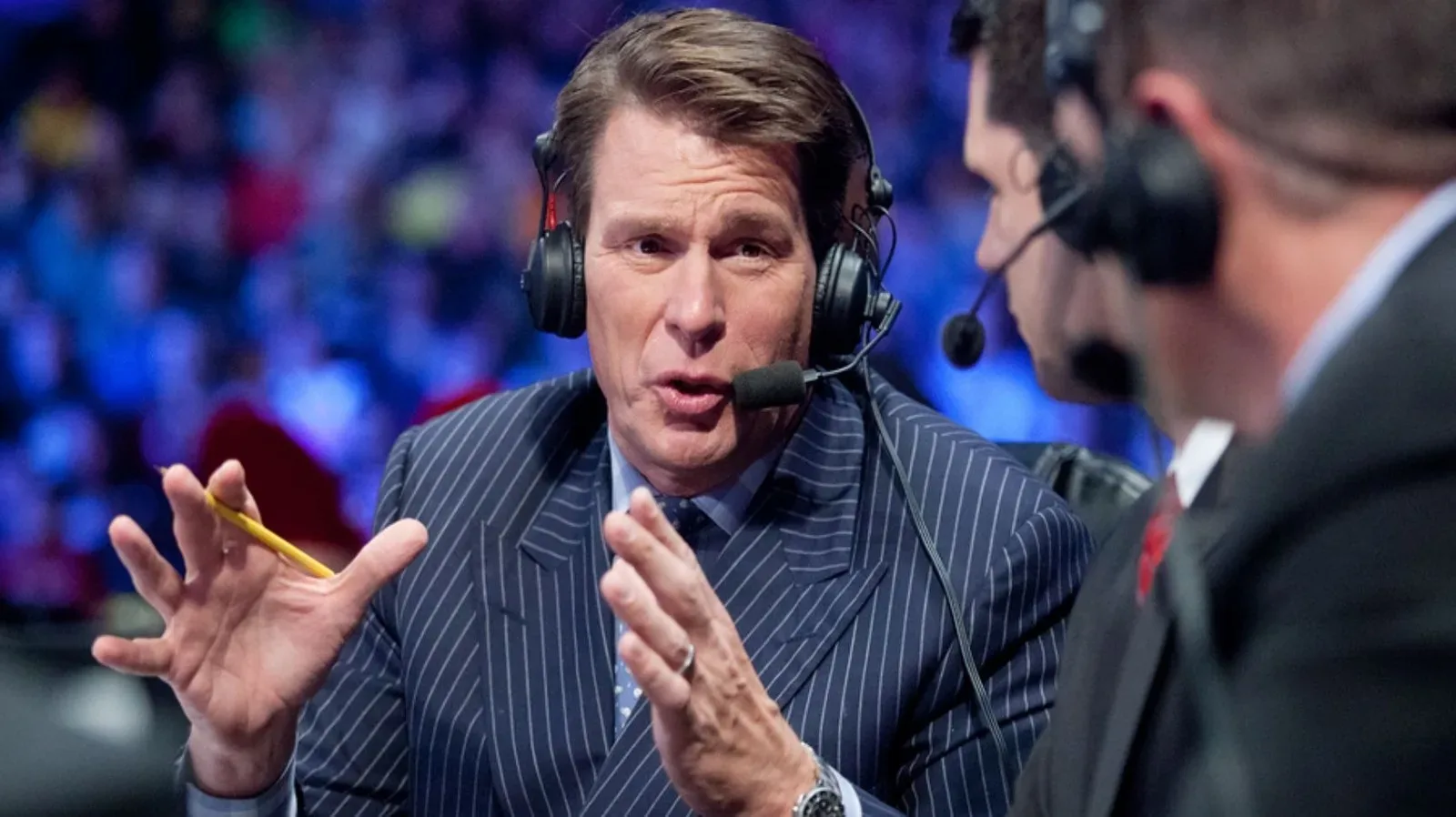
WWE Hall of Famer John Bradshaw Layfield has offered a blunt perspective on talent releases and developmental salaries, saying he does not object to the company making cuts when it has already taken significant financial chances on prospective performers.
Speaking on Something to Wrestle, Layfield addressed the recurring debate surrounding wrestler pay, contract reductions and releases. The discussion has drawn particular attention following New Level’s move to AEW after WWE asked the act to accept a pay reduction of more than 50 percent. Layfield’s comments did not focus on that individual situation; instead, he spoke broadly about WWE’s approach to investing in younger talent and deciding which performers remain with the company.
“They take a lot of chances on a lot of people. I don't have any problem with the cuts and the releases and the salaries,” Layfield said on Something to Wrestle. “It's about what you negotiate. But, WWE takes a lot of chances with a lot of people, and they pay people incredibly well to train there. These people that are there training may think they're not getting paid that well.”
Layfield’s position is rooted in the developmental side of WWE’s business. Rather than treating a contract exclusively as compensation for appearances on television, he framed it as part of a larger investment that includes training, evaluation and the opportunity to determine whether a wrestler can succeed at the highest level of the industry.
For more background on this topic, read WWE NXT Heatwave Reportedly Drew Frustration After AAA Crowd Departures.
That distinction is central to his argument. A developmental system necessarily brings in performers who will not all become featured stars, and a company must make decisions once it believes a particular prospect is not progressing into a long-term fit. From Layfield’s viewpoint, that reality makes releases and negotiations an expected part of the process rather than an automatic sign that the system has failed the people involved.
JBL contrasts today’s prospects with his own beginning
Layfield also acknowledged that his perspective is shaped by a much different era. He said that, when he was starting out, wrestlers were not making enough money “to do anything.” At the same time, he recognized that the comparison is not entirely fair because the path available to a modern WWE prospect is fundamentally different from the route he took into the business.
He described the contrast as “apples and oranges.” That is an important qualification in a conversation where generations of wrestlers often judge earnings and opportunities through very different experiences. For wrestlers of Layfield’s era, breaking in often meant working with limited resources while gaining experience wherever they could. The current developmental environment, as he described it, gives younger talent a chance to train within a major company structure while being paid during that learning period.
Layfield said he would not change the way he entered wrestling. His comments were not a claim that hardship is necessary for a performer to become successful, nor were they a dismissal of present-day concerns. Instead, he argued that newer wrestlers have access to a comparatively favorable entry point, even if the money does not always meet every wrestler’s personal expectations.
“Whatever they pay them down in ‘NXT,’ $40k, $80k, whatever that is, that's a pretty good wage to start out to learn how to train, to see if you can make it in this business,” Layfield said on Something to Wrestle.
Those figures were presented by Layfield as examples during his broader point, not as a detailed breakdown of every NXT agreement or a confirmation of a standard WWE developmental salary. His underlying argument was that earning money while receiving training and being evaluated by WWE represents a meaningful opportunity for wrestlers trying to establish themselves in the profession.
The cost of developmental recruiting
Layfield’s strongest defense of WWE’s approach centered on the risk attached to signing prospects in the first place. WWE can identify athletes, independent wrestling standouts and performers with potential, but there is no guarantee that an individual will adapt to the demands of the ring, connect with audiences or reach the level required for a sustained role.
That uncertainty is what Layfield believes is often overlooked when fans discuss releases. The company does not simply pay someone for a finished product; it can also spend money while a performer learns, develops and attempts to prove that they can turn potential into a viable wrestling career. Not every investment produces a main-roster star, and not every developmental performer will remain in the system long enough to become one.
“So, they spend a lot of money that just goes out the door, because the people don't make it,” Layfield said on Something to Wrestle. “So, I think it makes perfect sense for them to try and lock them in, because of the investments they make.”
The phrase “lock them in” speaks to the business side of developmental contracts. If WWE believes it has invested time, money and training into a performer who could become valuable, it is understandable that the company would seek contract terms that protect that investment. Conversely, a wrestler is entitled to assess any proposed deal based on their own financial needs, career goals and confidence in their value.
That is where Layfield’s first point comes back into focus: “It’s about what you negotiate.” The statement does not eliminate the imbalance that can exist between an enormous wrestling company and an individual performer trying to break through. It does, however, reflect Layfield’s belief that contract matters ultimately come down to an agreement both sides are willing to make.
Why the debate remains complicated
Talent cuts are never only financial news to wrestling fans. Every release affects a performer’s livelihood, their family and the momentum of a career that may have taken years to build. For that reason, fan reaction frequently centers on the human consequences of a decision, especially when a wrestler has shown ability or has only received limited chances on television.
Layfield’s comments approach the matter from the other side: the company’s responsibility to manage a developmental pipeline that includes uncertainty at every stage. Both realities can exist at once. Wrestlers can feel that their compensation, role or security does not match the sacrifice required to pursue the job, while WWE can determine that it cannot continue every agreement indefinitely or that a revised deal is necessary.
The New Level situation has added another layer to that wider discussion. The act’s subsequent signing with AEW demonstrates that a wrestler or team can choose another direction when the terms offered by WWE do not align with their expectations. It also underscores that negotiations are not merely abstract business exercises. A proposed reduction, an expiring agreement or a release can shape where performers work and how their careers develop next.
Layfield did not argue that every talent decision will be popular. Nor did he suggest that every released wrestler lacks ability. His point was narrower: WWE’s willingness to sign and train many people means it will also have unsuccessful investments, and he views that as a valid reason for the company to make difficult roster decisions.
An old-school perspective on a modern system
The Hall of Famer’s viewpoint will likely resonate differently depending on how one sees developmental wrestling. Supporters of his position may agree that being paid while learning inside WWE’s system is a substantial benefit and that no company can guarantee a permanent place for every prospect. Critics may argue that the scale of WWE’s business creates a higher expectation for pay, transparency and stability, particularly for talent being asked to relocate or devote themselves fully to training.
Layfield openly recognized that his outlook comes from an older generation, but he maintained that the modern path offers young wrestlers significant advantages compared with the conditions he experienced. For him, that opportunity is a key part of the equation whenever salaries, cuts and contract protections are debated.
As wrestling’s business landscape continues to create choices between major promotions, developmental systems and independent opportunities, negotiations will remain under close scrutiny. Layfield’s stance is clear: WWE’s releases and efforts to protect its investments make business sense to him, because the company assumes considerable risk before it ever knows which prospects will truly make it.
In pictures

Darryl Polo
Darryl Polo is a passionate wrestling fan covering WWE, AEW, TNA and beyond. He loves great rivalries, breakout stars and the moments that keep fans talking long after the bell. How we work.