
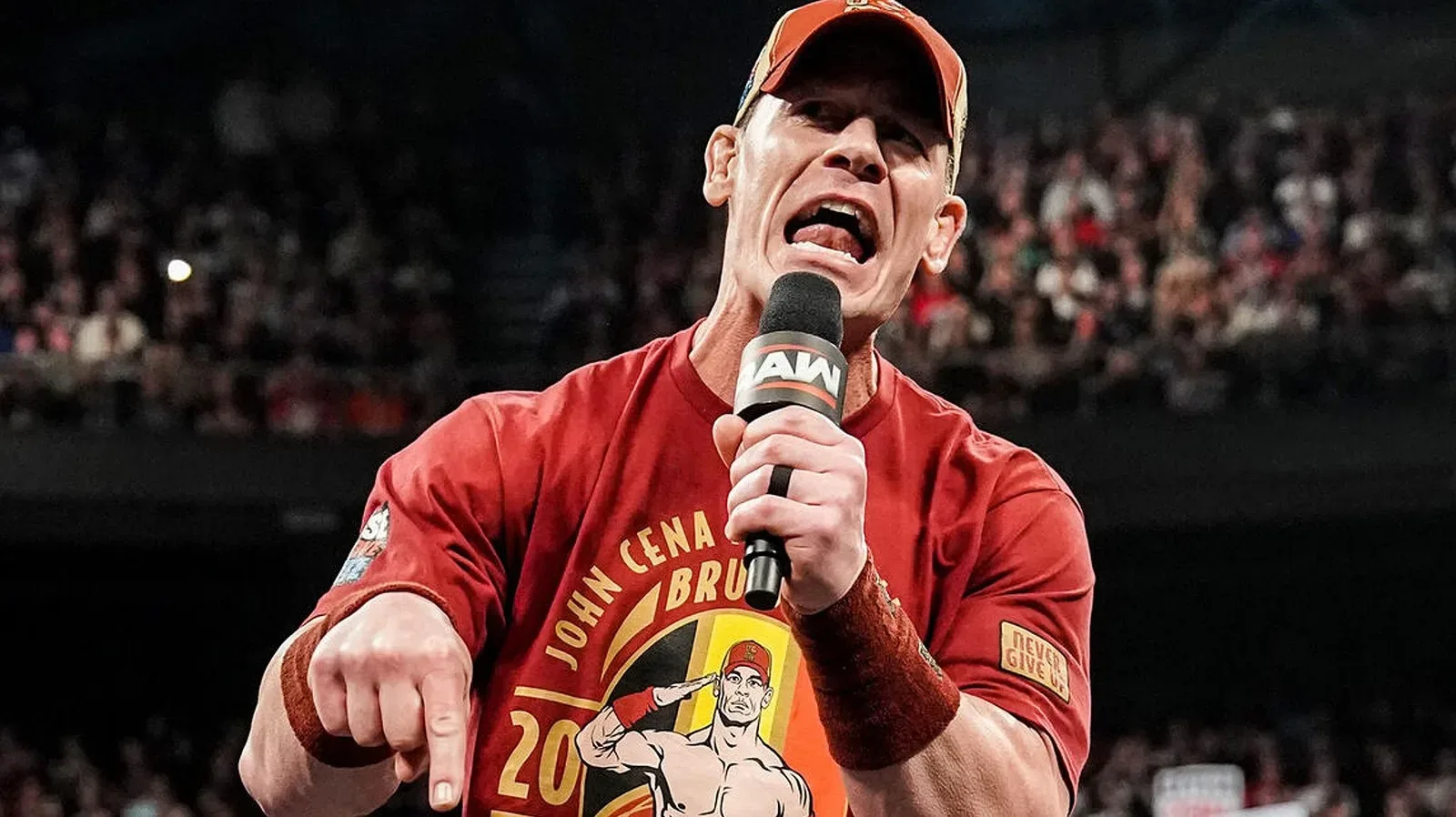
For years, one of the loudest recurring debates among WWE fans centered on John Cena and the possibility of a heel turn. Cena was WWE’s defining heroic figure for an entire generation, a performer who carried the company in main events, public appearances, merchandise campaigns and mainstream media opportunities. That position also made him a polarizing character for a sizable part of the audience, particularly during the period when calls for a dramatic change to his presentation became impossible to ignore.
Despite those demands, a Cena heel turn never happened during Vince McMahon’s time leading WWE creative. John “Bradshaw” Layfield has now offered his view on why McMahon was so firmly opposed to the idea, pointing to a previous decision involving another of WWE’s biggest stars: “Stone Cold” Steve Austin.
Speaking on Something To Wrestle, JBL said McMahon had learned a painful business lesson from Austin’s turn. In JBL’s telling, the company understood exactly how much could be at risk when a top babyface with enormous merchandising power was repositioned as a villain.
“You wonder why they never turned Cena? ’Cause they turned [Stone Cold Steve] Austin, and Austin was, the merch that Austin – Steve – was selling was ridiculous, and Vince learned his lesson,” JBL said on Something To Wrestle.
For more background on this topic, read Danhausen to Host ‘Very Nice, Very Evil’ WWE SmackDown on October 30.
The comparison is significant because Austin and Cena occupied similar places in different eras of WWE. Their personalities, styles and relationships with the audience were not identical, but both became central corporate attractions whose appeal extended far beyond weekly television stories. Austin was the face of the Attitude Era, while Cena became the company’s most recognizable active star through a lengthy run that also helped make him a major name outside wrestling.
JBL said the subject of turning Cena came up repeatedly in internal discussions. However, he maintained that McMahon’s answer was consistently immediate and decisive, with the chairman dismissing the prospect rather than treating it as an option to be explored.
That alleged resistance helps explain why the Cena heel-turn conversation became such a long-running piece of WWE fan discourse. Viewers who wanted to see a darker, more antagonistic version of Cena could point to his earlier work as the “Doctor of Thuganomics,” when he was an irreverent and confrontational character on the rise. Once he became WWE’s premier babyface, though, the role was built around persistence, optimism and a dependable connection with younger fans.
That formula made Cena a target for criticism from fans who felt his act had become too familiar or that his position near the top of the card limited opportunities for others. “Turn Cena heel” became a frequent response whenever frustration over his booking reached a peak. Yet the very traits that made some fans eager for a change also made him exceptionally valuable in WWE’s broader business strategy.
Steve Austin’s Turn Remained a Major Cautionary Tale
Austin’s WrestleMania X-Seven turn has remained one of the most debated creative calls in WWE history. At the event, Austin aligned with longtime rival Vince McMahon to defeat The Rock, a conclusion that changed the character of the biggest antihero in the industry. The visual and storyline implications were enormous: a wrestler whose popularity had been driven in large part by his rebellion against McMahon was suddenly standing beside him.
The turn was controversial from the beginning. Austin had become much more than a conventional good guy, but the audience’s investment in him was built on the idea that he did not follow authority or accept the rules imposed by McMahon. Trying to position that character as a traditional heel created an immediate challenge, especially because the audience continued to react so strongly to Austin.
His subsequent portrayal during the WCW Invasion storyline has also been heavily criticized over the years. Many fans questioned the logic of Austin siding with WCW, while others have recalled that the crowd was reluctant to reject him regardless of his on-screen behavior. Austin was simply too popular, too ingrained in the audience’s identity of WWE at the time, to be easily recast as someone fans wanted to boo.
JBL’s point was not only about crowd reactions. It was also about the commercial consequences of changing the alignment of a performer whose image was attached to massive merchandise sales. Austin’s merchandise was a major part of WWE’s business during his ascent, and JBL believes that experience shaped how McMahon looked at later suggestions involving Cena.
There is an important distinction between believing a heel turn might generate compelling television and deciding that it is worthwhile for a company’s biggest attraction. A change can create buzz, fresh matches and a new narrative direction. It can also disrupt a brand that is working across multiple platforms, especially when a wrestler is a major draw for children and families and a consistent presence in marketing.
For McMahon, as JBL describes it, Austin’s turn appears to have made that risk much more tangible. If the company had struggled to persuade the audience to reject Austin, then turning Cena could have presented a similar problem. Cena’s fanbase was deeply loyal, and his popularity produced value that went far beyond the reaction inside an arena on a given night.
Cena’s Position Made the Decision More Complicated
During his peak years as WWE’s top star, Cena was not merely an act that could be altered to freshen up a title program. He was a public-facing representative of the company whose visibility reached movies, television, charity work and mainstream promotional appearances. His “Never Give Up” message became a defining part of his connection with fans.
That did not prevent older or more vocal segments of the audience from booing him. In fact, Cena’s mixed reactions in certain buildings became part of the atmosphere around his biggest matches. But mixed reactions are not automatically evidence that a wrestler needs to turn heel. They can also indicate that a performer has become a central, emotional figure to multiple portions of the audience for different reasons.
For WWE, Cena’s ability to inspire devoted cheers as well as passionate opposition still made him one of the company’s most essential attractions. The negative reactions were often loud, but they existed alongside a large audience that embraced him completely. A heel turn would have required WWE to decide whether the potential creative benefit outweighed the possibility of weakening a hugely successful brand.
JBL’s recollection suggests McMahon did not see enough upside to make that gamble. Rather than viewing the repeated requests as an opportunity waiting to happen, McMahon apparently viewed them through the lens of Austin’s experience and the money associated with a superstar who had become bigger than an ordinary storyline role.
Austin Has Acknowledged His Own Regret
Austin himself has spoken publicly about the WrestleMania X-Seven decision in the past and has taken responsibility for supporting the idea. He has called it the worst decision he ever made, an assessment that reflects how difficult it was to move a character so closely tied to the audience’s emotional attachment to WWE’s anti-establishment spirit.
That self-criticism has only reinforced the perception that Austin’s heel run became a warning for future booking decisions involving transcendent babyfaces. In wrestling, turns are among the most powerful storytelling tools available. When executed at the right moment, they can redefine a career. When the audience refuses to follow the intended direction, however, even a well-known star can lose some of the momentum that made the character special.
Cena’s case carried that same potential dilemma, though in a different WWE landscape and with a different fan demographic. His character could have gained a new edge, and fans spent years imagining the rivalries a villainous Cena might have had. But from JBL’s perspective, McMahon was unwilling to revisit the kind of risk he associated with Austin’s turn.
Ultimately, the decision ensured that Cena remained WWE’s signature heroic figure throughout McMahon’s regime. Fans would only see Cena work as a heel during the TKO-era WWE regime, making the eventual change especially notable after so many years of speculation. The long delay also gives JBL’s comments added context: the question was not whether fans wanted to see a different side of Cena, but whether WWE’s previous experiences made its leadership unwilling to sacrifice what had already proven to be an extraordinarily successful formula.
JBL’s comments on Something To Wrestle do not erase the creative arguments that surrounded Cena for years. They do, however, offer a clear explanation for why those arguments may never have carried much weight with McMahon. In this view, Steve Austin’s history was not simply an old storyline WWE had moved beyond. It was a business lesson that continued to influence the company’s approach to its next generation-defining star.
In pictures

Darryl Polo
Darryl Polo is a passionate wrestling fan covering WWE, AEW, TNA and beyond. He loves great rivalries, breakout stars and the moments that keep fans talking long after the bell. How we work.