
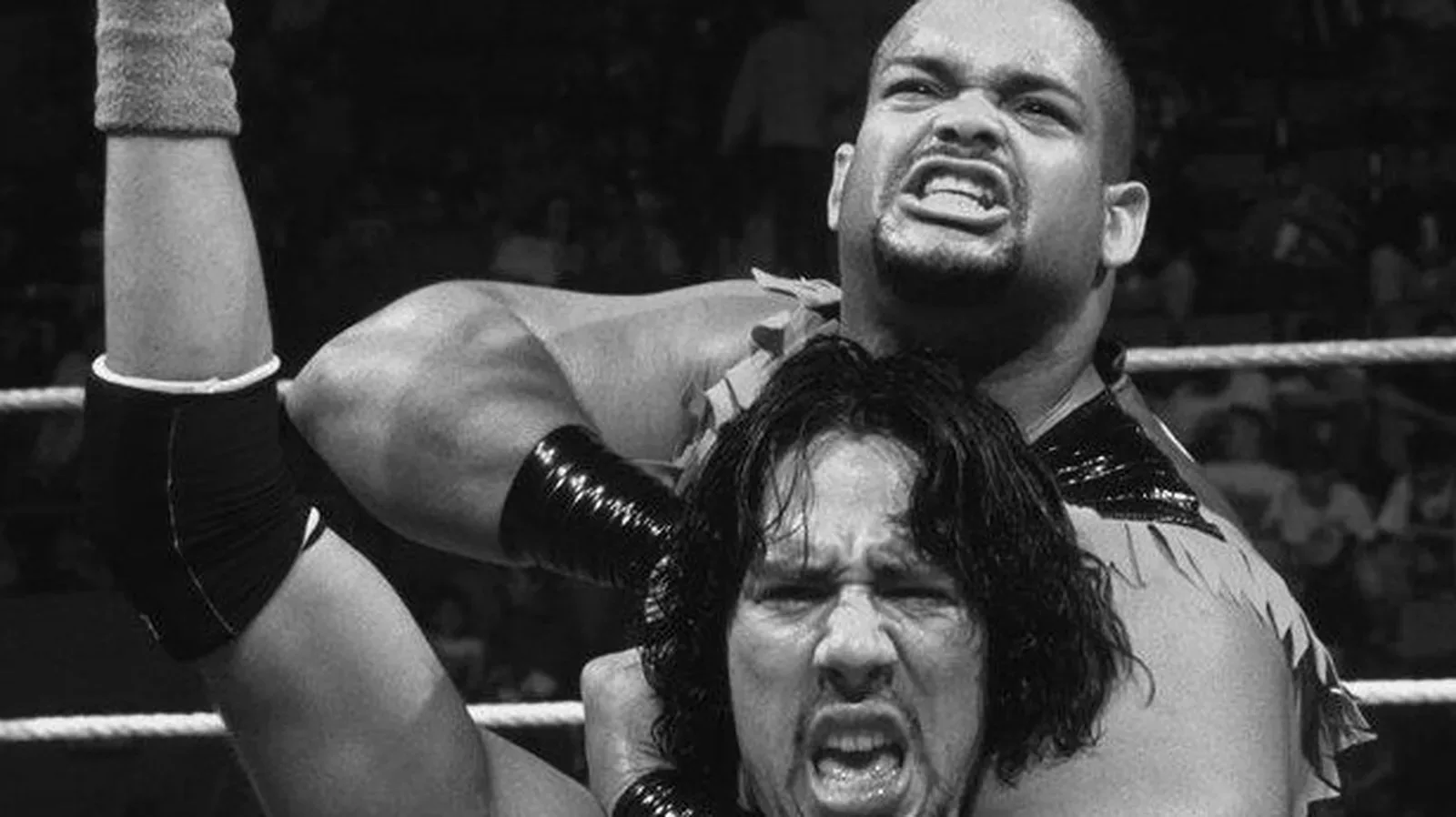
John "Bradshaw" Layfield has looked back warmly on the wrestler who shared an important early chapter of his WWE career: Savio Vega.
JBL and Vega were on opposite sides of the ring during their WWE program around SummerSlam 1996, but the rivalry did not define their relationship away from the cameras. Speaking on Something to Wrestle With Bruce Prichard, Layfield described Vega as a tremendous opponent and an even better person, while reflecting on a friendship that has now lasted roughly 30 years.
The WWE Hall of Famer said Vega was effectively his “trial match,” a situation that came together unexpectedly but gave him an ideal person with whom to work. Layfield’s comments made clear how highly he regards Vega’s reputation among fellow wrestlers as well as his unusual athleticism.
“I had a great relationship with Savio,” JBL said. “Savio was my trial match, just happened by happenstance... You couldn’t ask for a better person to wrestle with than Savio. Savio was an incredible worker. I don’t know anybody who’s ever had anything bad to say about Savio.”
For more background on this topic, read Demon Finn Bálor Returns on SmackDown and Leaves GUNTHER Laid Out.
A SummerSlam 1996 Connection That Lasted
SummerSlam 1996 remains the key WWE reference point in Layfield’s recollection of his first program with Vega. Their on-screen roles called for them to be adversaries, as is often the case when performers are introduced to one another in a major storyline setting. Yet the rivalry was the beginning of a professional connection that became a longstanding friendship.
Layfield’s description of Vega as his trial match underlines the degree of confidence he had in his opponent. A wrestler placed in that role has to bring more than visible athletic ability. They must be able to make a match flow, communicate in real time, adapt to the demands of the moment and help ensure that a new pairing succeeds in front of a live crowd. JBL’s assessment suggests Vega was uniquely equipped for that responsibility.
His praise also centered on Vega’s standing as a colleague. “I don’t know anybody who’s ever had anything bad to say about Savio” is a notable endorsement in an industry built on years of travel, close collaboration and intense physical work. Layfield did not frame Vega merely as an effective rival from a memorable period in WWE. He framed him as someone valued broadly by the people around him.
That distinction matters when veterans revisit the matches and feuds that shaped their careers. Ring performances can be revisited through footage and results, but the trust established between performers often becomes the more enduring part of the story. For JBL, his memories of facing Vega at SummerSlam 1996 are clearly connected to the relationship that followed.
Why Vega Earned the “Bumblebee” Nickname
Layfield also recalled a nickname Vega carried during his WWE run, one that captured the surprise generated by his movement and aerial ability. He said Triple H, identified by JBL as “Hunter,” used to call Vega “bumblebee.”
“Hunter [Triple H] used to call him ‘bumblebee’ because bumblebees aren’t supposed to be able to fly,” JBL said. “And Savio would get up at the top rope... Savio could actually fly, and he’s like the bumblebee. He could do things that physics said that he shouldn’t do.”
The comparison was a playful one, but the point of the nickname was serious praise. Vega’s ability to reach the top rope and move in ways that appeared to defy expectations stood out to his peers. Layfield’s recollection emphasized that Vega’s style was not simply about attempting something spectacular; it was about making difficult movement look possible despite a body type or physical profile that might not have led observers to expect it.
In wrestling, an athlete’s ability to create that kind of surprise can be invaluable. A performer who looks capable of one kind of match but can suddenly add another dimension gives opponents, producers and audiences more possibilities. JBL’s account presents Vega as precisely that kind of wrestler: dependable in the ring, respected in the locker room and able to deliver athletic moments that could catch viewers off guard.
The “bumblebee” label also speaks to the way nicknames can circulate among wrestlers and take on a life beyond the ring. Rather than being presented as a storyline moniker, this was a peer’s shorthand for a talent whose physical gifts were remarkable enough to invite comparison to something not expected to fly, but which does so anyway.
From WWE Rivals to AAA Colleagues
The relationship between JBL and Vega has not been limited to memories of their WWE feud. The two now work alongside one another with Lucha Libre AAA Worldwide, WWE’s sister promotion. Their current responsibilities give their friendship a new professional setting decades after they first worked together in the ring.
Vega serves AAA as a producer and also works as a color commentator and translator. JBL works alongside him in that broadcast environment, creating a natural continuation of a partnership rooted in mutual familiarity and trust. Their roles are different from the ones they held at SummerSlam 1996, but the underlying connection is recognizable: both are contributing experience to help present wrestling to an audience.
Vega’s combined duties are especially notable because they span several parts of a wrestling presentation. Producing requires an understanding of how material comes together behind the scenes. Color commentary asks for the ability to add context and reaction while matches unfold. Translation work requires clarity and precision so that communication is carried across language barriers without losing its intended meaning. Taken together, those assignments place Vega in an important position within AAA’s presentation.
For Layfield, working beside Vega today provides a direct link between the past and the present. Their first major WWE interaction came in a competitive setting, where they were tasked with telling a conflict in the ring. Their AAA association instead places them on the same side, using their collective background in support of the promotion’s output.
JBL’s Respect Goes Beyond a Single Match
There are several layers to JBL’s reflection, but the strongest is uncomplicated respect. He praised Vega’s work, his personality and the confidence others had in him. His account did not rely on exaggerating a rivalry or revisiting old animosity. Instead, it focused on the value of having the right person across the ring at an important moment.
That is why the SummerSlam 1996 reference carries added weight. Major events can be defining stages for wrestlers, particularly when a new program or unfamiliar in-ring dynamic is involved. Layfield described the circumstances as happening “by happenstance,” but he also made clear that the result could not have been better from his perspective. Vega was, in JBL’s words, the person a wrestler would want in that position.
Three decades later, the two remain connected through wrestling. Their shared work in AAA is evidence that the relationship has endured beyond a single WWE program, a single event or a single era. JBL’s comments offer a concise tribute to Vega’s ability and character, while also highlighting how professional wrestling relationships can outlast the rivalries audiences first remember.
For Vega, the praise from a fellow WWE Hall of Famer reinforces a legacy built not only on what fans saw in the ring, but on the trust and admiration earned from colleagues. For JBL, it is a chance to acknowledge the wrestler who helped him through an early test and who remains a valued collaborator today.
In pictures

Darryl Polo
Darryl Polo is a passionate wrestling fan covering WWE, AEW, TNA and beyond. He loves great rivalries, breakout stars and the moments that keep fans talking long after the bell. How we work.