
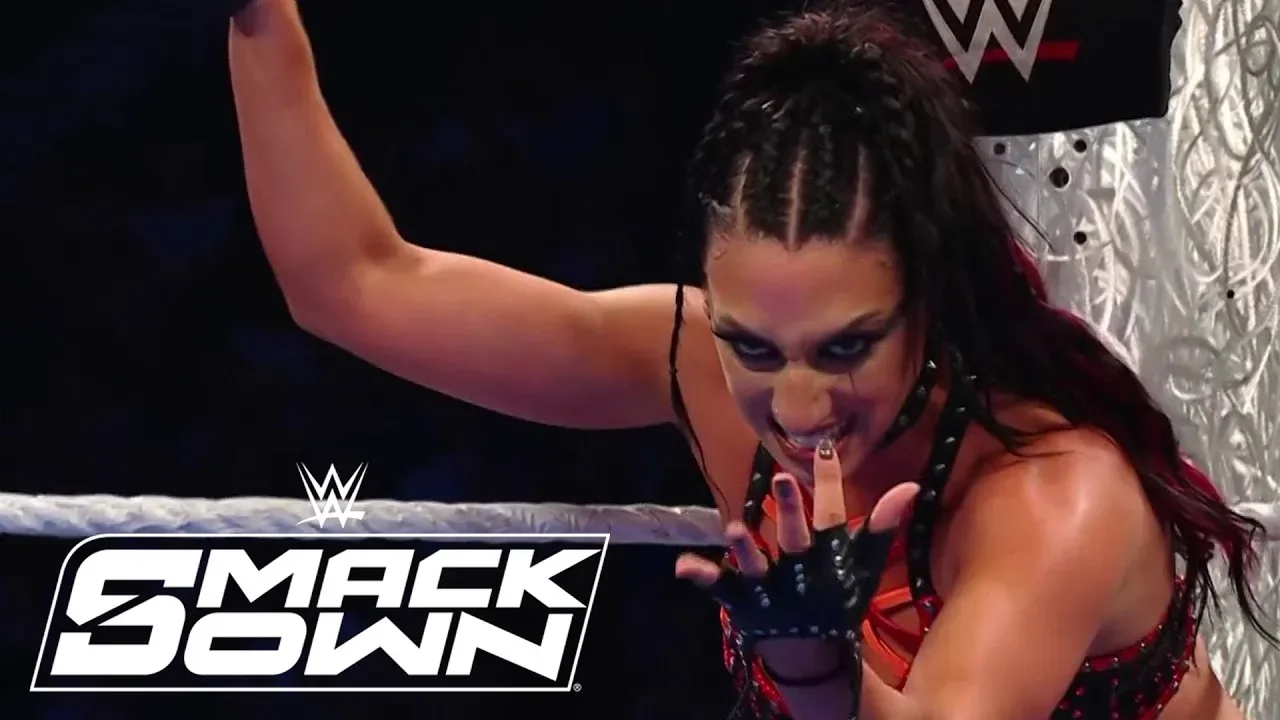
Jacy Jayne believes one of WWE NXT’s greatest strengths is the contrast between performers who arrive with years of independent wrestling experience and athletes who enter the business with a different physical and creative foundation.
WWE has long used NXT as a developmental environment that brings together wrestlers from a variety of backgrounds. Some sign after building reputations on the independent circuit, where they may have worked in front of different audiences, adapted to varied styles, and developed a deep familiarity with the rhythms of professional wrestling. Others come from collegiate sports, professional athletics, fitness backgrounds, or other competitive fields before learning the specific demands of WWE’s in-ring and television presentation.
For Jayne, those differing paths can lead to a productive exchange of knowledge. The former independent wrestler said that athletes can sometimes approach movement and offense in ways that someone steeped in wrestling’s existing visual language may not immediately consider.
“They’re able to see things and be like, ‘Oh, well, I can turn this into this,’ and they’re coming up with these crazy moves that probably an indie wrestler like me would have never even thought of, because we’ve never seen it done before. I feel like indie wrestlers mimic what they’ve seen, whereas an athlete, they don’t have that experience, they haven’t seen that before, so they’re able to come up with new things.”
For more background on this topic, read Liv Morgan Says Today’s NXT System Might Not Have Given Her Time to Break Through.
Jayne’s comments offer an interesting look at the balance involved in modern wrestling development. Independent wrestling can provide an invaluable education in ring positioning, crowd interaction, pacing, character development, and working with a wide range of opponents. It can also give a wrestler a long list of reference points, including moves, sequences, match structures, and presentation ideas they have watched or performed over the years.
At the same time, Jayne suggested that the familiarity can occasionally create a creative boundary. A wrestler whose experience has been shaped by what has already been done may naturally look to variations of established ideas. Athletes entering the industry without that same history, in her view, can sometimes see a physical possibility without being limited by expectations of how something is usually performed.
A Collaborative NXT Environment
Jayne did not frame the difference between indie wrestlers and athletes as a competition. Instead, she described a developmental system in which both groups can teach each other. The athletes can bring fresh movement, body control, and unconventional ideas, while the wrestlers with more ring experience can help translate those tools into professional wrestling.
“So whether it’s taking them under our wing and teaching them what we know, or they’re teaching us things that we don’t know, we just all work together. We’re all, in a way, a team.”
That philosophy speaks to the purpose of a place like NXT. Development is not limited to learning how to execute moves safely or how to wrestle a match. It also involves discovering what kind of performer each talent can become, refining their strengths, and finding ways for different backgrounds to complement one another.
An athlete may arrive with exceptional explosiveness, balance, flexibility, amateur credentials, or an instinctive grasp of body mechanics. A veteran of independent wrestling may have more seasoning in match construction, timing, improvisation, and adapting to the reactions of a live crowd. Neither background alone guarantees success, but the combination can create performers with a broader set of skills.
Jayne’s own perspective carries weight because she identifies herself as an indie wrestler. Rather than presenting that experience as an obstacle, she acknowledged what it has taught her while also recognizing that newer talent can contribute concepts that are not rooted in the same wrestling influences. Her point is not that one path is superior to another. It is that a roster with both kinds of talent has more opportunities to evolve.
Innovation and Experience Can Coexist
Professional wrestling has always been built on a constant exchange between tradition and reinvention. Wrestlers study what came before them, borrow elements that work, and reshape those elements for new audiences. At the same time, the most memorable innovations often emerge when a performer’s athletic background, personality, or unique physical gifts allow them to execute something in a way nobody else can.
Jayne’s observation highlights how that process can happen in real time at the WWE Performance Center and in NXT. A move might begin as an athlete’s idea based on a background outside wrestling. From there, coaches and fellow wrestlers can help determine whether it is safe, whether it fits a performer’s style, and whether it can be incorporated into a match in a meaningful way. The result can be a new piece of offense that still serves the larger story being told in the ring.
For wrestlers with independent experience, that environment also provides a chance to expand beyond the methods and habits formed before arriving in WWE. The adjustment from independent wrestling to a major televised system can involve learning different production expectations, working with a larger support structure, and developing a presentation that reaches a broader audience. Being surrounded by athletes who see movement differently can be part of that adjustment.
Likewise, athletes entering professional wrestling have much to gain from performers such as Jayne, who understand the nuances that are not always visible from the outside. Wrestling requires more than athletic ability. The smallest details—facial expressions, pacing, selling, character motivation, camera awareness, and knowing when to let a crowd react—can transform an impressive sequence into an effective moment.
Jayne’s description of talents “taking them under our wing” reflects the importance of that shared education. WWE’s developmental approach asks experienced wrestlers to pass along knowledge while also remaining open to learning from the people around them. That exchange can make the entire locker room stronger, particularly when the goal is to develop talent capable of succeeding across WWE’s biggest platforms.
Money in the Bank Opportunity Ahead
Jayne will have a major opportunity of her own this year when she competes in the Women’s Money in the Bank match. The match carries unique stakes within WWE, as the winner earns possession of the Money in the Bank briefcase and the championship opportunity associated with it.
Money in the Bank matches are typically defined by risk, urgency, and split-second decision-making. Competitors must navigate multiple opponents while pursuing the briefcase suspended above the ring, making positioning and timing especially important. The format also rewards creativity, an area Jayne addressed in her remarks about the different perspectives athletes and independent wrestlers can bring to the ring.
For Jayne, participation in the Women’s Money in the Bank match places her in a setting where momentum can change instantly. A victory would give her one of WWE’s most consequential tools, but simply competing in the match presents a prominent platform to demonstrate the confidence and adaptability that have defined her NXT journey.
Her comments on collaboration also offer a useful lens through which to view the next stage of that journey. Jayne has been part of an NXT system built on different wrestling backgrounds, different ideas, and constant competition for advancement. As she heads into Money in the Bank, she does so with the perspective of someone who values both the lessons of experience and the possibilities created when performers bring something new to the ring.
In Jayne’s view, the strongest developmental environment is not one that chooses between independent wrestling experience and athletic potential. It is one that allows both to challenge each other, share what they know, and keep professional wrestling moving forward.

Darryl Polo
Darryl Polo is a passionate wrestling fan covering WWE, AEW, TNA and beyond. He loves great rivalries, breakout stars and the moments that keep fans talking long after the bell. How we work.