Internal WWE creative and production assignments have emerged for the August 31 edition of Monday Night Raw and the September 4 episode of SmackDown, offering a detailed look at the personnel attached to key matches, interviews, confrontations, and storyline developments across both shows.
The Raw episode carried the internal title “Bigger Problems”. The September 4 SmackDown, which had been taped during the prior week, was internally titled “Jonny…Wrestling?”
As is often the case with WWE television, the listed assignments separate the writing of talking segments and backstage scenes from the production of matches and major in-ring angles. The credits also show a mix of prominent WWE producers and creative staff working across programs, including Michael Hayes, Robert Roode, Tyson Kidd, Molly Holly, Jamie Noble, Shane Helms, Jason Jordan, Candice LeRae, Shawn Daivari, and Kenny Dykstra.
Raw creative assignments centered on The Usos, Roman Reigns and Judgment Day
Raw opened with a beatdown involving The 946 and The Usos. Michael Kirshenbaum, Ben Saccoccio, and Brian Parise were listed as the writers for that opening segment, while Robert Roode was assigned as its producer. Starting the show with a physical angle placed immediate focus on the conflict and set the tone for an episode that featured several major character-driven developments.
For more background on this topic, read Raj Dhesi Questions How Critics Define His WWE Championship Reign as a Failure.
Kirshenbaum, Saccoccio, and Parise were also attached to the backstage segment featuring Roman Reigns and Jacob Fatu. The Roman Reigns and LA Knight segment later in the program was produced by Michael Hayes, one of the most experienced names in WWE’s television production structure.
Adam Pearce was credited with writing the segment involving Ethan Page, Dragon Lee, and Chad Gable. Pearce also produced the Ethan Page versus Dragon Lee match, giving him responsibility for both the preceding story material and the bout itself.
The Raw backstage scene between Stephanie Vaquer and Becky Lynch was written by Kirsten Koedding and John Trowbridge. Koedding and Trowbridge were also assigned to the Judgment Day backstage segment, connecting the pair to two important segments involving Raw’s women’s division and one of the brand’s established factions.
Brian Parise individually received the writing credit for the Paul Heyman backstage interview. With Heyman’s on-screen role frequently tied to major developments around WWE’s top-level rivalries, the assignment underlines the separate attention given to that interview within the show’s creative breakdown.
Raw match producers included Jordan, LeRae, Helms and Noble
Several Raw matches were produced by teams with both extensive in-ring backgrounds and extensive WWE television experience. Sol Ruca versus Raquel Rodriguez was produced by Jason Jordan and Candice LeRae. The pairing is notable given Ruca’s continuing rise on WWE programming and Rodriguez’s power-based style, creating a match that called for a clear presentation of two distinctly different performers.
Shane Helms was listed as the producer for both Je’Von Evans versus Dominik Mysterio and the tag team match that followed, pitting Evans and Joe Hendry against Mysterio and JD McDonagh. Handling both segments gave Helms a central role in shaping that portion of Raw’s in-ring action and its progression from singles competition into a tag team encounter.
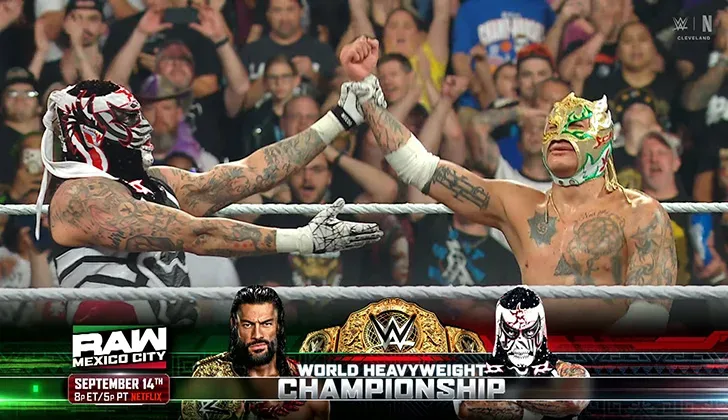
Penta versus Rey Fenix was produced by Jamie Noble. Given the shared history and athletic reputations of the two competitors, Noble’s assignment placed him behind one of the episode’s most technically and stylistically significant matchups.
Robert Roode’s work on Raw extended beyond the opening Usos angle. In addition to producing that beatdown, he would also be credited on SmackDown later in the week alongside Michael Hayes for CM Punk versus Johnny Gargano. The dual-show involvement reflects Roode’s continued presence in WWE’s production operation.
SmackDown writing credits covered Punk, Orton, Rhodes, Gunther and more
The September 4 SmackDown writing breakdown began with a backstage segment involving CM Punk, Nick Aldis, and Johnny Gargano. Colin Clark was credited as the writer for that scene. Clark also wrote the Kevin Owens backstage interview and the backstage segment involving Candice LeRae and Gargano, making him a major contributor to the episode’s Gargano-related material.
Ioannis Filippides was credited with the writing of two women’s division backstage segments: one featuring Charlotte Flair, Alexa Bliss, and Tatum Paxley, and another involving Nikki Bella and Paige. Those credits placed Filippides behind multiple scenes involving some of the most recognizable names on the SmackDown roster.
Cristian Scovell was assigned to the backstage segment featuring Aldis, Gunther, and Danhausen. Chad Barbash wrote the interview conducted by Corey Graves with Randy Orton and Cody Rhodes, a segment bringing together two of WWE’s most prominent active stars.
Patrick McAlpine was credited with writing the segment featuring Lil Yachty, Baron Corbin, and Trick Williams. Celebrity appearances can require a different logistical and creative approach than standard WWE television material, particularly when they are integrated with active roster personalities, and that segment was among the more distinctive items listed in the show’s rundown.
Daivari, Tyson Kidd, Molly Holly and Hayes led SmackDown production
On the production side, Shawn Daivari was assigned to the segment involving Gunther, Sami Zayn, Kevin Owens, and Finn Balor. Daivari also produced BAKUSAI versus The Miz and Kit Wilson, giving him credits for both a major multi-person storyline segment and an in-ring match.
Kenny Dykstra produced the tag team bout of Charlotte Flair and Tatum Paxley versus Fatal Influence. Tyson Kidd, also known as TJ Wilson, produced both the Nick Aldis, Chelsea Green, and Irresistible Forces segment and Tiffany Stratton versus Nia Jax. Kidd’s two assignments covered a non-match storyline segment as well as a significant women’s division singles match.
Blake Monroe and Giulia were featured in a segment produced by Molly Holly. The credit continues Holly’s extensive behind-the-scenes work within WWE following a celebrated in-ring career that earned her a place in the WWE Hall of Fame.
The night’s CM Punk versus Johnny Gargano match was produced by Michael Hayes and Robert Roode. Their combined involvement brought together two influential figures in WWE’s production department for a matchup between Punk, a central figure on WWE television, and Gargano, whose role was further emphasized through several other segments across the episode.
What the credits show about WWE’s television process
These assignments provide a useful snapshot of WWE’s collaborative television workflow. A single episode is not shaped by one writer or producer; instead, different staff members are assigned to individual matches, interviews, backstage scenes, opening angles, and major confrontations. That approach allows WWE to distribute responsibility across its creative and production teams while giving specific personnel oversight of particular stories.
The August 31 Raw list especially demonstrates how a program can be built around parallel threads. The Usos-related opening angle, Roman Reigns and Jacob Fatu scene, Reigns and LA Knight segment, Judgment Day material, and a collection of matches each had distinct creative or producing teams. The credits also show recurring contributors across connected material, such as Kirshenbaum, Saccoccio, and Parise on multiple Bloodline-adjacent scenes.
SmackDown’s list similarly reflects a broad lineup, ranging from CM Punk and Johnny Gargano to Charlotte Flair, Cody Rhodes, Randy Orton, Gunther, Tiffany Stratton, and Nia Jax. The internal title, “Jonny…Wrestling?”, also suggests that Gargano was an especially notable focus of the taped episode, appearing in a backstage scene with Punk and Aldis, another with Candice LeRae, and the featured match against Punk.
While internal credits do not necessarily reveal every hand involved in shaping a WWE broadcast, they identify the staff members assigned to the show’s individual pieces. For viewers following WWE’s evolving creative direction, the August 31 Raw and September 4 SmackDown breakdowns highlight the producers and writers helping construct the weekly presentation behind the cameras.
Darryl Polo
Darryl Polo is a passionate wrestling fan covering WWE, AEW, TNA and beyond. He loves great rivalries, breakout stars and the moments that keep fans talking long after the bell. How we work.