
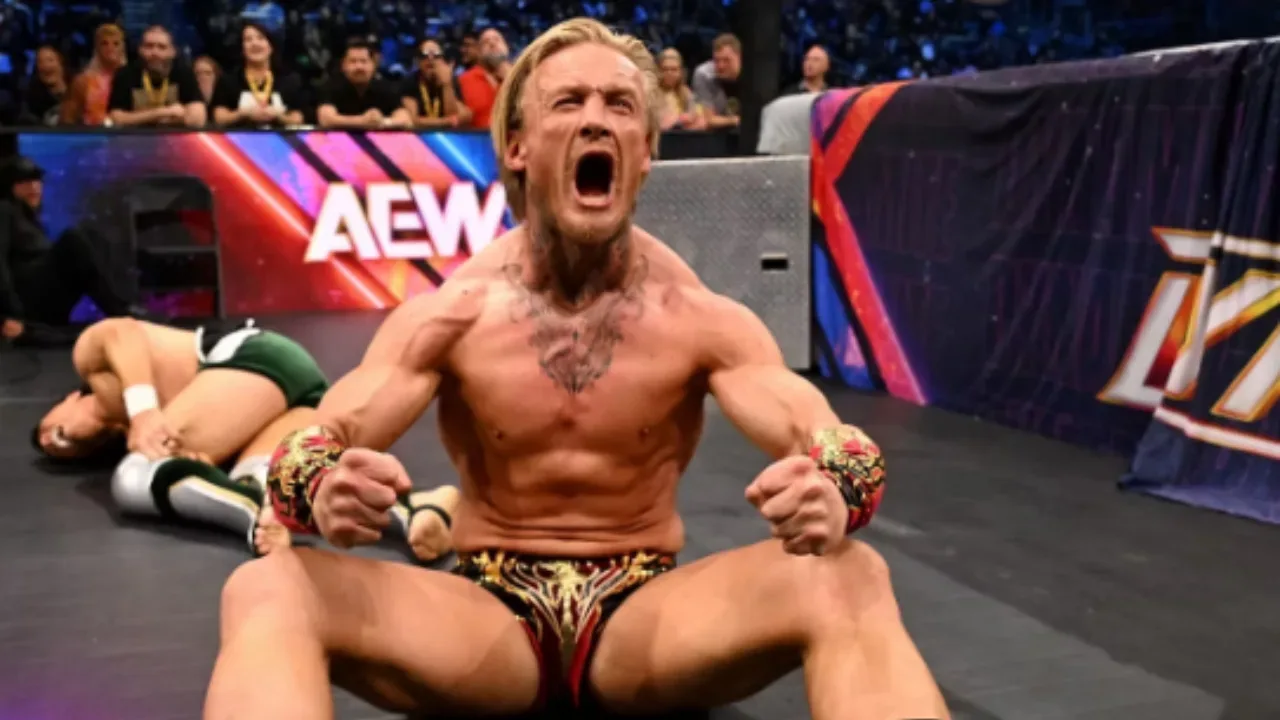
Ilja Dragunov has built his wrestling identity around intensity, and the performer offered a revealing explanation of why the physical side of competition carries such importance to him.
Speaking with Renee Paquette on The Close-Up, Dragunov said he believes fighting exposes qualities that are often hidden in everyday life. In his view, the pressure and danger associated with a genuine confrontation strip away a person’s ability to carefully manage their image. What remains, he said, is something more immediate, emotional and honest.
“I feel like fighting brings out your true face,” Dragunov said.
That idea fits closely with the reputation Dragunov has cultivated through his work in professional wrestling. His presentation has long centered on physicality, urgency and a willingness to embrace the punishing nature of a high-stakes match. Rather than treating brutality as an empty visual, Dragunov described combat as a setting in which people are forced to respond on instinct.
For more background on this topic, read Zayda Steel Opens Up On Family Sacrifices Behind Her Wrestling Dream.
“In a real fight, it’s an extreme situation,” he said. “You can’t compose yourself. You’ve got to fight. You’ve got to fight back.”
For Dragunov, that loss of composure is not simply about aggression. It is connected to emotion. He explained that danger can prompt people to release feelings that might otherwise remain contained, making a fight a particularly revealing circumstance. The result, in his eyes, is a form of expression that can be both natural and artistic.
Combat as expression
Professional wrestling is a performance medium, but it also depends heavily on the audience believing in the emotional stakes of what takes place in the ring. Dragunov’s comments underline the balance he sees between those elements. He did not frame fighting solely as violence, nor did he reduce it to a simple display of athletic technique. Instead, he emphasized its capacity to communicate something real about the people involved.
He acknowledged that discussing the subject can be difficult to put into neat terms. Dragunov shared a joke from a friend who tells him that he speaks three languages and speaks all of them badly, before returning to the point that there is a particular “nuance” to fighting that he finds difficult to ignore.
That nuance, Dragunov said, comes from the extremity of the situation. When a person is pushed into a moment where they must protect themselves and answer an opponent’s challenge, there is little room left for a polished exterior. The reaction is immediate. The emotions are heightened. A person’s instincts become visible.
“Extreme situations people show their real face,” Dragunov said.
It is an outlook that helps explain why Dragunov speaks of physical competition in terms broader than winning or losing. A match can certainly determine a superior competitor on a given night, but the journey through that contest can also reveal fear, determination, anger, resilience and vulnerability. Those reactions are meaningful because they feel human, even inside a sport built around larger-than-life personalities.
Dragunov described fighting as having “something artistic” and “something very expressive” within it. At the same time, he stressed that it is natural. That combination is central to his perspective: combat can be crafted and presented, but its power comes from emotions that do not feel manufactured.
Authenticity at the center of Dragunov’s outlook
Dragunov connected his views on fighting to a larger personal process. He said much of what he has worked on throughout his life has been rooted in authenticity and in finding himself. The statement presents combat not merely as an environment where he performs, but as a vehicle for self-discovery.
That distinction matters in wrestling, where competitors are frequently asked to establish a clear identity in front of a live crowd and television audience. Some performers lean into charisma, humor, spectacle or technical mastery. Dragunov’s comments point to a different foundation: the belief that pressure produces truth, and that the most compelling confrontation is one that allows that truth to emerge.
His approach does not suggest that every fight is identical or that every competitor responds in the same way. In fact, the emphasis on nuance indicates the opposite. Each intense situation can reveal a different side of someone. One person may show courage. Another may reveal desperation. Another may find a level of defiance that was not visible before the bell rang. The value of a fight, in Dragunov’s view, is tied to those unguarded responses.
There is also a distinction in his remarks between simply appearing tough and being placed in a position where toughness must be tested. A controlled public persona can be maintained under ordinary circumstances. An extreme confrontation, as Dragunov described it, challenges that control. It forces a response, and that response can tell a more complete story than words alone.
Why intensity remains important in wrestling
Dragunov’s perspective speaks to one of professional wrestling’s enduring strengths. The most memorable matches are often not remembered only for a finishing move or a final decision. They are remembered for the way competitors conveyed the consequences of the struggle. Audiences react when they can understand what a wrestler is feeling and why the conflict matters.
Intensity is especially effective when it is paired with emotional clarity. A hard-hitting encounter may look impressive on a physical level, but it gains added weight when the audience can see the frustration, pride, resolve or exhaustion behind every exchange. Dragunov’s comments suggest that this is the kind of truth he values: not a carefully protected mask, but an unmistakable emotional response brought forward by adversity.
His description of fighting as both expressive and natural also reflects the unusual appeal of wrestling as an art form. The action is designed to be seen and felt by an audience, yet performers must make their reactions convincing enough to create investment. The finest moments can feel spontaneous even when they occur within a structured presentation. Dragunov’s philosophy places the emphasis on the emotion that survives within that structure.
That does not mean physicality is valuable for its own sake. The important element in Dragunov’s explanation is what physical conflict can reveal. The danger, pressure and need to respond are what create the environment for genuine expression. He sees the fight as a language of its own, one that can communicate qualities people may not otherwise articulate.
A personal philosophy behind the physical style
Dragunov’s remarks provide insight into the mindset behind a wrestler who embraces highly physical competition. He sees a confrontation as a moment of exposure. It is where restraint becomes difficult, emotions rise to the surface and identity becomes clearer.
“It forces you to speak, to show your real face,” Dragunov said.
That belief gives greater context to the way he talks about the brutality and intensity associated with wrestling. For Dragunov, those elements are not separate from character. They are part of how character is discovered and displayed. The more demanding the situation, the more opportunity there is for a competitor to reveal what is truly driving them.
Ultimately, Dragunov’s comments return to authenticity. He views fighting as an extreme but meaningful form of self-expression, one that can expose emotions without the safety of a rehearsed answer. In a setting where competitors must react, endure and keep moving forward, he believes the real person has nowhere to hide.

Darryl Polo
Darryl Polo is a passionate wrestling fan covering WWE, AEW, TNA and beyond. He loves great rivalries, breakout stars and the moments that keep fans talking long after the bell. How we work.