
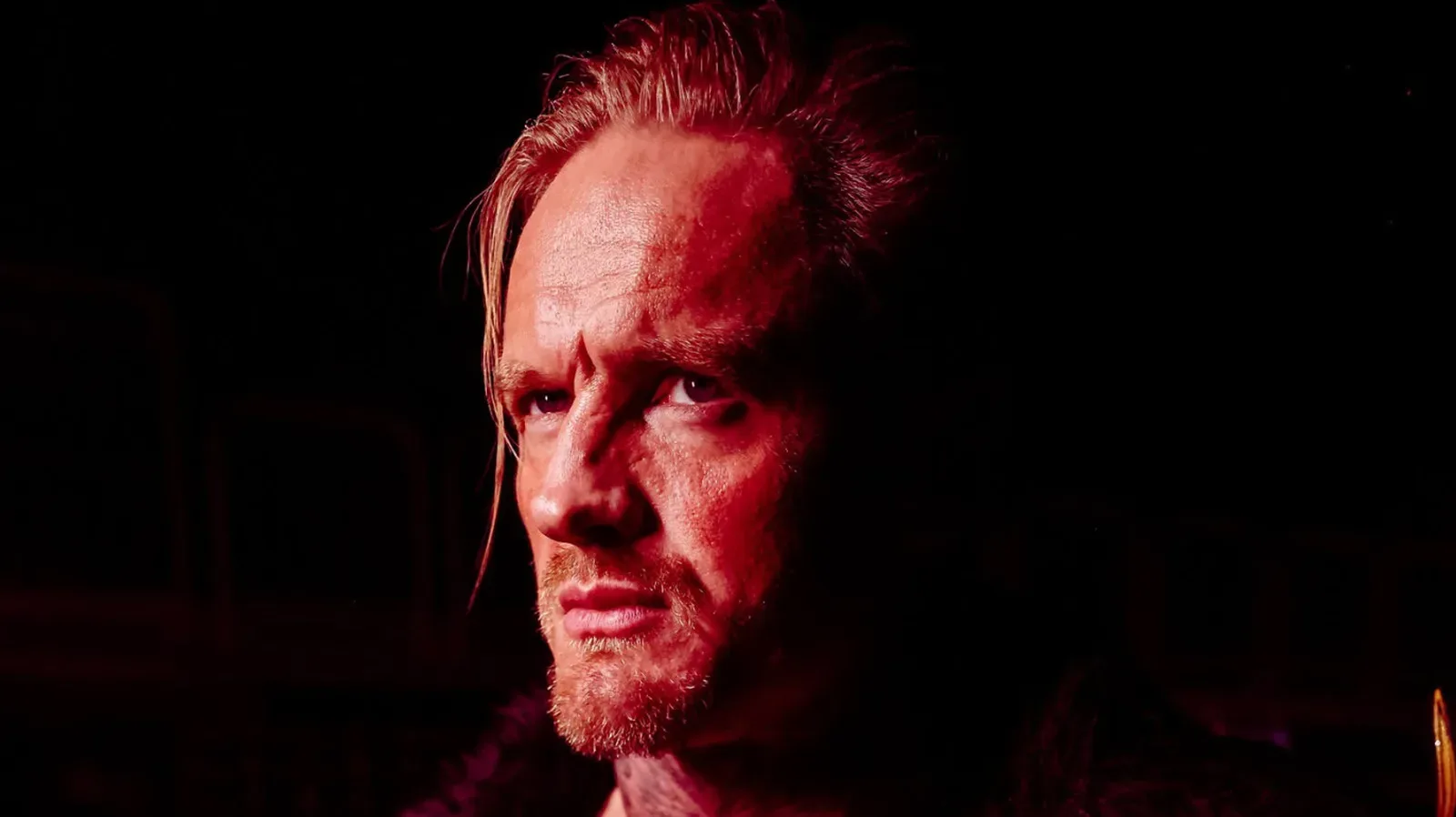
Ilja Dragunov has made an immediate impact in AEW, but the path that brought him to the promotion was shaped by a difficult period of injury recovery, personal reflection and a growing belief that he needed a different environment.
Dragunov debuted at AEW WrestleDream in emphatic fashion before stepping into the ring for his first match a few days later on AEW Dynamite. There, he defeated “Speedball” Mike Bailey, giving AEW fans an early look at the intensity and physical style that defined his rise elsewhere. The former United States Champion has now discussed the decision behind his move, explaining that he had begun considering a career change well before his WWE contract reached its end.
The decision was not presented as a reaction to one incident or one individual. Instead, Dragunov described a more gradual internal realization after returning from a serious ACL injury and attempting to establish the next phase of his career.
“It’s been a very complicated time for me,” Dragunov said. “But you see, I came back from my ACL tear... [which] that happened in the most unexciting way possible. I worked my way through three rehabs, and was training very hard and was very dedicated.”
For more background on this topic, read Darby Allin vs. Hechicero Official for CMLL’s October 30 Arena México Event.
A demanding road back from injury
For Dragunov, the road to free agency came after a major setback that required considerable patience. He said he went through three rehabilitations while working to regain the level necessary to return to the ring. That process preceded a significant comeback moment: he captured the United States Championship essentially upon his return.
Winning that title represented an important achievement in a WWE tenure that covered seven years and much of Dragunov’s 20s. It also offered a prominent example of his perseverance after the ACL injury. Yet the championship victory did not completely answer the questions he had about what should come next.
“I came back, and I won the United States Championship, basically on my return, which was an awesome, memorable moment,” Dragunov said.
Dragunov made clear that he values that accomplishment and the time he spent with WWE. His comments were notably measured, with no attempt to direct blame toward the company or the people involved in his prior run. Rather, he framed the choice as a professional and personal evaluation of whether he could find another stage that better suited the direction he wanted to take.
That distinction matters in a business where departures are often interpreted through the lens of public conflict, creative disputes or contract negotiations. Dragunov’s explanation instead centers on instinct. He said that, after dropping the championship and moving into subsequent performances, he began to sense that something had changed for him.
Dragunov felt a shift after the title reign
The key point in Dragunov’s reflection is not that he rejected his WWE past. He repeatedly acknowledged the weight of those years and the respect he holds for the company. But he also said there came a point when he felt compelled to examine whether another era of his career was possible.
“But then, at certain times after I dropped the belt and I was going through my next performances, I felt... just like, in my gut, things are different,” Dragunov said. “And I don’t blame anybody. I’m a gentleman, and I’ve way too much respect for the last seven years, the most of my 20s, that I spent with the company.”
Those seven years are a substantial portion of any wrestler’s career, particularly for someone who spent them developing an identity as one of the most forceful in-ring competitors of his generation. Dragunov’s presentation has long been built around relentless pace, heavy physicality and an emotional sense of urgency. A move to AEW gives him the chance to test that persona in a new setting and against a roster filled with very different potential opponents.
His first AEW match against Bailey immediately highlighted that possibility. Bailey’s speed, striking and ability to thrive in fast-paced contests offered a natural contrast to Dragunov’s punishing, uncompromising approach. Dragunov’s victory put a decisive first result on the board, while the match itself established the kind of high-intensity contests fans may expect from him in AEW.
It is still far too early to determine where Dragunov will ultimately stand in AEW’s title picture or broader hierarchy. A major debut and an opening win create momentum, but they are only the beginning of a run that will be judged over time. What is already clear is that Dragunov sees the move as an opportunity to rediscover a feeling he had been seeking.
“Is there more?”
Dragunov described the central question behind his decision in direct terms. After working through injury, returning to win championship gold and continuing forward after losing that title, he wondered whether there was another chapter he needed to explore.
“But I felt like it is fine for me, and reasonable to ask myself, ‘Is there more? Is there a new era I can breathe?’” Dragunov said.
That phrasing places his AEW choice in a broader context than a standard change of employers. Dragunov was looking for a new era, and he believed letting his agreement expire would allow him to pursue it. His recent appearances suggest he has embraced the shift quickly.
Since walking through the curtain at WrestleDream, Dragunov has said he has felt “freedom.” That is a powerful word for a wrestler beginning a new run, particularly one whose previous several years included both high-profile success and the demanding work of returning from an ACL tear. Freedom, in this sense, can mean the chance to face fresh opponents, adapt to a new locker room and discover which aspects of his craft are most effective in a different promotion.
It can also mean accepting the uncertainty that comes with beginning again. Dragunov arrives in AEW with an established reputation, but a new promotion presents new dynamics. He will need to build rivalries, find a place within AEW’s evolving landscape and prove that his intensity translates into sustained success on this roster. His win over Bailey was an important first statement, not a final destination.
What Dragunov brings to AEW
AEW has added a performer whose appeal rests heavily on credibility inside the ropes. Dragunov’s style makes even early-career matches feel consequential because of the commitment he brings to each exchange. His physical approach, willingness to absorb punishment and ability to make a match feel like a personal fight have helped make him distinctive.
That intensity should make him a versatile presence. He can fit into straight competitive matches, personal grudges and championship pursuits, while his arrival also expands the list of fresh matchups available to AEW. The Bailey contest served as an immediate example of how a Dragunov match can be framed as a collision of styles rather than simply another roster addition being introduced.
For now, however, Dragunov’s own words provide the most meaningful guide to understanding the move. He did not describe leaving WWE as an act of resentment. He described it as the result of reflection after a complicated stretch of his career. He appreciated the seven years he spent there, recognized the importance of returning from injury to win the United States Championship, and then listened to the feeling that it was time to see what else was possible.
AEW WrestleDream marked the public start of that search. The victory over Bailey gave Dragunov a successful first chapter in the ring. The larger story will unfold in the months ahead, as he looks to turn the freedom he says he feels into a defining new era of his career.
In pictures

Darryl Polo
Darryl Polo is a passionate wrestling fan covering WWE, AEW, TNA and beyond. He loves great rivalries, breakout stars and the moments that keep fans talking long after the bell. How we work.